On this page
Quick summary
Seventh-month joss paper ash and transboundary haze deposit sticky tar across indoor evaporator fins and blower drums, trapping stale campfire odours. Rinsing accessible mesh filters removes loose soot safely, while deep resin coatings on curved coils require low-alkaline chemical servicing or dismantled overhauls.
Wall-mounted general servicing $25–$50/unit · chemical wash $60–$80/unit · View servicing rates
How Incense Smoke and Haze Turn into Sticky Coil Resin
Burning incense outside HDB corridors or windows sends microscopic ash and aromatic oils straight toward living-room intake grilles. Once warm smoke meets wet cooling fins, moisture binds soot into dark varnish along aluminium edges and curved fan blades.
Ordinary dry vacuuming cannot lift baked resin once indoor humidity glues ash onto metal fins. Running smoky units unwashed circulates stale odours through every bedroom and gradually starves blower airflow.
Flats facing central bin chutes or downstairs burners collect sticky ash fast during hungry-ghost month. Checking top mesh filters weekly spots early soot darkening.
Match Smoke Residue Depth to the Right Cleaning Method
Inspect accessible indoor grilles from floor level before choosing between simple filter rinsing, chemical coil flushing, or full strip-down cleaning:
Scroll to see more columns
| Smoke residue cue | Where tar settles | Safe homeowner action | Recommended Snowflake tier |
|---|---|---|---|
| Grey dust on mesh | Washable top plastic screen | Rinse warm water, air dry | General wash if mild smell remains |
| Sweet smoky burst on start | Front evaporator aluminium fins | Keep 230V cover closed | Chemical coil servicing on site |
| Dark film on blower blades | Deep squirrel-cage fan wheel | Switch unit off until clean | Dismantled chemical overhaul |
| Slow drip with soot flakes | Condensate tray and drain line | Place towel below casing | Tray flush and drain vacuum |
Follow Safe Indoor Checks Before Booking Smoke-Residue Servicing
Shut hallway windows tightly during peak corridor burning, and keep living-room units on cool recirculation rather than opening corridor vents. Wipe plastic front panels gently with a damp microfibre cloth while keeping the main wall isolator turned off.
Never spray household degreasers, bleach, or essential oils onto aluminium fins, because harsh alkalis pit thin metal coatings and eat drain pan seals. Stand strictly on solid floor level rather than climbing onto HDB aircon ledges or opening electrical boards. Protective canvas drop sheets keep smoky wash water off bedroom walls during treatment. Keep bedroom doors shut while flushing coils so soot stays contained inside wash bags.
Compare Post-Smoke Aircon Cleaning Rates and Booking Timing
Wait until seventh-month burning tapers off or haze clears before booking deep coil flushing so clean fins stay soot-free:
- Light dust recovery bills S$50 for a solo unit or S$30 per head across twin units. Bundling three-plus blowers lowers rates to S$25 each (14-day warranty).
- Embedded smoke tar clears via chemical coil washes at S$80 on one room, S$70 per room on twin units, or S$60 per evaporator on three-plus rooms (60-day cover).
- Heavy black blower tar calls for full coil strip-downs billing S$150 once, S$125 per split on two, or S$115 per split for three or more smoky splits (90-day warranty).
- Uncertain whether lingering smells come from damp coils or dirty drains? Schedule a S$30 fault visit, waived whenever cleaning proceeds.
Diagnostic Cases for This Fault
Singapore jobs showing what we checked on-site before quoting parts or gas.
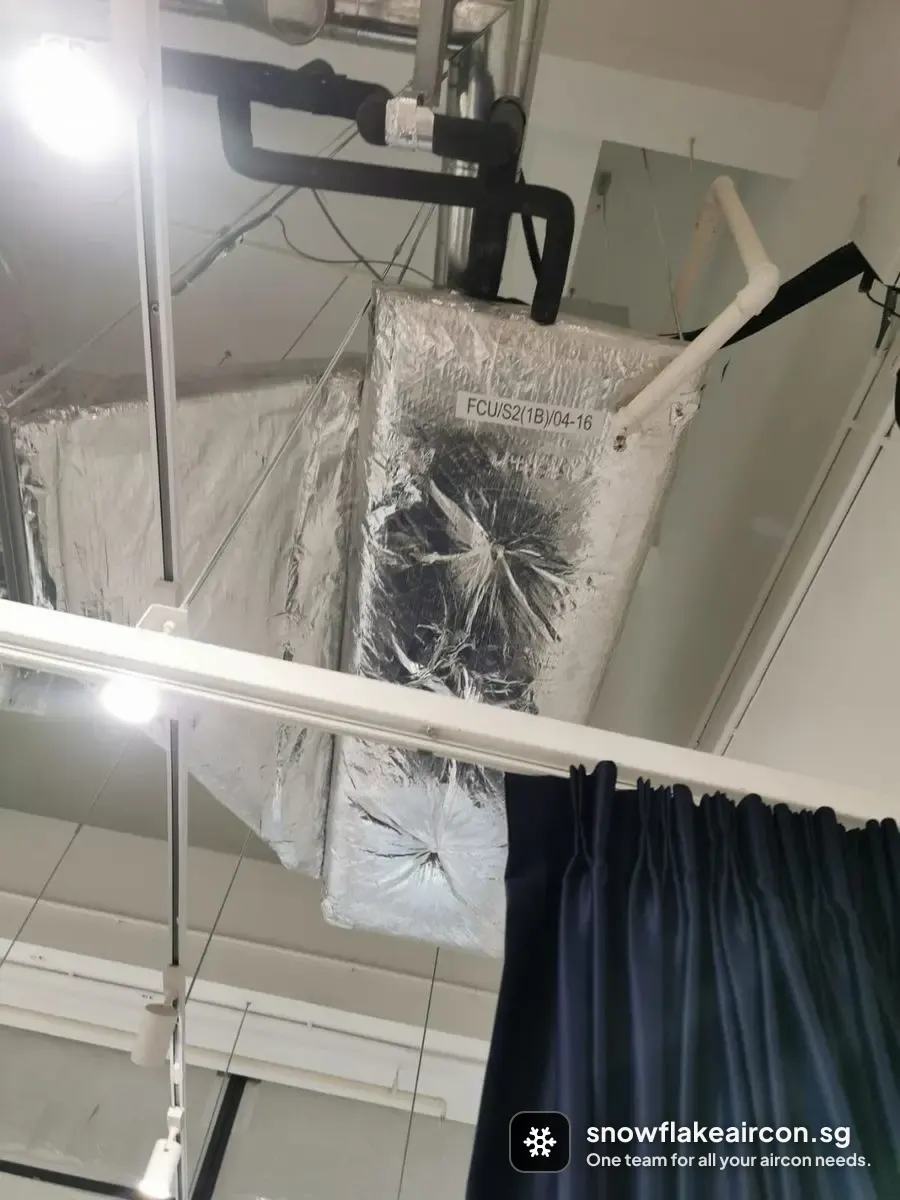
Carrier · Ducted
Shop ducted FCU losing airflow: lint-choked coil
Apparel textile lint compacted across the concealed ducted FCU coil face and blower blades
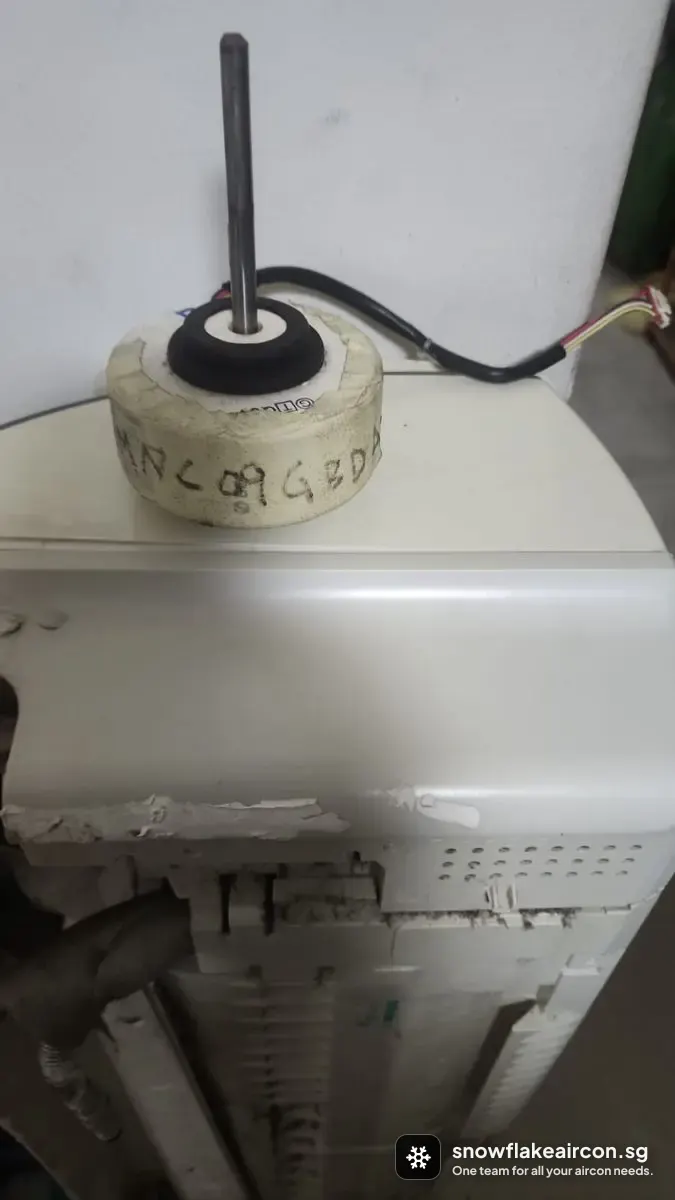
Sharp · Wall-mounted
Sharp 6-0 grinding then shutdown: worn fan motor bearings
Worn indoor fan motor bearings on a unit past its usual service life
Common Questions
Can household disinfectant sprays remove seventh-month incense smells from aircon fins?
Should Singapore residents run aircon in cool mode during heavy haze or incense burning?
When does smoky indoor odour call for a dismantled overhaul instead of a regular chemical wash?
Does outdoor haze or joss ash damage HDB condenser units on exterior ledges?
Sources
Sources checked 27 Nov 2026