On this page
Quick summary
B2 industrial canteens, metal workshops, and QC labs expose copper U-bends and aluminum condenser fins to cooking grease, grinding dust, and mild chemical fumes. Neutral-pH coil washes, anti-corrosion fin barriers, grease pre-filters, and short inspection cycles prevent pinhole refrigerant leaks and compressor failures.
Wall-mounted general servicing $25–$50/unit · chemical wash $60–$80/unit · View servicing rates
Identify Corrosion Risks in Heavy Industrial Canteens and Labs
Heavy manufacturing estates across Tuas, Jurong, and Woodlands mix fine metal particles, oil mist, and cleaning aerosols into workshop air. Canteen exhaust fans also coat nearby outdoor condensers in sticky vapourised cooking grease. Standard residential rinse intervals break down fast under that exposure.
Trapped moisture turns ambient dust and chemical fumes acidic on bare aluminum fins and copper joints. That corrosive film eats pinhole leaks into U-bends within three years, causing low-gas trips and compressor overheating. Timely flushing keeps condensing temperatures safely within design specs.
Match Contaminant Exposure to Protective Servicing Routines
Adapt filter hardware, detergent chemistry, and inspection spacing to each factory zone rather than using residential intervals:
Scroll to see more columns
| Factory zone type | Main coil threat | Protective care measure | Target inspection rhythm |
|---|---|---|---|
| Staff canteen hall | Sticky grease vapour | Washable mesh pre-filters & neutral wash | Monthly filter; quarterly coil |
| Machining floor office | Fine metal & coolant mist | Thorough low-pressure freshwater rinse | Bi-monthly fin & drain flush |
| QA or testing lab | Mild acid or solvent air | Protective anti-corrosion fin coating | Quarterly leak & delta-T log |
| Exposed rooftop plant | Exhaust plume recirculation | Shift intake upwind of fume stacks | Semi-annual mount & casing check |
Apply Neutral Rinses, Barrier Coatings, and EEG Upgrades
Skip harsh un-neutralized acid cleaners on thin condenser fins. Leftover acid residue accelerates galvanic pitting after wash visits finish. Use pH-neutral industrial cleaners, rinse thoroughly with fresh water, and coat clean replacement coils. Install stainless steel fasteners on exposed outdoor frames. Clear oily drain-pan sludge before afternoon canteen surges block gravity pipes.
Qualifying SMEs upgrading aged cooling plants can review Singapore's GoBusiness Energy Efficiency Grant (EEG) for co-funding. Isolate fresh air intakes away from chemical fume stacks wherever site layout permits. Follow MOM height-safety permits on rooftop platforms. Engage EMA-licensed electrical workers for any 3-phase isolator modifications. Log coil pressure readings after each quarterly flush.
Prepare Site Survey Benchmarks and Office Unit Pricing
Start with a site walkdown to separate wall-mounted office splits from multi-ton lab ACMV plants and custom coil treatments:
- Book an on-site plant assessment before ordering coil treatments. Split inspections charge S$30 and VRV assessments charge S$80, both waived when confirmed work proceeds (30-day repair cover).
- Multi-ton lab plants and protective barrier coatings require custom quotes. Pricing depends on coil tonnage, access height, and chemical resistance specs.
- Wall-mounted canteen and office splits qualify for transparent batch fees. Cleaning three or more units together bills S$25 general, S$60 chemical, or S$115 overhaul per split.
- Two-unit office visits bill S$30, S$70, and S$125 per split across tiers. Single-unit visits bill S$50, S$80, and S$150 under 14-day, 60-day, and 90-day guarantees.
Diagnostic Cases for This Fault
Singapore jobs showing what we checked on-site before quoting parts or gas.
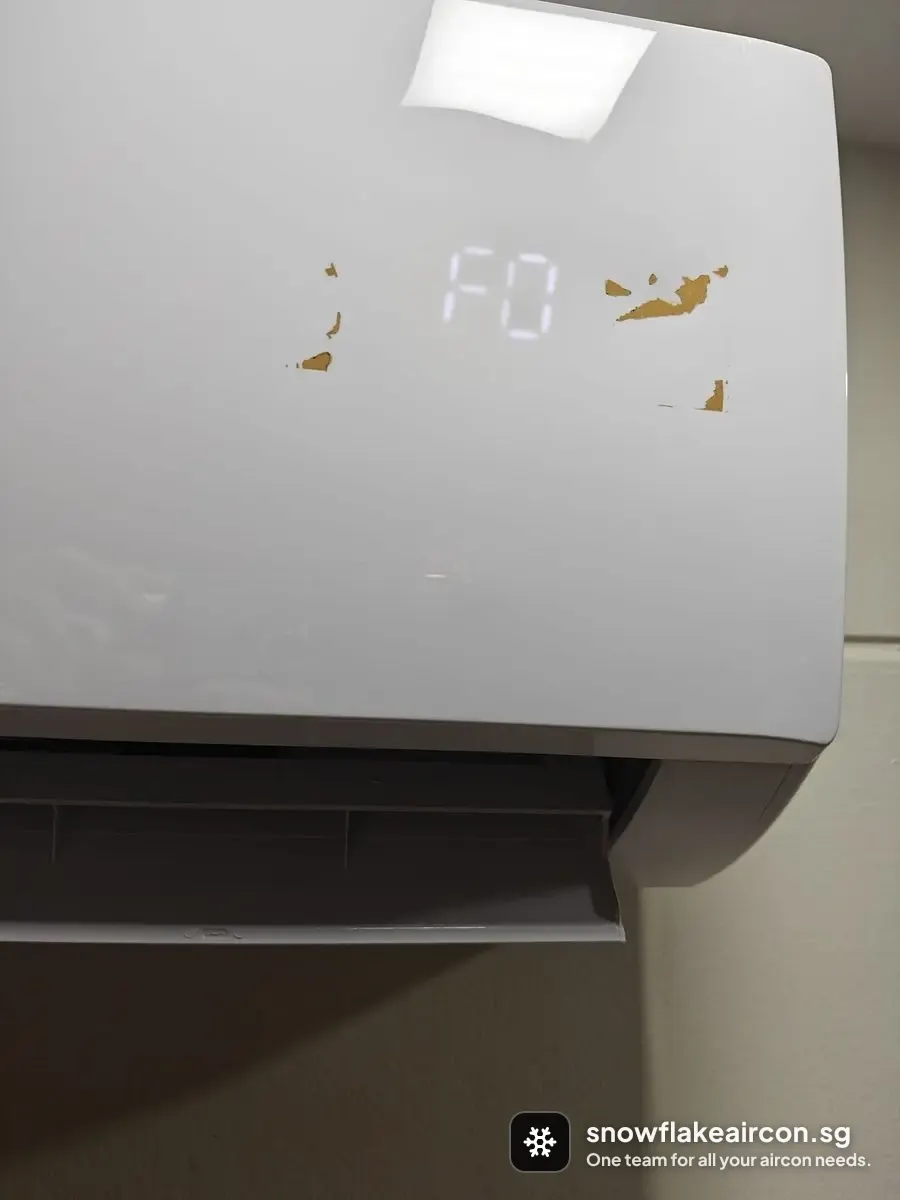
Gree · Wall-mounted
Gree F0 on a rusted condenser: refrigerant shortage
R32 refrigerant shortage triggering Gree F0 protection from corroded evaporator return bends
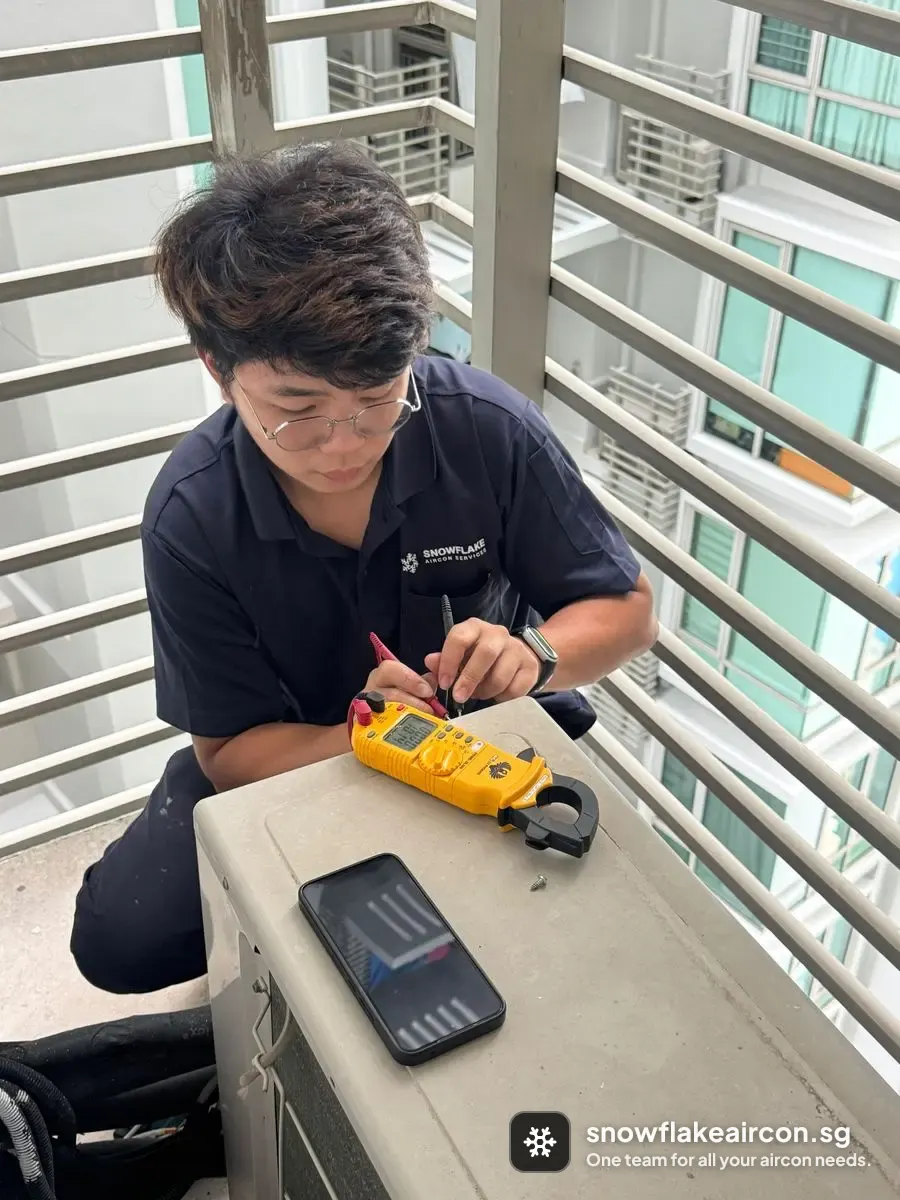
Daikin · Wall-mounted
Tripping a 20A breaker: weak capacitor, not compressor
Degraded outdoor run capacitor combined with a dust-choked condenser coil climbing amp draw past the 20A breaker limit after 15 minutes while the compressor remains sound