On this page
Quick summary
Dual-key condos in Singapore usually link both the main residence and lockable studio back to one outdoor condenser, one power isolator, and one SP Group meter. Coordinating studio access with main-unit servicing keeps pipes clear and unlocks lower multi-unit flat rates.
System 2 installed from $2,600 (22 SWG copper) · $30 site survey waived on install · View packages
Why Dual-Key Suites and Studios Share One Outdoor Condenser
Developer-fitted dual-key apartments in Singapore split one legal title behind a shared foyer. Both sides usually wire back to a single multi-split compressor. Tight MCST ledge space leaves no room for extra outdoor condensers.
One 20A double-pole isolator switch on the shared ledge or main board feeds the entire circuit. Flipping that master switch off inside the main suite cuts studio cooling immediately.
Compare Dual-Key Isolator, Meter, and Servicing Setups
Understand how shared developer hardware affects power control, utility splits, and cleaning responsibility across both wings:
Scroll to see more columns
| Shared component | Standard developer setup | Common tenancy dispute | Practical landlord or tech fix |
|---|---|---|---|
| Outdoor isolator switch | One switch serves whole system | Main occupant turns power off | Label isolator clearly; keep switch on |
| SP Group electricity meter | Single meter bills main account | Disputes over heavy night cooling | Clarify flat utility split in CEA lease |
| Shared condensate drain | Connected PVC pipe run | Studio slime backs into main tray | Book joint cleaning on same day |
| Condenser ledge access | Accessible via one window only | Missing technician entry windows | Confirm dual-wing dates upfront |
Set SP Group Billing Terms and MCST Ledge Rules Early
Most dual-key layouts carry one SP Group meter billed at Singapore's 31.16 cents/kWh regulated tariff (with GST). Compressor draw drives most electricity cost and cannot be tracked separately by indoor wall blowers alone. CEA tenancy agreements should specify fixed utility caps or licensed sub-meter terms.
Adding a dedicated studio condenser later requires MCST written permission and BCA structural bracket compliance. Keep shared ledge windows clear so technicians inspect outdoor wiring safely.
Plan Joint Dual-Key Servicing Visits and Shared Checks
Booking the studio blower alongside main-suite rooms on one trip protects compressor balance and cuts bills:
- Servicing one studio room solo costs S$50 for routine cleaning (14-day cover). Pairing it with one main room charges S$30 per room, while three combined rooms drop to S$25 per room.
- Joint chemical cleaning bills S$60 each across three or more combined rooms (60-day cover). Standalone single-room chemical visits bill S$80, and pairs bill S$70 each.
- Algae clogs inside shared PVC drain runs demand full coil teardowns. Combined three-plus bookings pay S$115 per coil (90-day cover), versus S$150 standalone or S$125 each for pairs.
- Unexplained breaker trips or weak studio cooling warrant a S$30 shared-system check. That check charge waives off approved repairs or installs under 30-day warranty.
Diagnostic Cases for This Fault
Singapore jobs showing what we checked on-site before quoting parts or gas.
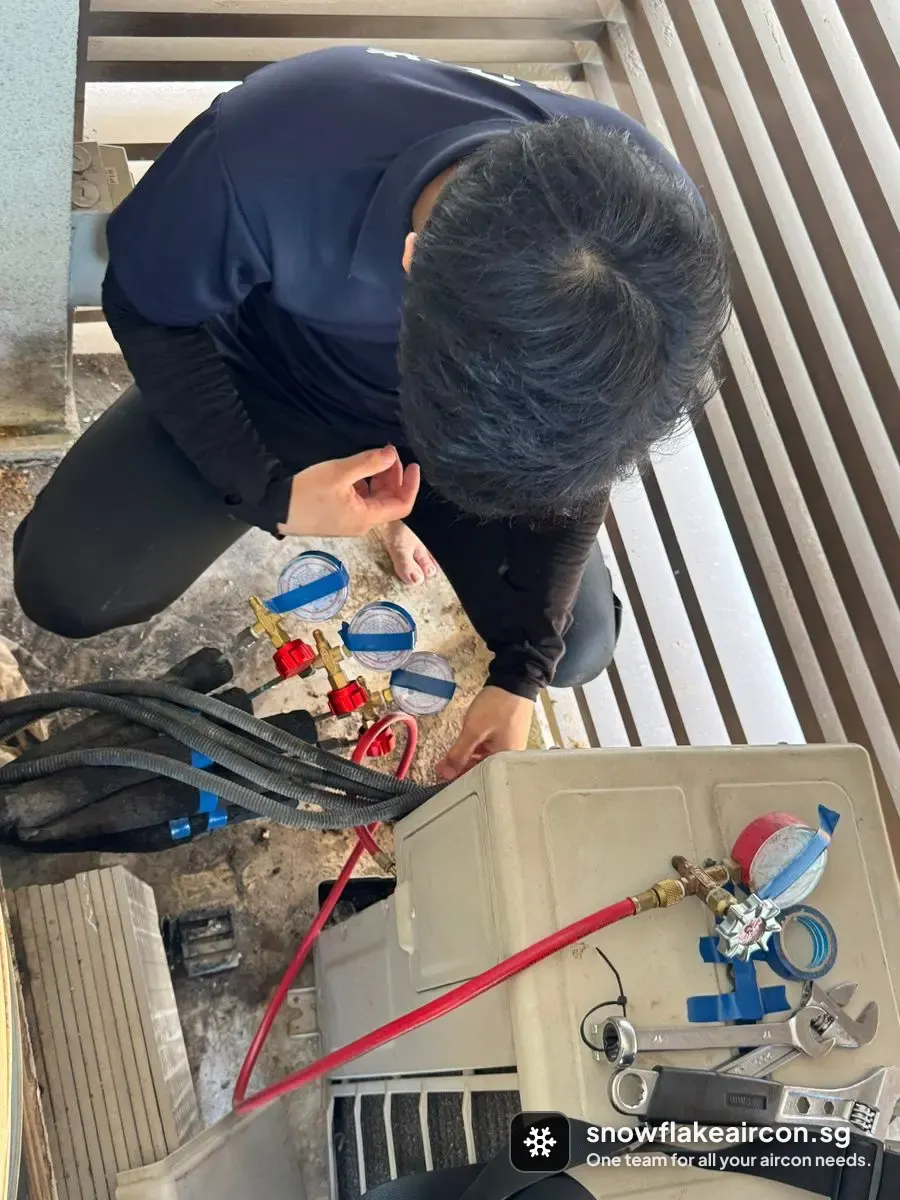
Mitsubishi Electric · Wall-mounted
Warm air with normal gas pressure: fouled coil, not low gas
Grease-choked indoor evaporator coil and dust-packed blower wheel causing poor temperature drop while refrigerant pressure stayed full
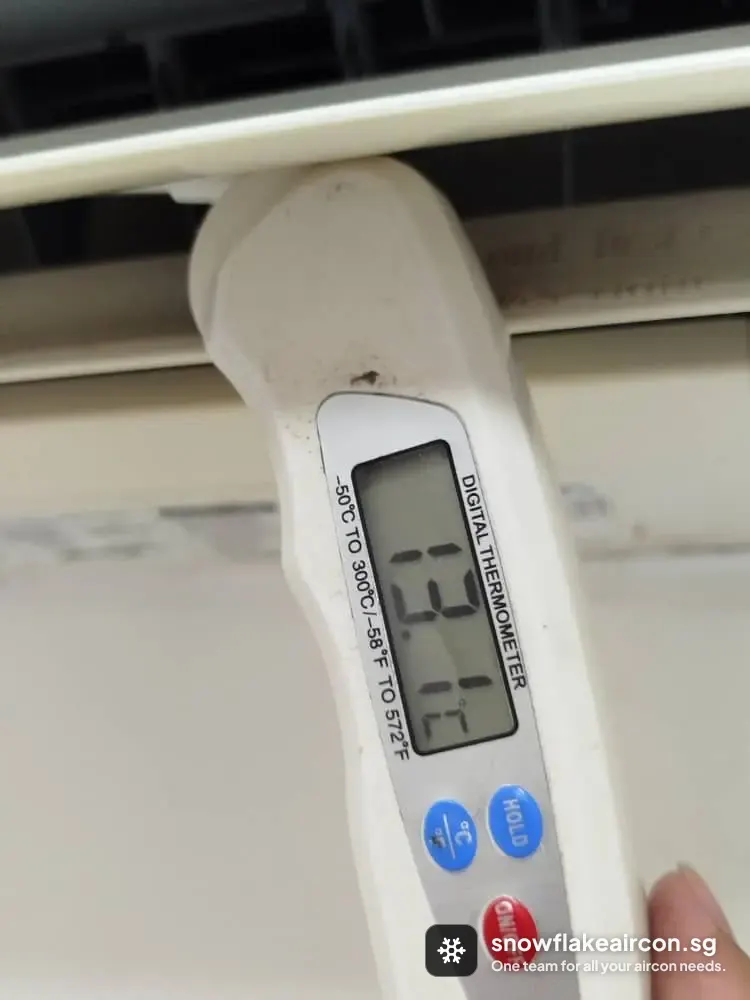
Midea · Multi-split
New BTO, one warm bedroom: wardrobe blocked return air
Fitted joinery leaving less than the required return-air clearance below the unit
Common Questions
Can a dual-key landlord shut off the studio aircon isolator when tenants fall behind?
Why does a dual-key studio wall unit stop blowing cold when the main suite runs?
How do Singapore dual-key landlords bill SP Group electricity fairly for studio aircons?
Is it cheaper to service the dual-key studio and main residence on the same day?
Sources
Sources checked 27 Nov 2026