On this page
Quick summary
Optical edging machines shed microscopic CR-39 resin, polycarbonate, and silica dust that coats retail split coils and chokes HEPA purifiers across Singapore workshops. Separating bench extraction from aircon returns, rinsing pre-filters fortnightly, and booking quarterly chemical washes prevent drain overflows and compressor strain.
Wall-mounted general servicing $25–$50/unit · chemical wash $60–$80/unit · View servicing rates
Understand How Lens-Edging Dust Fouls Optical Shop Aircons
Lens-edging lathes release fine CR-39 resin, polycarbonate shavings, and anti-reflective silica mist. Retail wall splits and ceiling cassettes pull that oily dust straight onto damp evaporator fins. Standard mall lint wipes away easily, whereas optical swarf bakes into stubborn crusts.
Humid mall air speeds up particle hardening inside aluminium cooling fins. Tinting steam and ultrasonic cleaners also raise moisture near dispensing sinks. Airflow drops rapidly, coils freeze mid-shift, and milky sludge chokes PVC drain pipes over frame cabinets.
Separate Edging Bay Returns from Fine-Dust Air Purifier Intakes
Position dedicated benchtop vacuum extractors and standalone HEPA air purifiers immediately beside lens-edging and tinting stations. Capturing plastic grindings at bench height keeps showroom returns cleaner. Never mount open aircon return grilles directly above wet edging bays.
Separate rear wet grinding benches from front fitting desks using solid doors or clear PVC strip curtains. Rinse washable mesh filters every two weeks after closing. Wipe purifier outer pre-screens weekly and watch for fan rumble before high pressure trips outdoor compressors.
Keep ceiling access hatches unobstructed above optometry rooms so wet vacuum hoses reach cassette pumps swiftly. Tracking unusual kWh jumps early also prevents noisy weekend breakdowns.
Match Optical Shop Zone Risks to Servicing Cadence
Align shop zone contamination levels with clear in-house cleaning and professional maintenance intervals:
Scroll to see more columns
| Shop zone | Primary airborne debris | In-house filter care | Snowflake servicing tier |
|---|---|---|---|
| Rear edging & glazing bay | Resin swarf, silica mist, wet slurry | Weekly mesh rinse + bench HEPA wipe | Chemical wash every 3–4 months (S$60–S$80/unit) |
| Front eyewear showroom | Mall foot-traffic dust + light resin drift | Fortnightly mesh wash; keep louver clear | General clean every quarter (S$25–S$50/unit) |
| Optometry exam room | Closed-room humidity + quiet condensate | Check airflow & drain scent weekly | Chemical overhaul if jelly forms (S$115–S$150) |
| Commercial VRV or splits | Continuous retail heat + fine coating residue | Track monthly SP kWh spikes vs baseline | S$30 split / S$80 VRV assessment (waived on work) |
Schedule After-Hours Workshop Servicing and Efficiency Checks
Keep showroom cooling steady during peak dispensing hours with scheduled after-hours workshop maintenance:
- Schedule a S$30 split assessment (or S$80 for commercial VRV networks) outside customer hours. Snowflake waives that fee whenever approved repairs or washes proceed, backed by a 30-day repair guarantee.
- Protect showroom splits every quarter with general washes. Three-plus units run S$25 per indoor coil, dual units run S$30 per coil, and single units run S$50 (14-day cover).
- Dissolve tacky resin crusts inside glazing-bay coils via chemical cleaning at S$60 per room across three-plus blowers, S$70 each for pairs, or S$80 single (60-day cover).
- Clear heavy silica paste from rear drain trays using dismantled overhauls (S$115, S$125, or S$150 per unit, 90-day cover). Check GoBusiness Energy Efficiency Grant rules when upgrading ageing SME retail hardware.
Diagnostic Cases for This Fault
Singapore jobs showing what we checked on-site before quoting parts or gas.
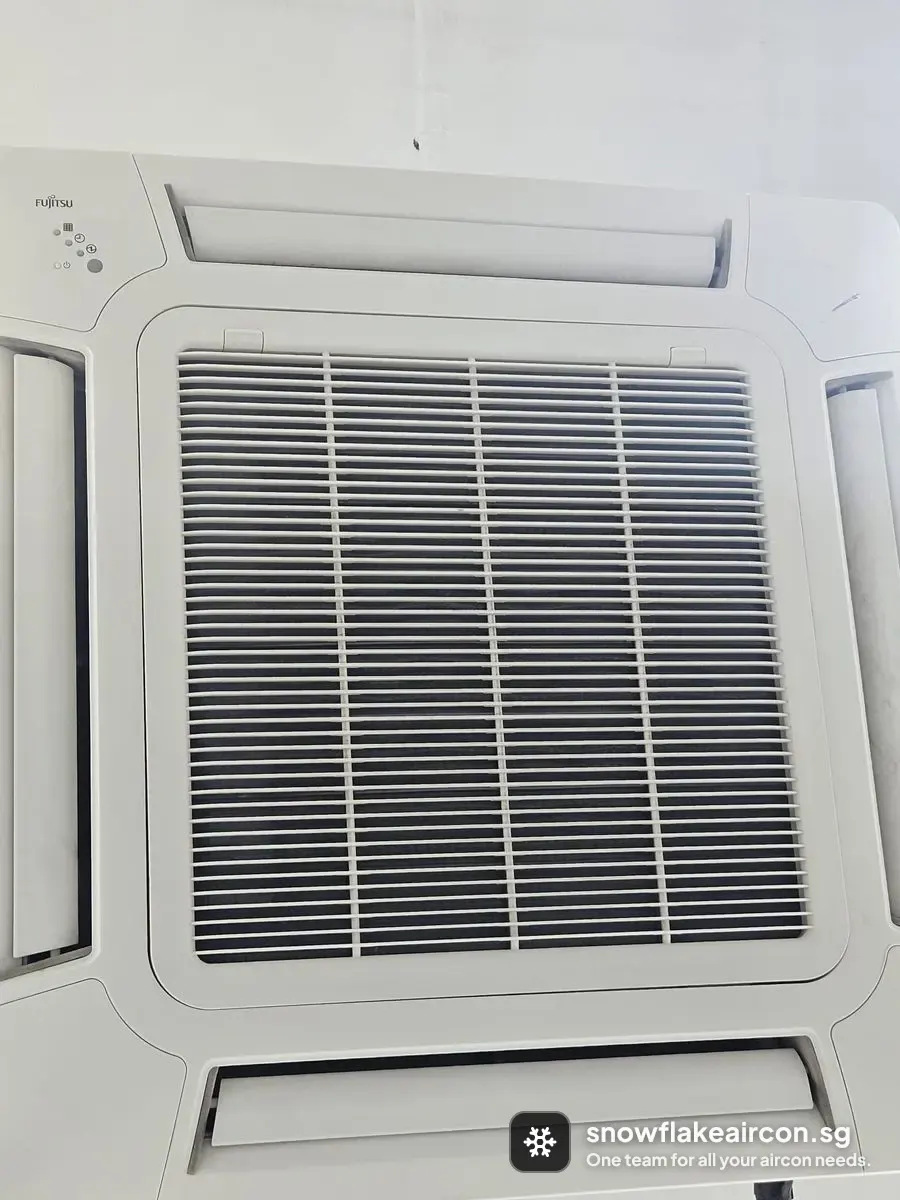
Fujitsu · Cassette
Office cassette dripping at louver: sweating from fouled coil
Surface condensation on the supply louver driven by restricted airflow across one fouled coil face
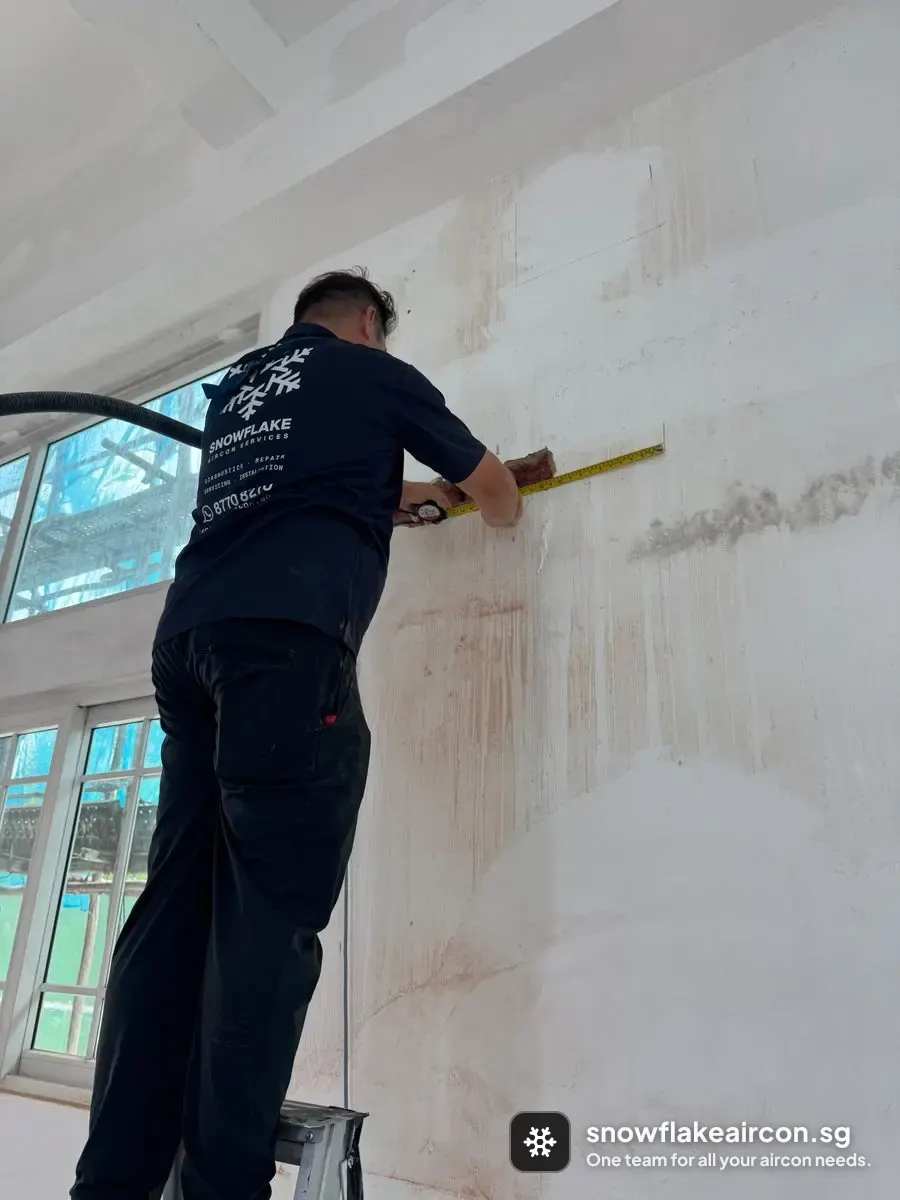
Daikin · Wall-mounted
Water stain down the wall: blocked rear drain trough
Biofilm jelly choking the hidden rear auxiliary drain trough behind the evaporator coil, spilling condensate down the plastered wall while the main trunking pipe stayed intact
Common Questions
Why do optical lab aircon drain pipes block faster than ordinary retail shops?
Can a room HEPA purifier replace regular servicing on eyewear workshop splits?
What happens when resin dust cakes onto optical shop cooling coils?
What does an on-site aircon diagnostic check cost for an eyewear shop?
Sources
Sources checked 27 Nov 2026