On this page
Quick summary
Bedroom inverter aircons pull fixed evaporator coil temperatures around 5 to 10 degrees whether remotes read 18 or 25 degrees. Dialing 18 degrees in powerful mode extends peak compressor amps and raises SP Group electricity bills without speeding initial cool-down.
Wall-mounted general servicing $25–$50/unit · chemical wash $60–$80/unit · View servicing rates
How Inverter Cooling Targets Work at 18 Degrees Versus 25 Degrees
Hot HDB bedrooms often measure 31 degrees after sunset, so both 18-degree and 25-degree commands push an inverter compressor straight to full startup speed. Indoor evaporator fins still settle into the same 5-to-10-degree cold band.
Lowering the remote number changes when the outdoor unit slows down rather than startup coil coldness. Keeping remotes at 18 degrees extends peak compressor amps under late-2026 SP Group billing at 31.16 cents per kWh (GST included).
Continuous full-load running over-dries bedroom air and wastes electricity overnight. Selecting 25 degrees allows smooth part-load modulation once indoor heat drops.
Compare 18-Degree Turbo and 25-Degree High Fan Performance
Airflow velocity across clean fins dictates how quickly bedroom heat clears. Lower thermostat numbers barely change initial vent air temperature:
Scroll to see more columns
| Cooling test mode | Discharge fin behaviour | Compressor amp pattern | Electricity bill effect |
|---|---|---|---|
| 18 degrees + powerful mode | Same cold coil temp at startup | Sustained peak amp draw longer | Highest nightly SP Group spend |
| 25 degrees + high fan (15 min) | Fast room mixing across vents | Modulates down once cooled | Balanced 31.16 cents/kWh use |
| 25 degrees + dusty mesh screen | Choked airflow, frost risk | Repeated compressor strain | Sluggish cooling, wasted kWh |
| 25 degrees + standing fan | Breaks ceiling warm-air pocket | Shortest high-amp burst | Lowest bedroom power draw |
Cool Hot HDB Bedrooms Faster Without Peak Amp Penalties
Close blackout curtains against late-afternoon sun before starting your wall split. Select 25 degrees alongside high fan speed for fifteen minutes first. Strong blower airflow sweeps room heat quickly across chilled aluminium fins.
Aim a standing fan across the bed to mix stagnant ceiling heat pockets. Drop indoor fan speed afterward so the compressor coasts gently overnight. Bedrooms reach steady sleep comfort without heavy electricity waste.
Check Slow Cool-Down Causes and Schedule Timely Servicing
Wall splits that blow lukewarm air on high fan need mechanical care rather than lower numbers. Review these clear servicing steps:
- Rinse removable indoor mesh screens from floor level every two weeks. Unblocked airflow keeps evaporator coils working at peak efficiency.
- Single-blower basic washes cost S$50. Two units run S$30 each, while three or more settle at S$25 per FCU with a 14-day warranty.
- Algae film needs chemical washing for S$80 on a lone unit, S$70 apiece in pairs, or S$60 per FCU when treating three or more coils (60-day warranty).
- Heavy sludge on drum blades requires dismantled overhauls. Pay S$150 for one unit, S$125 per coil in pairs, and S$115 each across multi-room sets of three or more (90-day warranty).
- Book a S$30 fault inspection whenever clean coils still feel warm. Completed repairs waive that diagnostic charge alongside a 30-day warranty.
Diagnostic Cases for This Fault
Singapore jobs showing what we checked on-site before quoting parts or gas.
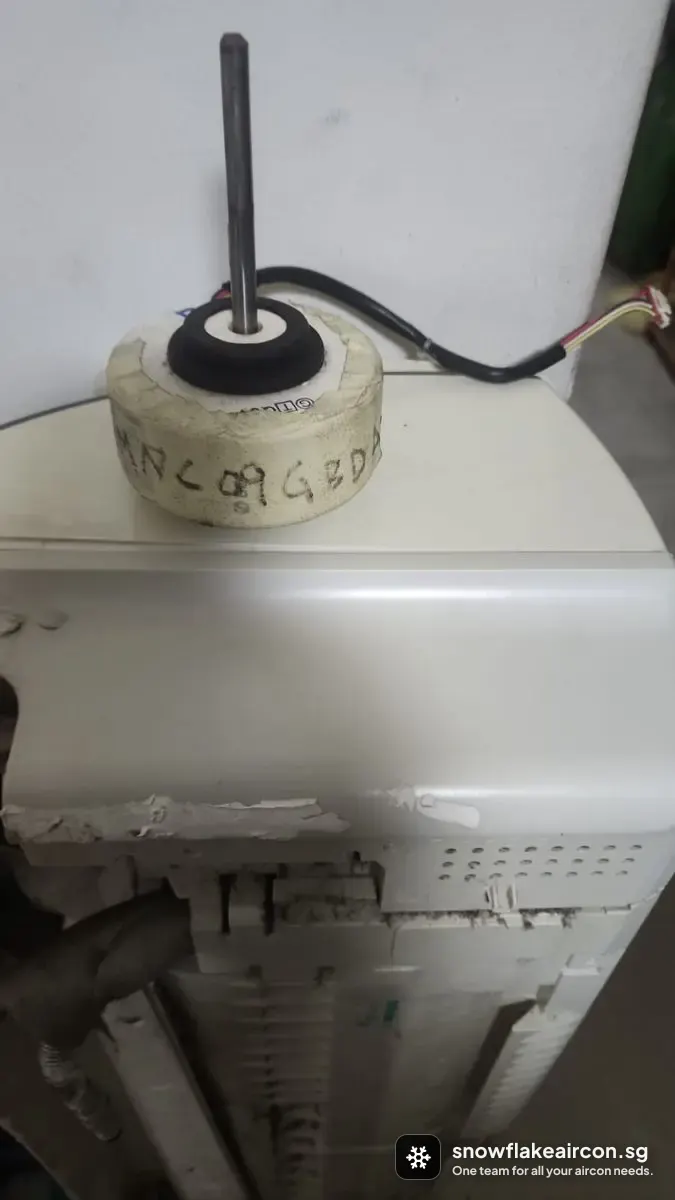
Sharp · Wall-mounted
Sharp 6-0 grinding then shutdown: worn fan motor bearings
Worn indoor fan motor bearings on a unit past its usual service life
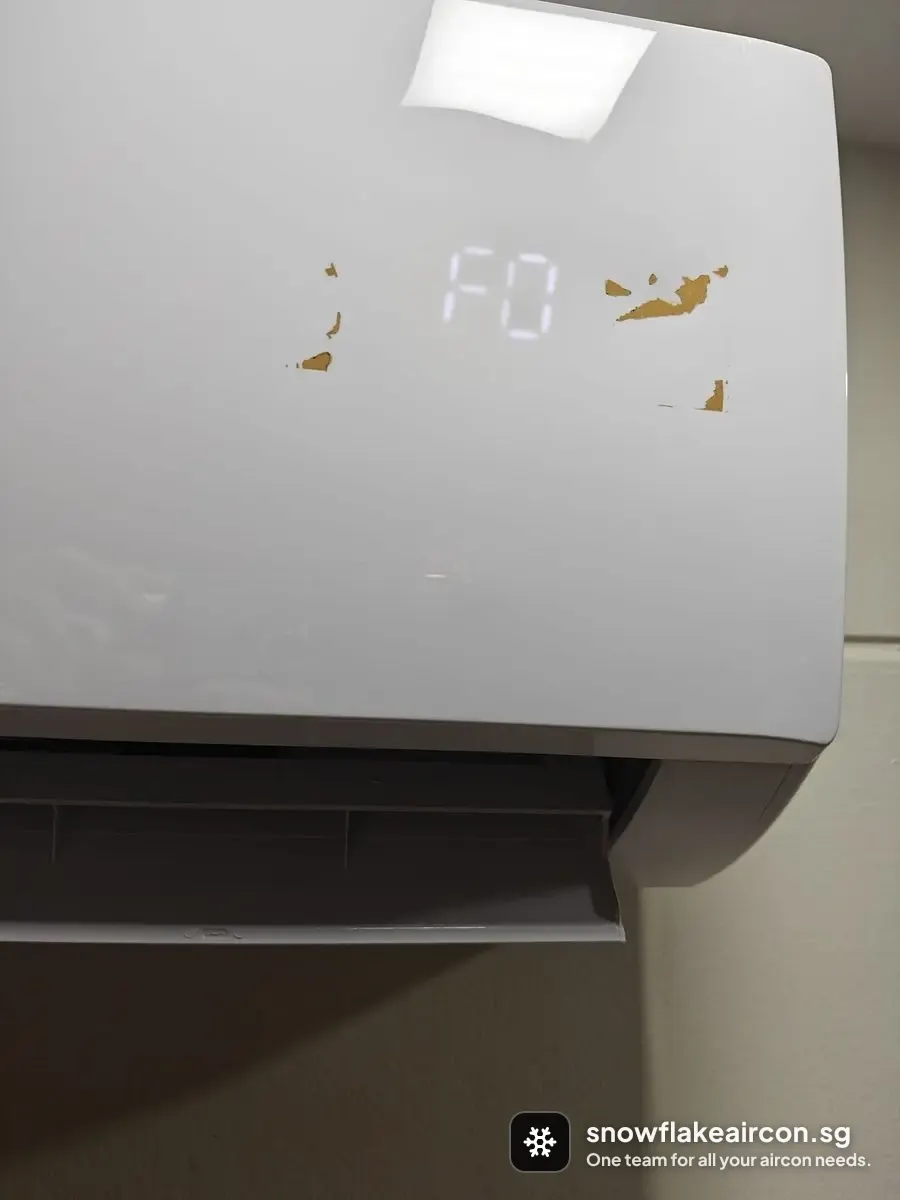
Gree · Wall-mounted
Gree F0 on a rusted condenser: refrigerant shortage
R32 refrigerant shortage triggering Gree F0 protection from corroded evaporator return bends
Common Questions
Does powerful mode actually make indoor vent air colder than normal cooling?
Why does my electric meter jump when bedrooms stay on 18 degrees overnight?
What fan speed and temperature combo cools a stuffy HDB room fastest?
Could slow cool-down at 25 degrees point to a dirty coil or refrigerant leak?
Sources
Sources checked 27 Nov 2026