On this page
Quick summary
Shared student hostels and condo flats hold power bills steady with ten-hour remote off-timers instead of physical lockboxes. Pairing clean shutoff gaps with routine multi-room servicing stops mould, pipe leaks, and tampering fights.
Wall-mounted general servicing $25–$50/unit · chemical wash $60–$80/unit · View servicing rates
Why Soft Timer Rules Beat Physical Thermostat Lockouts
Plastic remote cages often push flatmates to pry covers or flip wall spurs mid-run. Those shortcuts crack indoor casings and breach EMA electrical safety rules. Smart schedules keep rules clear and fair across busy student rooms.
Ten-hour night timers at 25 degrees keep rooms cool while resting outdoor compressors. Electricity runs at 31.16 cents per kWh with GST under SP Group rates, so ten nightly hours draw near 3.2 to 3.6 kWh per room.
Compare Timer Controls for Student Flats and Shared Condos
Match room automation to flat occupancy and tenancy lease wording before handing over keys:
Scroll to see more columns
| Control option | Daily runtime cap | Tamper resistance | Best shared flat fit |
|---|---|---|---|
| Factory remote off-timer | Set 8 to 10 hours nightly | Low if changed on handset | Small 2 to 3 person condo shares |
| Cloud WiFi smart remote | Auto-off schedule plus logs | High via owner app schedule | Multi-room student hostels |
| Wall panel passcode lock | Blocks sub-23 degree drops | High on wired hotel panels | Master-leased co-living suites |
| Physical plastic lockbox | Blocks handset button access | Causes forced casing damage | Avoid under rental guidelines |
Keep Floor-Level Hygiene Steady and Protect Safety Boundaries
Nightly shutoff gaps let wet cooling fins dry out between sleep shifts. Ask tenants to brush or rinse intake screens fortnightly while standing indoors so dust never clogs airflow.
Add timer caps, bill split terms, and upkeep duties to CEA tenancy records before move-in. Residents must stay off outer condo ledges and leave 20A spur boxes closed.
Schedule Shared Flat Servicing and Verify Unit Health
Grouping shared rooms on one visit prevents leaking bedrooms and keeps utility spend predictable:
- Book routine washes every three months to clear drain jelly before leaks start. Single rooms cost S$50, twin rooms cost S$30 each, and three or more drop to S$25 per room with 14-day cover.
- Use chemical washes when stale scents persist past filter care. One room bills S$80, two rooms bill S$70 apiece, and larger sets cost S$60 per coil under 60-day terms.
- Schedule dismantled overhauls during yearly student intake turnovers. Single-unit overhauls run S$150, dual-unit sets run S$125 per unit, and three-plus suites drop to S$115 per unit under 90-day cover.
- Check weak cooling or ceiling drips promptly via a S$30 site visit. Approved repairs waive that visit charge and carry 30-day work cover.
- Share simple remote guide cards inside bedrooms so new housemates reset sleep timers cleanly without calling emergency crews.
Diagnostic Cases for This Fault
Singapore jobs showing what we checked on-site before quoting parts or gas.
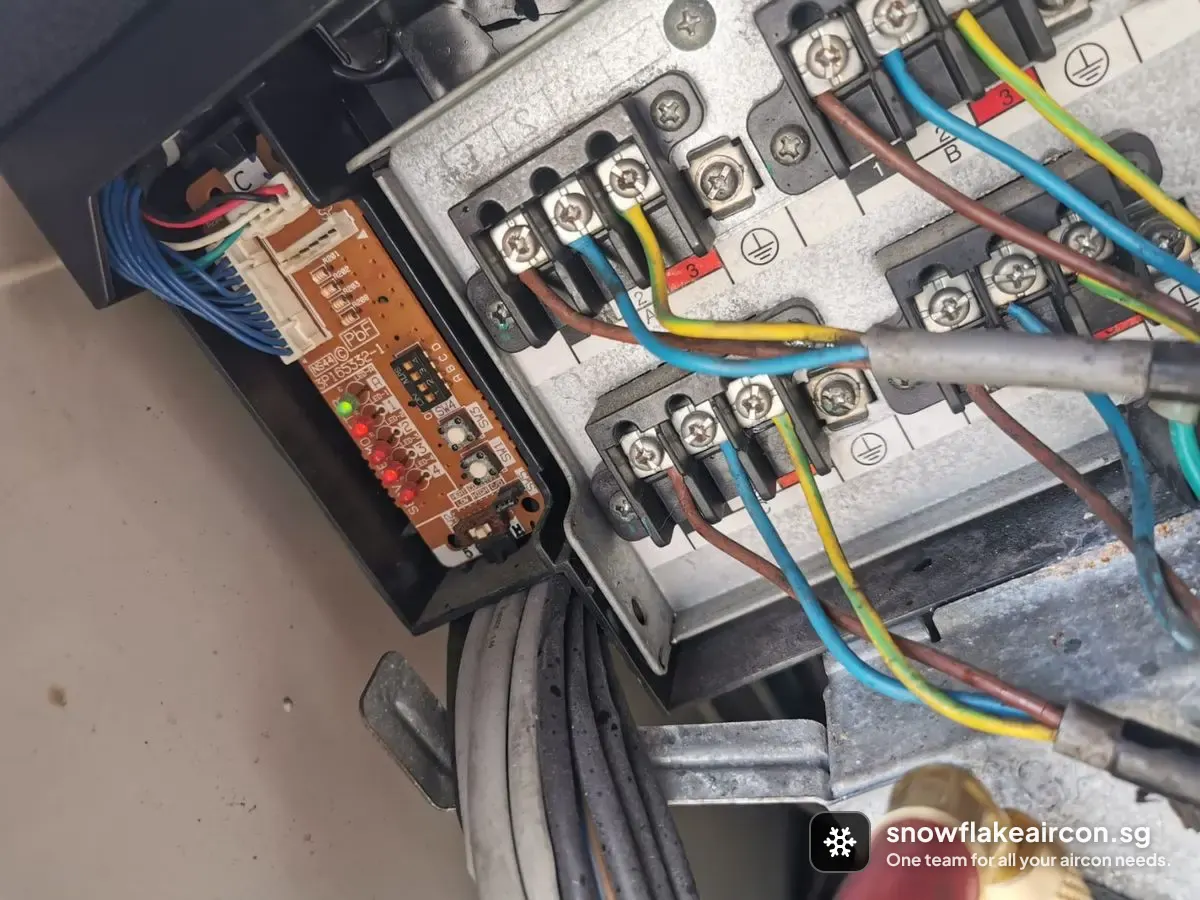
Panasonic · Multi-split
New multi-split acting strangely: swapped signal wires
Two indoor-to-outdoor signal pairs connected to each other's terminals at the outdoor unit
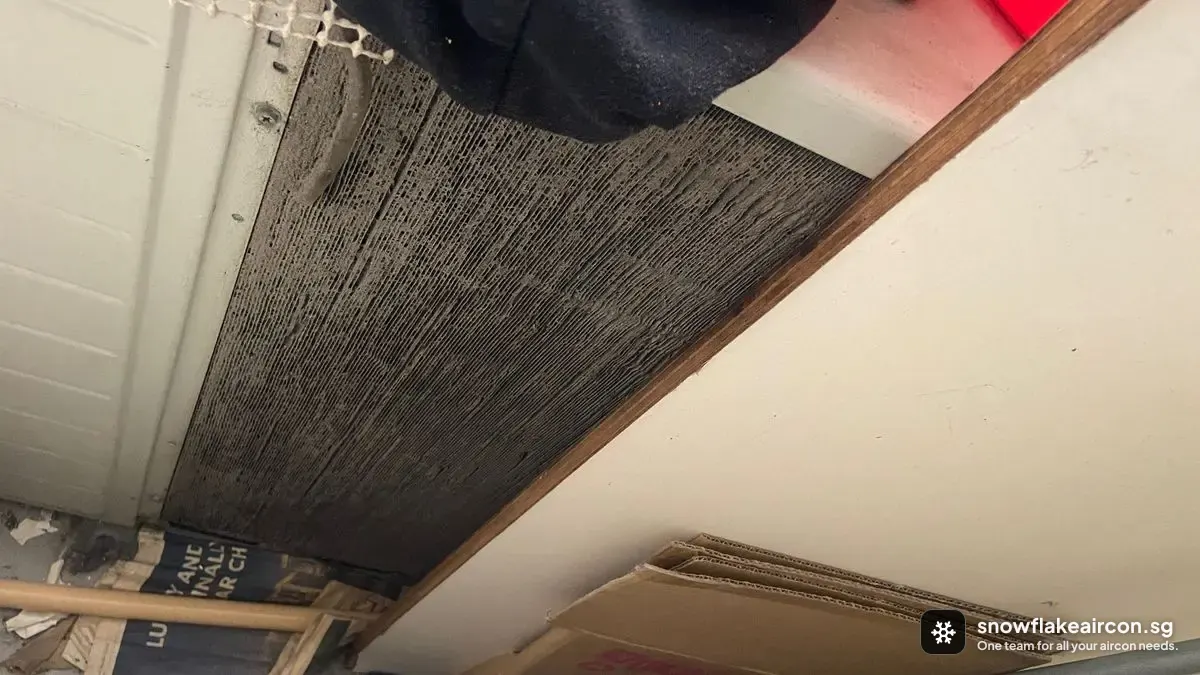
Midea · Cassette
Weak airflow over a kitchen line: grease-bound coil needs overhaul
Hardened cooking grease bound through the full fin depth and packed across the blower
Common Questions
How long should a daily student hostel aircon timer run in Singapore?
Why do physical plastic thermostat lockboxes fail in shared Singapore rentals?
Can landlords charge shared condo tenants extra electricity above a cap?
What servicing frequency prevents water leaks in 10-hour student bedrooms?
Sources
Sources checked 27 Nov 2026