On this page
Quick summary
Glass-partitioned study pods carved from HDB bedrooms or living halls trap computer heat and transmit solar load through clear panes. Choosing between 9,000 and 12,000 BTU indoor blowers, adding reflective blinds, and preserving return-air clearance prevents muggy desks and compressor short-cycling.
System 2 installed from $2,600 (22 SWG copper) · $30 site survey waived on install · View packages
Why Glass Partitions Alter Bedroom and Hall BTU Load
Tempered glass dividers hold far less insulation than brick or dry-wall panels. Afternoon sun through hall windows radiates warmth straight inside, while desktop monitors emit constant heat.
Acoustic sliding frames also block cross-breezes inside compact 7 to 10 sqm pods. Sizing a sunlit glass study like an inner storeroom leaves desks sticky by mid-afternoon.
Compare Glass Study BTU Sizing Across HDB and Condo Setups
Size indoor fan coils using floor area, solar exposure, and ceiling gap tightness rather than square footage alone:
Scroll to see more columns
| Study pod layout | Typical floor area | Primary heat driver | Recommended indoor capacity |
|---|---|---|---|
| Shaded bedroom corner pod | 6 to 8 sqm | Single laptop and soft glare | 9,000 BTU wall coil |
| West-facing glass hall pod | 8 to 11 sqm | Afternoon sun across glazing | 12,000 BTU wall coil |
| Dual-screen work-from-home pod | 9 to 12 sqm | Desktops plus warm lighting | 12,000 BTU plus solar blinds |
| Partial glass with open top gap | 10 to 14 sqm | Cold air leaks into main hall | Seal ceiling gap or step to 18k |
Prevent Glass Fogging and Inverter Short-Cycling
Aiming a 12,000 BTU blast straight onto warm exterior windows chills glass below dew point. Moisture droplets soon form along aluminium tracks. Mount indoor units blowing across desks with 15 cm ceiling intake clearance.
Sealing frames to the slab stops cool air spilling into uncooled halls. Follow HDB rules on indoor brackets, drain gradients, and running electrical capacity.
Verify Study Pod Piping and Schedule Routine Care
Confirm compressor headroom and trunking routes before ordering extra indoor blowers:
- Book Snowflake's S$30 layout visit (S$80 VRV) before renovation framing begins. Installation or repair credits back that survey.
- Verify NEA Registered Goods multi-split ratings so added blowers fit condenser kW limits safely.
- Preventive desk-room washes stay low: S$50 single FCU, S$30 per FCU for two, or S$25 each for larger multi-splits (14-day workmanship cover).
- Chemical coil cleaning runs S$80 solo, S$140 combined for twins (S$70 each), or S$60 per FCU on bigger jobs (60-day cover). Dismantled overhauls run S$150, S$125, or S$115 per FCU (90-day cover).
Diagnostic Cases for This Fault
Singapore jobs showing what we checked on-site before quoting parts or gas.
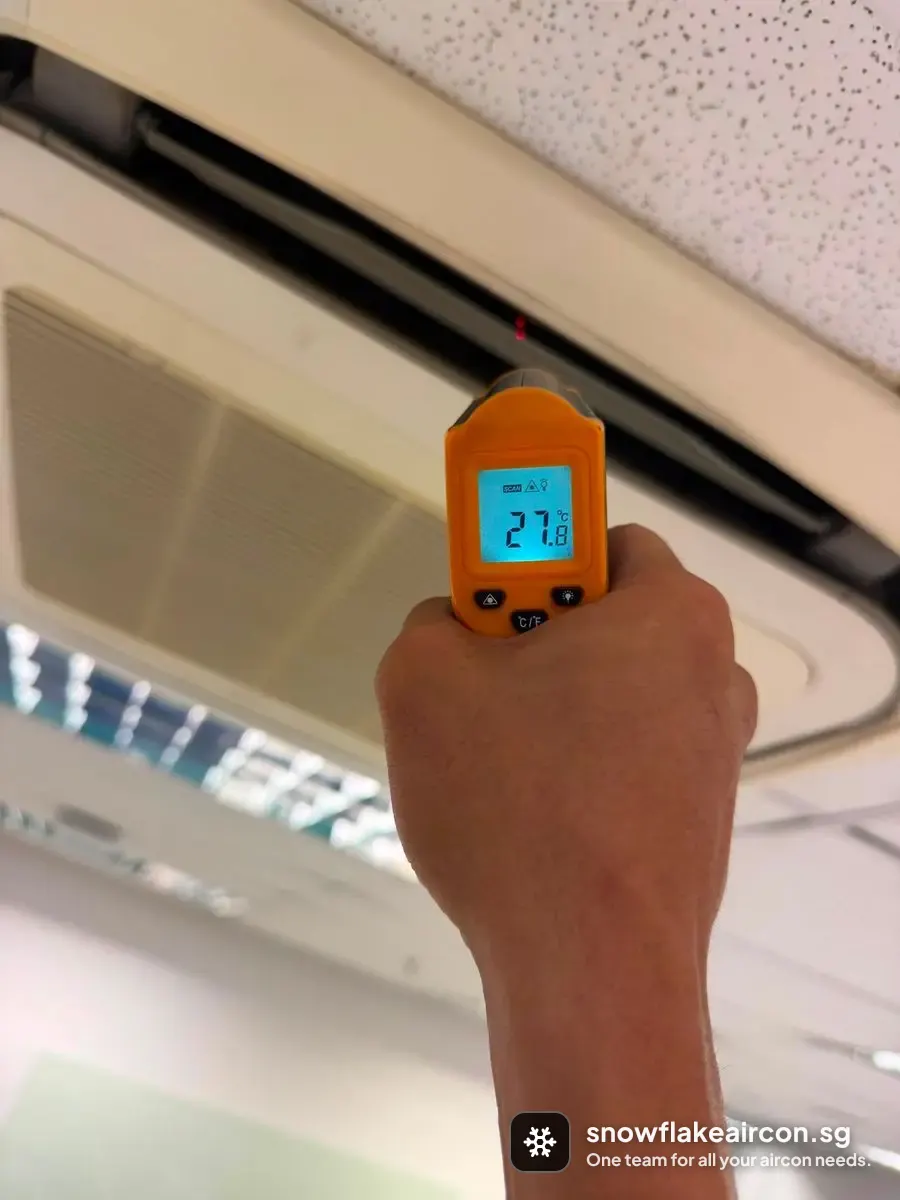
Daikin · Cassette
Cassette not cooling: stuck gas-flow valve, not compressor
A flow-control valve stuck part-closed, restricting refrigerant to the indoor coil
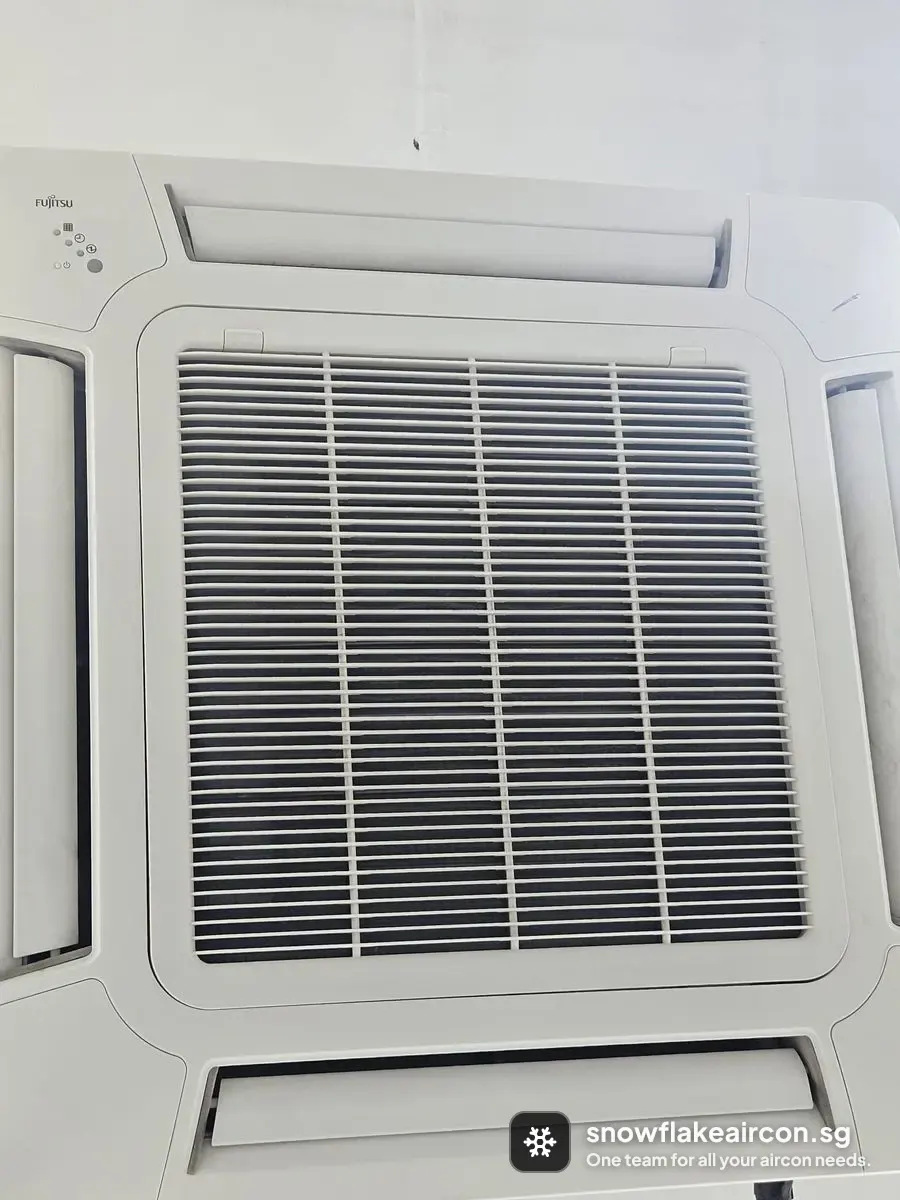
Fujitsu · Cassette
Office cassette dripping at louver: sweating from fouled coil
Surface condensation on the supply louver driven by restricted airflow across one fouled coil face
Common Questions
Is a 9,000 BTU aircon enough for an 8 sqm glass-partitioned study in Singapore?
Why does water condensation form along glass study partition tracks?
Can I add a fourth wall unit for my glass study onto an existing HDB System 3 outdoor unit?
How much electricity does cooling a 9,000 BTU study pod eight hours daily cost on SP Group?
Sources
Sources checked 27 Nov 2026