On this page
Quick summary
At SP Group's 31.16 cents/kWh rate, cooling one 9,000 BTU bedroom for 8 hours nightly costs roughly S$26 to S$30 monthly on a tuned System 3 versus S$36 to S$43 on an oversized System 4. Larger condensers hit minimum turn-down floors early and cycle often.
System 2 installed from $2,600 (22 SWG copper) · $30 site survey waived on install · View packages
Why Condenser Turn-Down Changes Overnight SP Group Bills
Inverter aircons save electricity when compressor motors cruise continuously at gentle part-load speeds. Once a 9,000 BTU bedroom reaches 25 degrees, holding steady sleep chill needs very little capacity.
Oversized System 4 condensers carry higher minimum modulation floors than matched System 3 models. Cooling one room forces big outdoor compressors to start and stop repeatedly, pushing up monthly SP Group bills.
Compare Monthly Sleep Costs for 1, 2, and 3 Active Heads
These figures model 8 hours nightly (240 monthly hours) at 25 degrees under SP Group's Q4 2026 GST-inclusive 31.16 cents/kWh tariff:
Scroll to see more columns
| Active sleep rooms (8h/night) | Tuned 5-tick System 3 | Oversized System 4 | Monthly SP Group delta |
|---|---|---|---|
| 1 bedroom (9,000 BTU) | 84 to 96 kWh | S$26 to S$30 | 115 to 139 kWh | S$36 to S$43 | System 3 saves ~S$10 to S$13 |
| 2 bedrooms (2 x 9,000 BTU) | 161 to 187 kWh | S$50 to S$58 | 187 to 221 kWh | S$58 to S$69 | System 3 saves ~S$8 to S$11 |
| 3 bedrooms (3 x 9,000 BTU) | 252 to 300 kWh | S$79 to S$93 | 235 to 283 kWh | S$73 to S$88 | System 4 saves ~S$5 at peak |
| Annualised 1-room sleep cost | ~S$312 to S$360 per year | ~S$432 to S$516 per year | ~S$120 to S$156 yearly savings |
Keep Part-Load Efficiency High and Claim HDB 5-Tick Vouchers
Checking NEA MELS part-load COP scores prevents households from oversizing outdoor units needlessly. Eligible HDB homes also claim S$400 NEA Climate Vouchers through December 2027 on verified 5-tick systems.
Dust-clogged blowers push even efficient inverters back toward full-load wattage. Clean filters and timely washes preserve smooth overnight speed modulation across humid months.
Choose Between System 3 and System 4 Before Your Site Survey
Align condenser sizing with real bedtime room habits and upkeep schedules before buying:
- Select a tuned 5-tick System 3 whenever one or two bedrooms run together overnight. Pair a small System 1 if an office cools solo.
- Pick a high-COP System 4 only when three or four zones routinely chill at once during hot nights or daytime study hours.
- Verify pipe runs and electrical amp headroom through a S$30 Snowflake survey, completely waived once installation goes ahead.
- Protect low sleep kWh draw via routine servicing (S$25/unit for 3+, S$30/unit for 2, S$50 for 1) or chemical washes (S$60/unit for 3+, S$70 for 2, S$80 for 1).
Diagnostic Cases for This Fault
Singapore jobs showing what we checked on-site before quoting parts or gas.
Toshiba · Multi-split
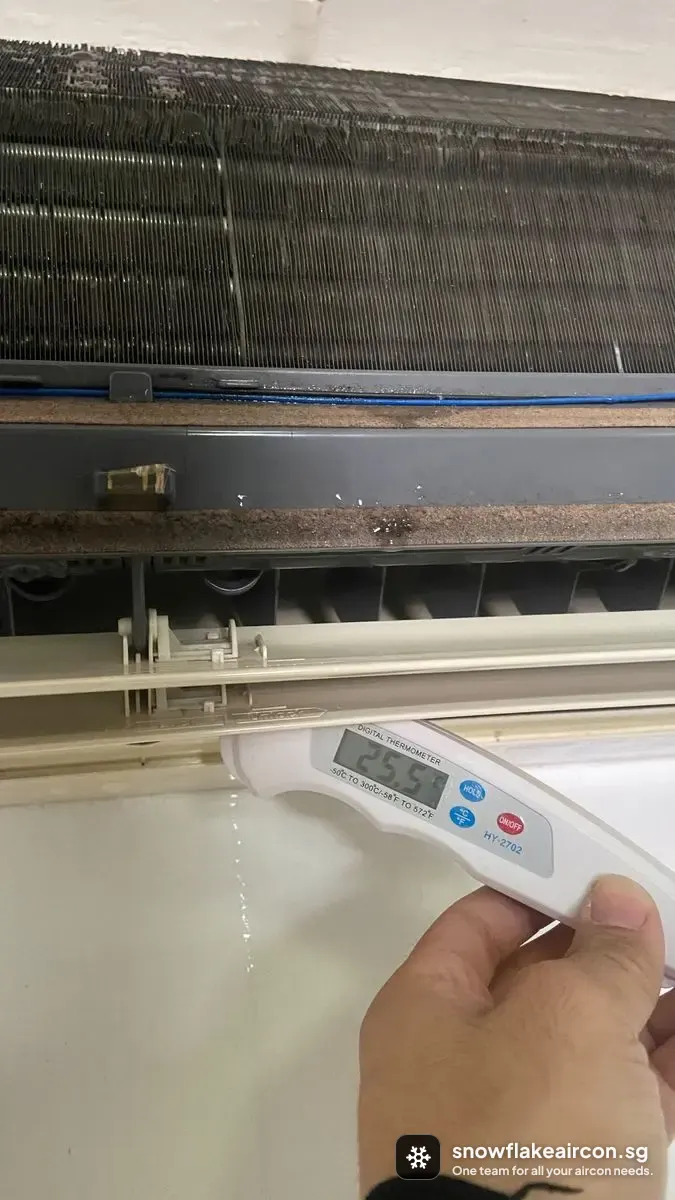
Multi-split, one bedroom warm: seized expansion valve
The affected room's own metering valve stuck part-closed, starving its coil
Panasonic · Wall-mounted
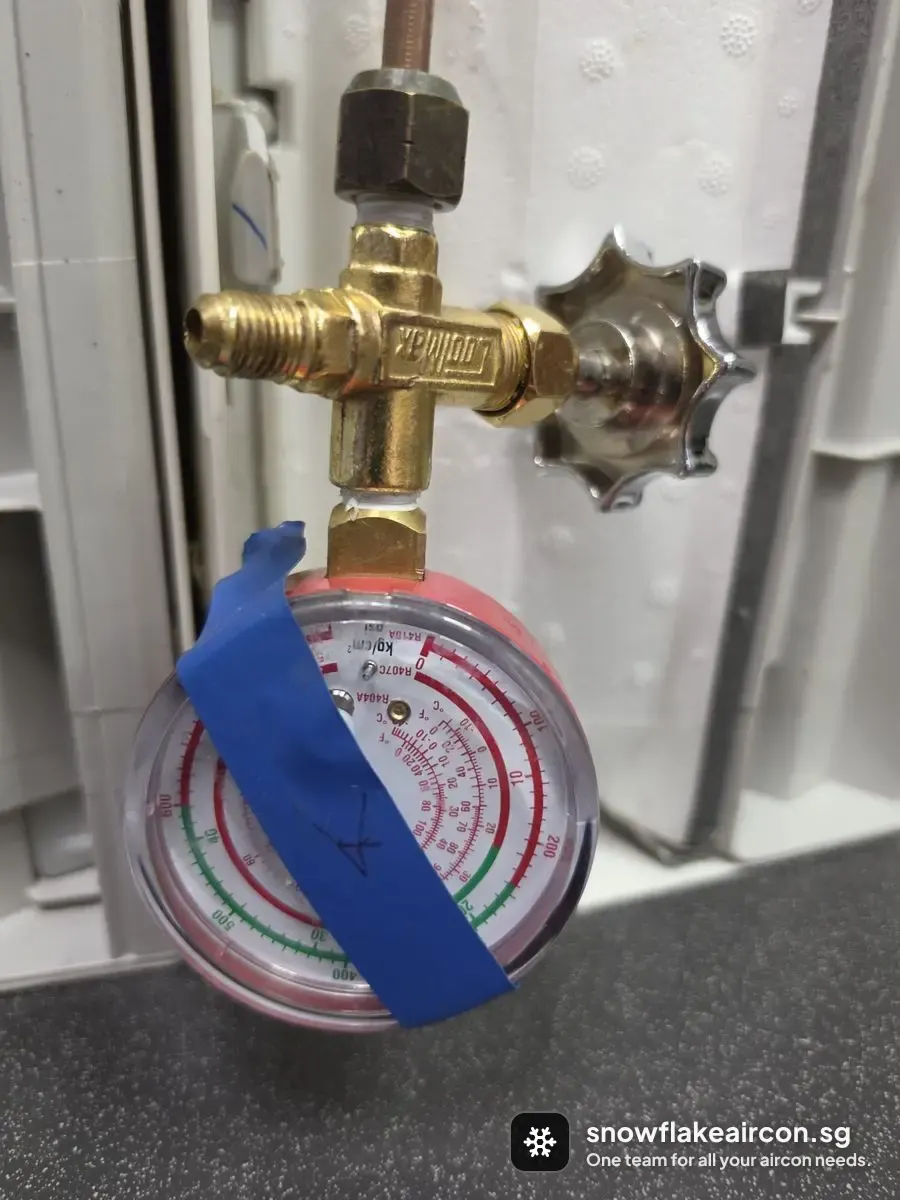
Warm air after gas top-up: leaking Schrader valve core
Weeping Schrader valve core behind a finger-loose outdoor brass flare cap slowly venting R32 charge over six months while the concealed copper pipe run stays intact
Common Questions
Why does a System 4 use more electricity than a System 3 for one sleeping room?
When does a System 4 become cheaper overnight than running a System 3?
How much can eligible HDB households claim toward a 5-tick System 3 upgrade?
How do dirty indoor coils affect overnight SP Group aircon bills?
Sources
Sources checked 27 Nov 2026