On this page
Quick summary
Weight-rated spring mounts stop landed terrace roof units sending deep hum down concrete slabs into bedrooms. Matching spring load to unit corners keeps bass quiet. Flexible pipe loops and sealed anchors also keep roof seals dry.
System 2 installed from $2,600 (22 SWG copper) · $30 site survey waived on install · View packages
Why Rubber Pads Fail on Concrete Roof Slabs
Outdoor compressors on Singapore terrace roofs produce pulses between 30 and 100 Hz during evening inverter ramp-up. Concrete slabs conduct those bass waves straight down columns into upper master bedrooms.
Basic rubber waffle pads stiffen fast under tropical afternoon sun beside rooftop condensers. Once flattened by heavy multi-split frames, aged rubber bridges steel feet straight onto the roof slab.
Uneven compressor corner weights compress one mounting foot harder than others. Sizing steel springs per corner keeps the chassis level and isolates low bass tones.
Compare Isolator Hardware for Landed Rooftops
Selecting proper rooftop vibration hardware stops coil springs from bottoming out under multi-split or VRF frames:
Scroll to see more columns
| Mounting hardware | Roof load suitability | Bass hum isolation | Waterproofing care |
|---|---|---|---|
| Rubber waffle pads | Light single splits only | Weak below 50 Hz once aged | Rests flat without drilling |
| Open coil springs | Multi-split and VRF units | Deep travel cuts structural drone | Needs raised plinth or sealed bolts |
| Housed spring mounts | Windy unshielded roof slabs | Controls side sway cleanly | Use stainless steel anchors |
| Flexible pipe loops | All spring-isolated units | Stops copper bypassing springs | Support clear of ponded water |
Keep Piping Flexible and Protect Roof Waterproofing
Spring mounts lose isolation whenever rigid copper lines or conduits clamp tightly onto parapet walls. Installers shape sweeping pipe loops so outdoor units float freely without straining flare nuts.
Drilling blindly into roof screeds lets rain leak beneath damp seals into bedroom ceilings. Mount units on raised plinths or sealed stainless studs, and leave 230V wiring strictly for an EMA-licensed electrician.
Verify Condenser Weight and Book a Safe Rooftop Check
Homeowners must stay off roof edges and never touch live switches. Trained crews check spring load and fan health safely:
- Inspect roof spring loads via a S$30 site survey (VRV setups cost S$80). Repair or hardware changes cancel that assessment charge with 30-day warranty backing.
- Routine general care stops noisy bedrooms below under 14-day warranty terms. Homes running three or more blowers pay S$25 per FCU, twin setups pay S$30 apiece, and a single unit costs S$50.
- Grease film making rooftop units drone clears via chemical cleaning backed for 60 days. Multi-unit homes of three-plus coils bill S$60 per coil, pairs bill S$70 apiece, and one coil bills S$80.
- Heavy drain sludge in upper risers needs stripped overhauls backed for 90 days. Three-plus setups settle at S$115 per coil, pairs settle at S$125 each, and solo coils cost S$150.
Diagnostic Cases for This Fault
Singapore jobs showing what we checked on-site before quoting parts or gas.
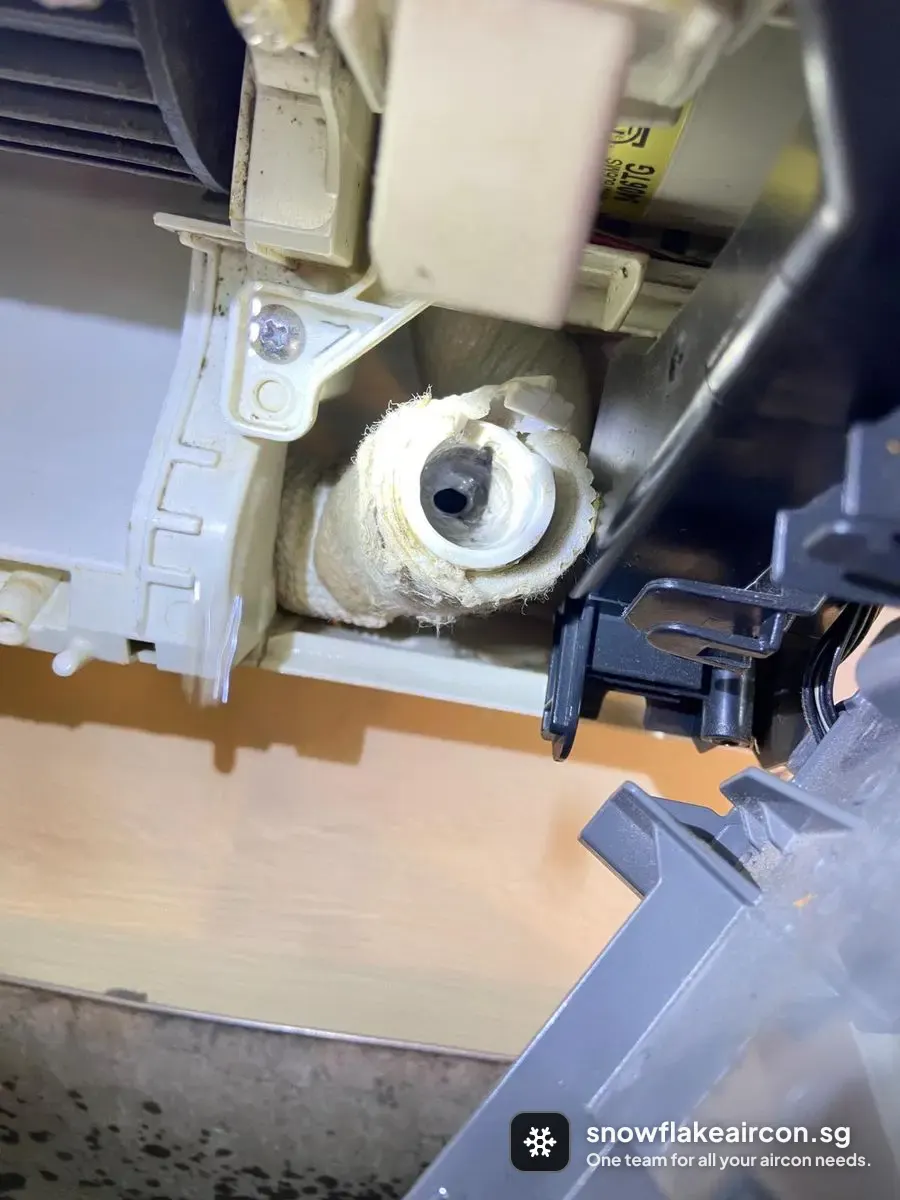
Mitsubishi Electric · Wall-mounted
Trunking water drip: cracked drain elbow behind casing
A cracked drain elbow at a bend, losing water into the trunking below the tray
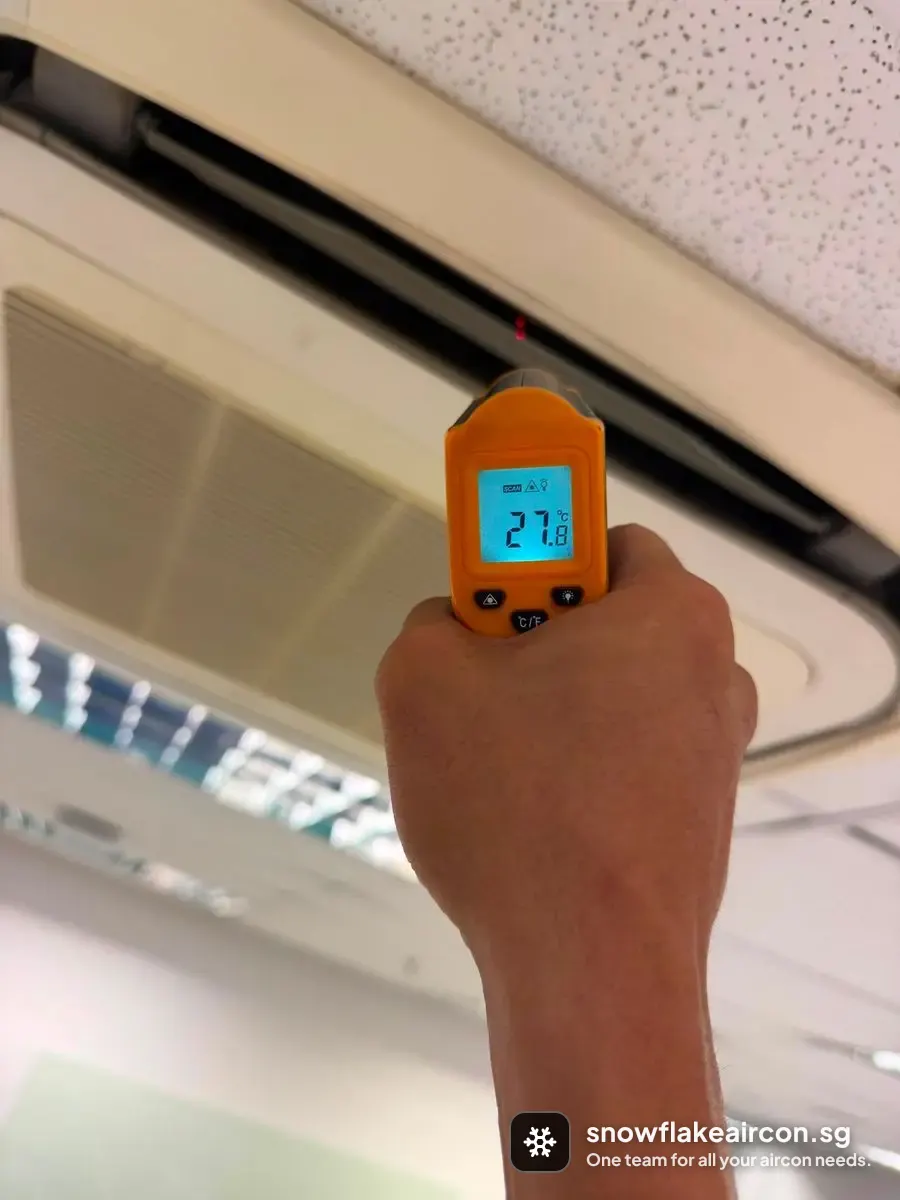
Daikin · Cassette
Cassette not cooling: stuck gas-flow valve, not compressor
A flow-control valve stuck part-closed, restricting refrigerant to the indoor coil
Common Questions
Why do rooftop aircon condensers hum louder inside bedrooms below than outdoors?
Do rubber anti-vibration pads stop hum from heavy multi-split rooftop units?
Can rigid copper refrigerant pipes cancel out new spring vibration isolators?
Is it safe for terrace homeowners to adjust rooftop spring mounts themselves?
Sources
Sources checked 27 Nov 2026