On this page
Quick summary
Wall aircons that chill fast at 18 degrees yet blow warm at 25 degrees usually suffer a drifted intake room thermistor or trapped cool air bouncing off curtain pelmets. Testing fixed medium fan speed and checking thermistor ohm resistance solve false cut-offs without unnecessary gas refills.
On-site fault check: $30 ($80 VRV), waived if you proceed with repair · See diagnosis & repair
Why 18 Degrees Masks Drifted Intake Sensors and Pelmet Traps
Wall splits measure room temperature using a small intake thermistor clipped near the top return grille. Over years of humid use, that bead sensor can drift 3 or 4 degrees low.
When the board reads 21 degrees while bed air sits at 26 degrees, setting 25 degrees halts cooling immediately. The compressor shuts off outside while the indoor fan blows warm humid room air.
Dropping the remote down to 18 degrees stays well below the skewed sensor reading. That extreme setting forces continuous cold airflow and proves the gas circuit still cools strongly.
Tight curtain pelmets create a similar trap even on newer units. Chilled supply air bounces straight back into the intake grille within minutes.
Compare Pelmet Air Pockets Against Drifted Room Thermistors
Separate carpentry airflow bounce from genuine electrical thermistor drift before booking repairs:
Scroll to see more columns
| Bedroom observation | Underlying mechanism | Floor-level check | Corrective fix |
|---|---|---|---|
| Deep pelmet reflects cold breeze up | Discharge air short-circuits into intake | Hold curtains aside during test run | Angle vanes downward; raise fan speed |
| Bedside probe reads 27 at 25 setpoint | Intake thermistor resistance drifted | Track bedside temp against shutdown | Test sensor ohms and replace probe |
| Auto fan stalls five minutes in | Low airflow lets cold layer pool up | Lock remote on medium fan overnight | Maintain fixed medium or low ceiling fan |
| Dust blanket sits across top grille | Dirty intake stalls return air sample | Rinse indoor mesh filters safely | Book general cleaning to clear airways |
Test Curtain Clearance Safely Without Opening Indoor Covers
Pull heavy drapes clear of the top intake grille and angle louvres away from pelmets. Switch the remote from quiet or auto fan onto steady medium speed overnight.
Place a simple bedside thermometer next to your pillow while testing 25 degrees. Note whether the outdoor unit cuts out while bedside warmth climbs past 26 degrees.
Remain strictly on floor level and leave the indoor electrical cover closed. Under EMA electrical safety guidelines, sensor harness resistance testing belongs only to trained technicians.
Book a Thermistor Check to Cut 25-Degree Cooling Costs
Fixing false warm trips lets flats sleep cool at 25 degrees overnight. Steady operation saves electricity under SP Group's 31.16 cents/kWh rate:
- Arrange a S$30 sensor diagnosis to check thermistor ohms against calibrated room air. Repair jobs waive that charge cleanly with 30-day warranty cover.
- Swap only the drifted thermistor harness when resistance misses manufacturer tables, avoiding unnecessary gas refills or mainboard bills.
- Remove choking dust around top intake grilles with routine upkeep. Solo blowers cost S$50, paired setups pay S$30 per blower, and multi-room homes with three-plus units run S$25 per coil (14-day warranty).
- Strip sticky dirt near top grilles with chemical cleans at S$80 for one wall unit. Two-unit bookings pay S$70 each with 60-day cover.
Diagnostic Cases for This Fault
Singapore jobs showing what we checked on-site before quoting parts or gas.
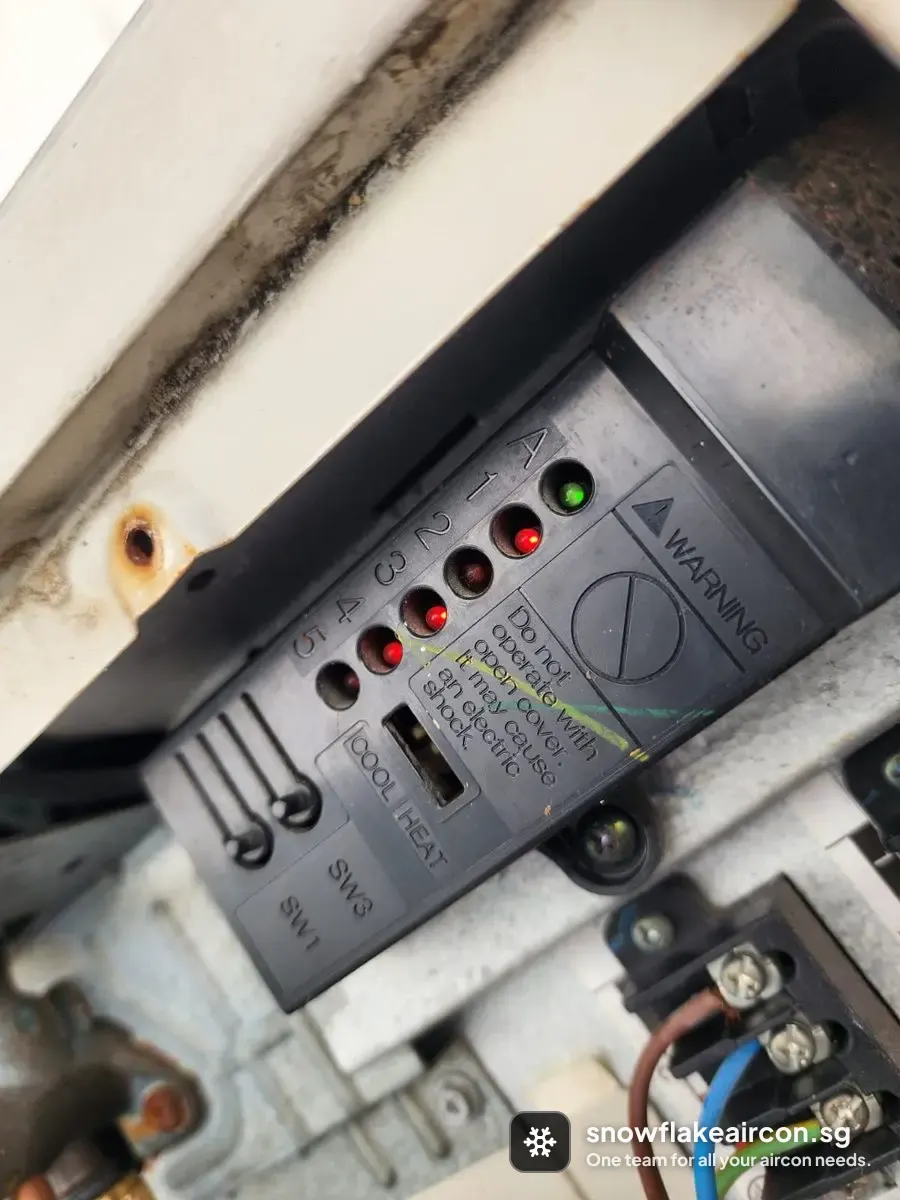
Daikin · Wall-mounted
Daikin J6 outdoor red LED: bad thermistor, not condenser
Open-circuit Daikin outdoor heat-exchanger thermistor halting multi-split cooling via outdoor safety protection while the inverter compressor stays healthy
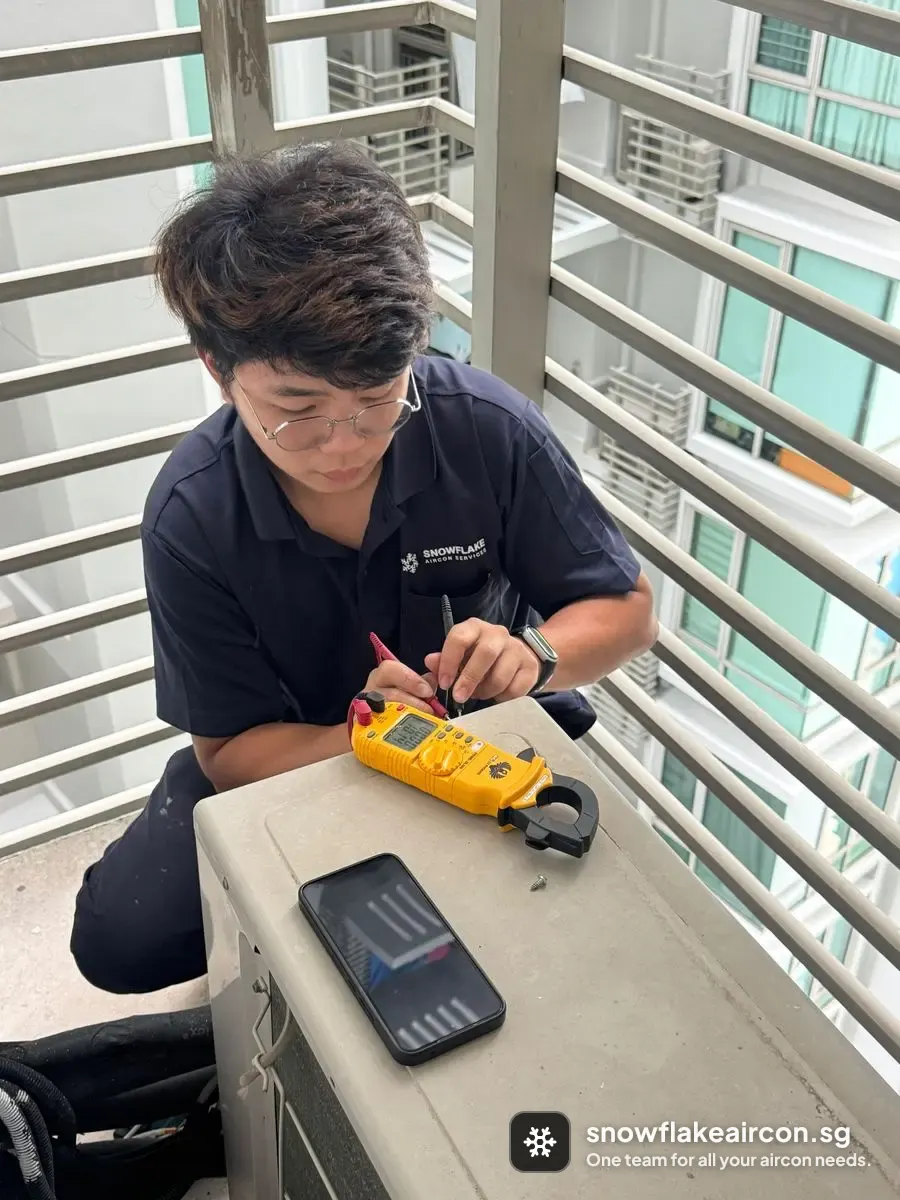
Daikin · Wall-mounted
Tripping a 20A breaker: weak capacitor, not compressor
Degraded outdoor run capacitor combined with a dust-choked condenser coil climbing amp draw past the 20A breaker limit after 15 minutes while the compressor remains sound
Common Questions
Why does dropping the remote to 18 degrees make a warm unit blow icy?
How do curtain pelmets cause an aircon to turn warm at 25 degrees?
Does blowing warm at 25 degrees mean the aircon needs gas?
How do technicians test an intake room thermistor during diagnosis?
Sources
Sources checked 27 Nov 2026