On this page
Quick summary
Faint sweet or ether-like fumes blowing from an aircon vent can indicate leaking refrigerant carrying compressor lubricant oil, though new plastic grilles and cleaning sprays mimic the note briefly. Persistent chemical smells paired with weak cooling require immediate shutdown and nitrogen leak testing.
On-site fault check: $30 ($80 VRV), waived if you proceed with repair · See diagnosis & repair
Distinguish Harmless Warm-Up Odours from Refrigerant Leaks
Pure R32 and R410A refrigerants are nearly odourless. However, pressurised leaks carry ester compressor oil that smells mildly sweet, chemical, or ether-like indoors, often alongside soft hissing or warm vent air.
New installations emit harmless warm-up scents from fresh plastic vents, trunking glue, or nearby solvent wipes. Those benign odours fade across ventilated cooling runs while supply air stays cold.
Compare Sweet Chemical Odour Patterns and Cooling Clues
Match what your nose detects against cooling behaviour before deciding whether to ventilate or shut down power:
Scroll to see more columns
| Vent scent clue | Probable Singapore trigger | Cooling & visual check | Immediate resident action |
|---|---|---|---|
| Mild sharp whiff on new install | Fresh ABS casing and adhesive | Cold airflow holds steady | Ventilate room for a few hours |
| Lingering sweet ether note | Refrigerant plus POE oil spray | Warm air, hiss, or coil frost | Isolator off; open all windows |
| Brief chemical tint post-wash | Residual coil cleaner film | Strong cold air; fades fast | Run fan mode beside open window |
| Hot electrical varnish scent | Stressed relay or loose terminal | Breaker trips or dead display | Kill wall switch; book inspection |
Follow Safe Ventilation and Shutdown Steps Indoors
Toggle the wall isolator off and open bedroom windows right away whenever sweet chemical scents join warm airflow or oily droplets. R32 refrigerant carries mild flammability, so keep lighters and candles outside.
Stay strictly on floor level without climbing onto exterior HDB ledges or removing 230V internal covers. Let trained technicians handle electronic leak sniffing and coil inspection.
Book Pressure Testing Before Refilling Refrigerant Gas
Resolve the leak source cleanly before spending money on top-ups or deep washes:
- Nitrogen pressure tests start with a S$30 inspection ($80 on VRV gear). Proceeding with repair cancels that inspection charge and adds a 30-day warranty.
- Seal cracked flare nuts or replace leaking indoor coils before charging gas. Topping up over active pinholes wastes cash and brings oil fumes straight back.
- Lingering cleaner residue washes away at S$80 for a single head, S$70 per head on pairs, or S$60 per room across three-plus heads (60-day cover).
- Deeply contaminated squirrel-cage fans call for full teardowns priced at S$150 for a single room, S$250 total for pairs, and S$115 apiece when servicing three or more units (90-day workmanship warranty).
Diagnostic Cases for This Fault
Singapore jobs showing what we checked on-site before quoting parts or gas.
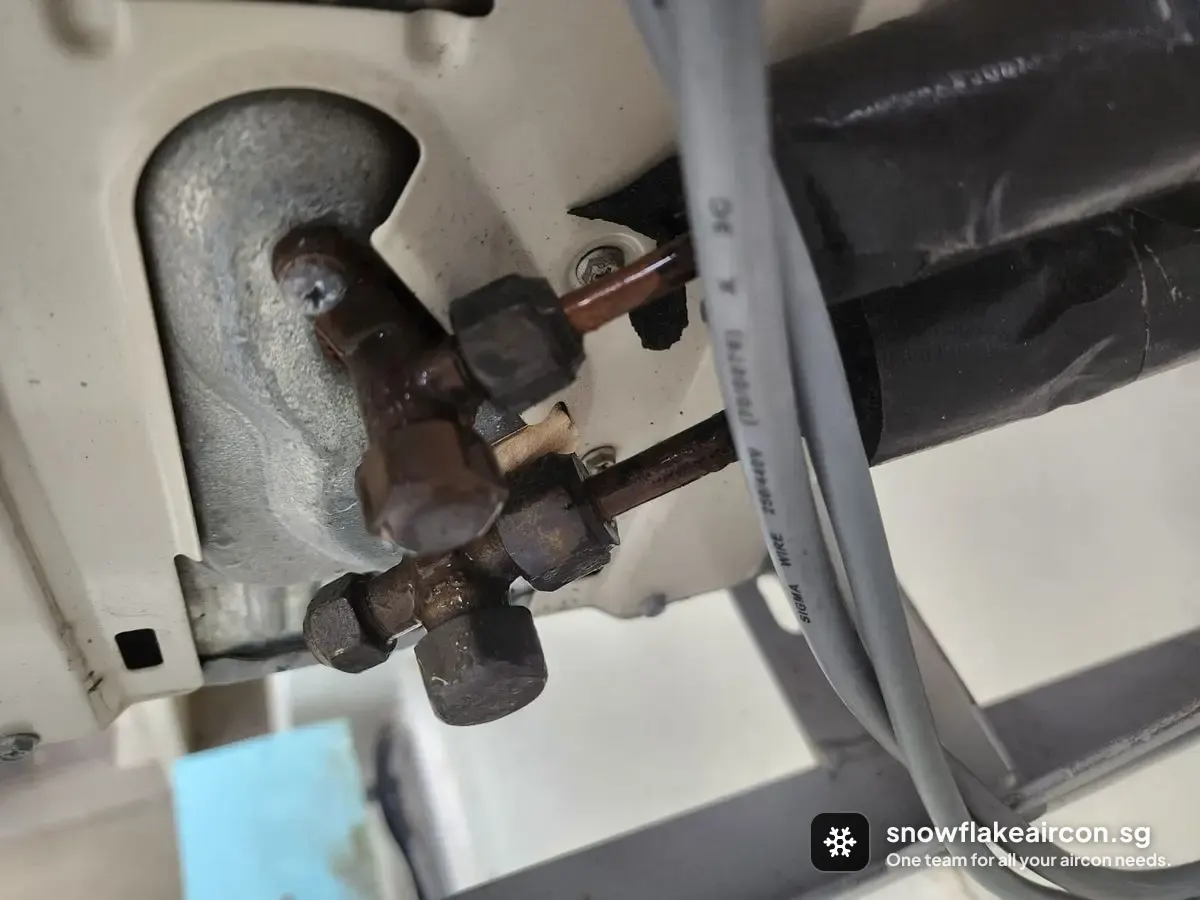
Samsung · Wall-mounted
Coastal unit losing gas again: salt ate the pipe fitting
A corroded outdoor fitting thinned past the point where it can seal
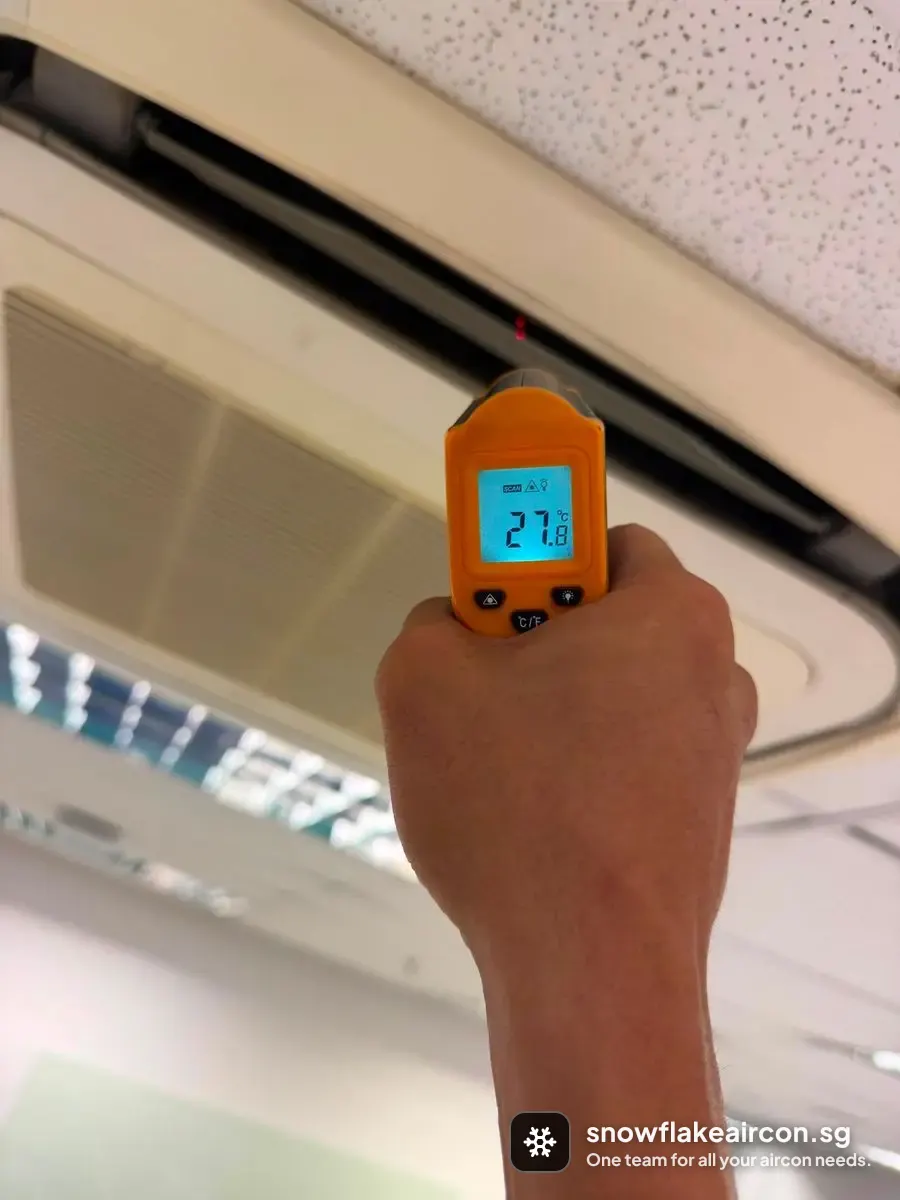
Daikin · Cassette
Cassette not cooling: stuck gas-flow valve, not compressor
A flow-control valve stuck part-closed, restricting refrigerant to the indoor coil
Common Questions
Why does leaking R32 or R410A refrigerant sometimes smell slightly sweet like ether?
Could a brand-new aircon emit a chemical smell without leaking refrigerant?
What safety rules apply if someone smells sweet chemical fumes in a bedroom?
Should homeowners ask for a refrigerant top-up first when an aircon smells chemical?
Sources
Sources checked 27 Nov 2026