On this page
Quick summary
Water droplets beading along an indoor aircon shell usually point to humid outdoor air leaking through unsealed wall pipe holes or low fan speeds over-chilling the plastic louvres. Sealing penetrations, raising fan airflow, and flushing blocked coils prevents wall staining and ceiling drips.
On-site fault check: $30 ($80 VRV), waived if you proceed with repair · See diagnosis & repair
How Humid Balcony Drafts Chill Indoor Plastic Casings
Singapore bedrooms sit surrounded by humid outdoor air near 80 to 90 percent moisture. Whenever unsealed wall holes admit damp service-yard drafts behind trunking, droplets condense across cold plastic shrouds.
Crushed foam lagging or clogged intake screens worsen this cold outer skin. Even clear drain pans drip onto wallpaper when casing temperatures plunge below indoor dew point.
Compare Common Sweating Triggers and Proven Fixes
Match droplet position and fan speed against the likely condensation trigger:
Scroll to see more columns
| Sweating symptom | Root thermal fault | Homeowner check | Technician remediation |
|---|---|---|---|
| Droplets along wall and casing edge | Unsealed core hole pulling humid air | Feel warm draft near trunking exit | Pack fire-rated putty and re-tape lagging |
| Mist around louvre blades only | 18-degree setting on slow fan speed | Raise setpoint to 24 degrees and auto fan | Verify airflow velocity across fins |
| Cold wet patches under trunking | Thin or crushed pipe foam lagging | Spot soft wet spots along wall casing | Re-sleeve copper in half-inch closed foam |
| Heavy droplets plus weak cold breeze | Matted dust choking evaporator fins | Rinse intake mesh; listen for gurgles | Chemical wash or full coil overhaul |
Adjust Room Habits Before Opening Trunking Covers
Close balcony sliding doors and service-yard windows tightly while units cool. Lift settings from 18 to 24 or 25 degrees with auto fan speed so cold plastic edges warm above dew point.
Rinse dusty top grilles safely from floor level. Leave trunking covers closed because live 230V terminal strips and copper bends sit tightly behind the mounting plate.
Book Lagging, Sealing, or Coil Wash Before Mould Spreads
Stop wall dampness before laminate wardrobes swell or plaster stains black:
- Book a S$30 diagnostic visit to trace unsealed masonry sleeves or torn lagging behind the bracket. Approved repairs absorb that inspection fee under a 30-day warranty.
- Dust-choked blowers needing airflow recovery clear with general servicing. One head costs S$50, two heads cost S$60 combined, and three-plus units bill S$25 apiece (14-day cover).
- Sticky coil biofilm trapping freezing air behind louvres requires chemical rinsing. Singles run S$80, paired heads cost S$140 combined, and larger bookings settle at S$60 per FCU (60-day cover).
- Soaked compressed rear insulation or deep tray slime demands a dismantled overhaul. Single FCUs bill S$150, dual FCUs run S$250 together, and larger flats pay S$115 per coil (90-day cover).
Diagnostic Cases for This Fault
Singapore jobs showing what we checked on-site before quoting parts or gas.
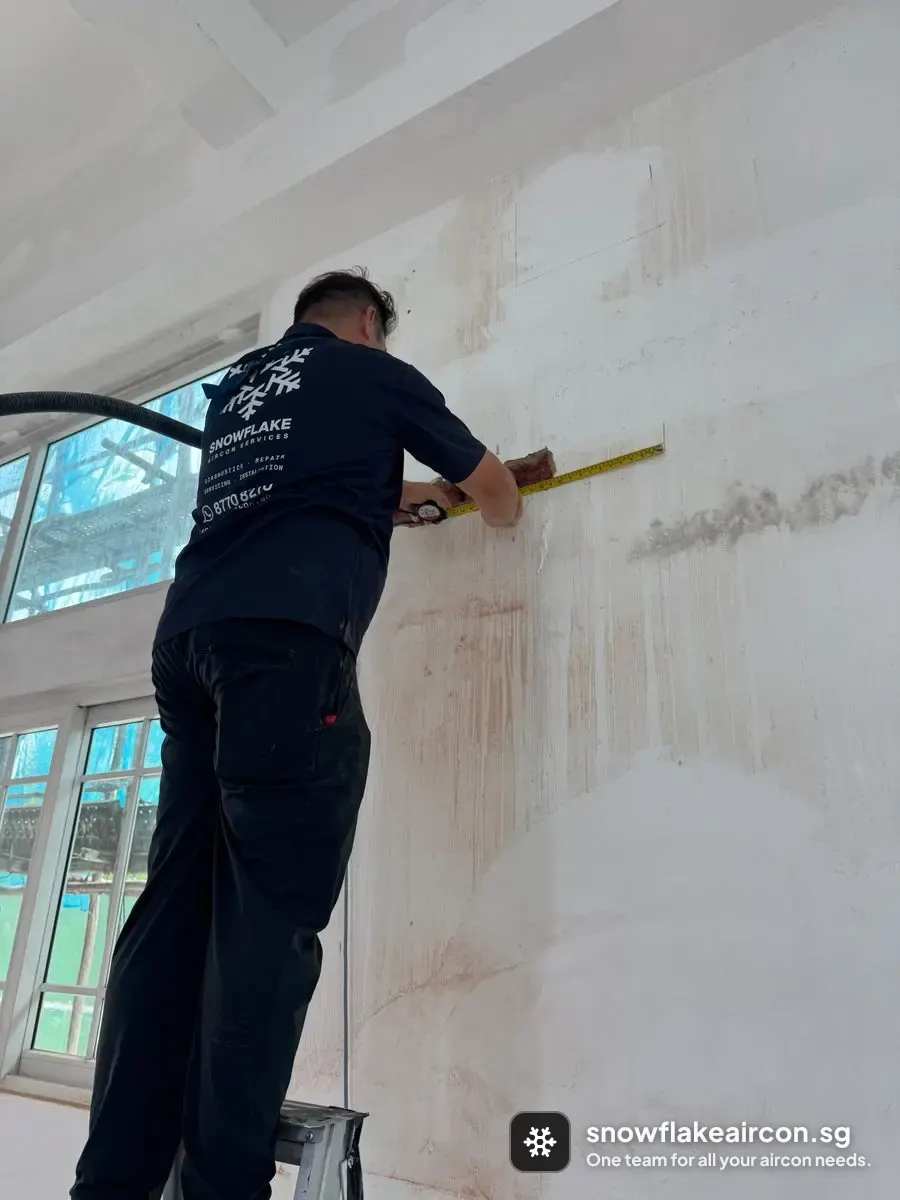
Daikin · Wall-mounted
Water stain down the wall: blocked rear drain trough
Biofilm jelly choking the hidden rear auxiliary drain trough behind the evaporator coil, spilling condensate down the plastered wall while the main trunking pipe stayed intact
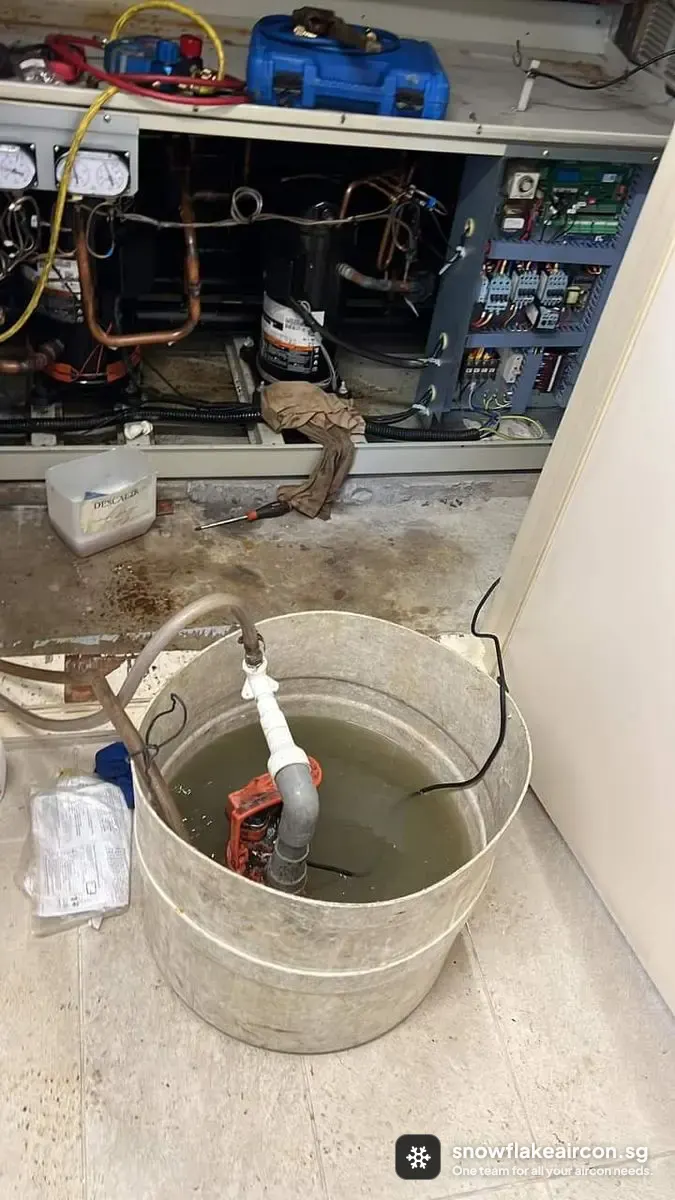
Mitsubishi Electric · Multi-split
Outdoor ledge dripping downstairs: split drain pipe stub
Split outdoor PVC condensate drain stub spilling backed-up water across the ledge
Common Questions
Why does an aircon sweat outside its plastic casing when the drain pipe is not clogged?
Does running the aircon at low fan speed worsen condensation on Singapore units?
How do technicians seal an unsealed wall pipe hole behind an indoor fan coil?
Can wall condensation around an aircon damage HDB plaster and timber wardrobes?
Sources
Sources checked 27 Nov 2026