On this page
Quick summary
Pottery workshops and art studios lose cooling quickly when fine clay, silica, and plaster dust slip past mesh filters into damp evaporator fins. Isolating kiln heat, rinsing filters weekly, and booking scheduled chemical servicing prevent cemented coil blockages.
Wall-mounted general servicing $25–$50/unit · chemical wash $60–$80/unit · View servicing rates
How Ceramic Clay and Plaster Dust Cement Inside Evaporator Coils
Wheel throwing, trimming clay pots, and mixing plaster release fine mineral powder across shophouse studios. Standard nylon filters catch coarse lint yet let microscopic clay slip right past.
Moisture inside wet aluminium coils binds airborne clay and gypsum into dense grey paste. Blower barrels quickly lose static pressure and push warm air out.
Gritty mud also settles inside shallow condensate pans and blocks drain traps. Left unwashed, compressors run continuously at peak current until thermal protectors trip.
Daily sweeping helps floor hygiene, yet airborne silica dust stays suspended for hours. High-airflow studio vents pull fine powder directly toward upper wall coils.
Isolate Kiln Heat from Main Pottery Cooling Zones
Electric and gas kilns radiate sustained heat throughout firing and long cooling cycles. Running open studio splits against an unsealed kiln wastes electricity and ages compressors early.
Enclose the kiln corner with full-height doors and dedicated exhaust extraction fans. Avoid dropping thermostats lower to fight radiant heat from hot kiln bricks.
Small studios replacing old aircons can tap Singapore's Energy Efficiency Grant (EEG) for qualifying upgrades. Five-tick models cut monthly power bills during long studio days.
Compare Studio Dust Zones, Filter Schedules, and Coil Risks
Tailor cleaning cadence to each studio task instead of waiting for dripping trays or warm breezes:
Scroll to see more columns
| Workshop zone | Dust and heat load | Safe staff check | Technician service scope |
|---|---|---|---|
| Wheel throwing & glazing | Wet clay splatter and damp mist | Weekly floor-level mesh rinse | Quarterly routine coil and drain flush |
| Dry sanding & plaster bay | Fine mineral and gypsum powder | Twice-weekly filter vacuuming | Bi-monthly wash or chemical coil clean |
| Kiln firing enclosure | Radiant heat and thermal spikes | Verify exhaust fan and closed door | Keep separate from main studio split |
| Neglected studio blower | Cemented grey sludge on fins | Switch off if dripping water starts | Full dismantled chemical overhaul |
Choose Pottery Studio Servicing Tiers and Inspection Costs
Keep studio staff strictly on floor level when rinsing filters. Elevated ceiling units, outdoor brackets, and electrical boxes require trained technicians:
- Commercial inspections bill S$30 for split aircons or S$80 for VRV and VRF hardware. That charge clears whenever studio repair or replacement starts (30-day warranty).
- Light studio dust clears during routine washes at S$50 for one split. Dual-split studios pay S$30 per blower, dropping to S$25 per blower on three-plus systems (14-day warranty).
- Bonded clay film demands chemical servicing at S$80 solo or S$70 apiece on twin units. Triple-split studios pay S$60 per indoor coil (60-day warranty).
- Hardened plaster mud demands full dismantled stripping. Single-unit overhauls cost S$150, twin splits pay S$125 each, and three-or-more setups run S$115 per unit under 90-day warranty.
Diagnostic Cases for This Fault
Singapore jobs showing what we checked on-site before quoting parts or gas.
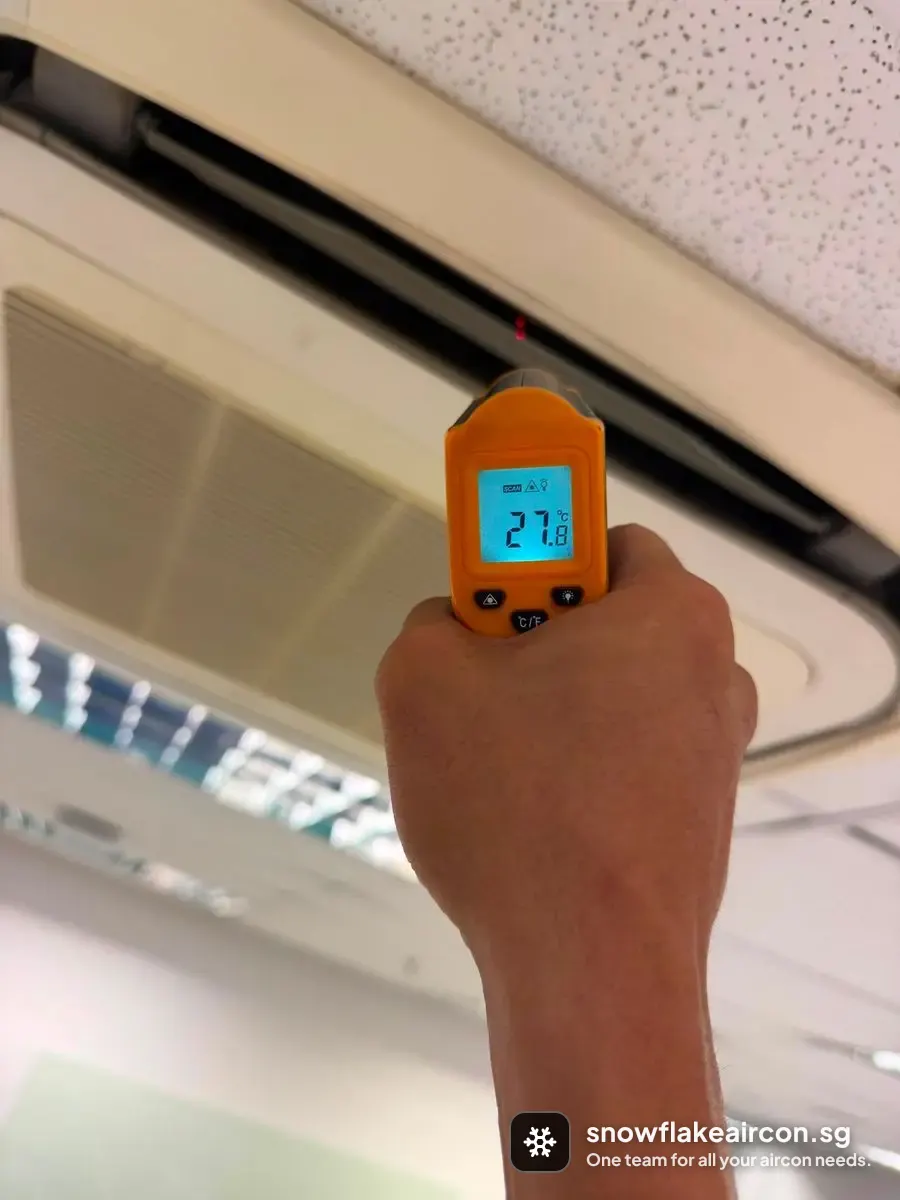
Daikin · Cassette
Cassette not cooling: stuck gas-flow valve, not compressor
A flow-control valve stuck part-closed, restricting refrigerant to the indoor coil
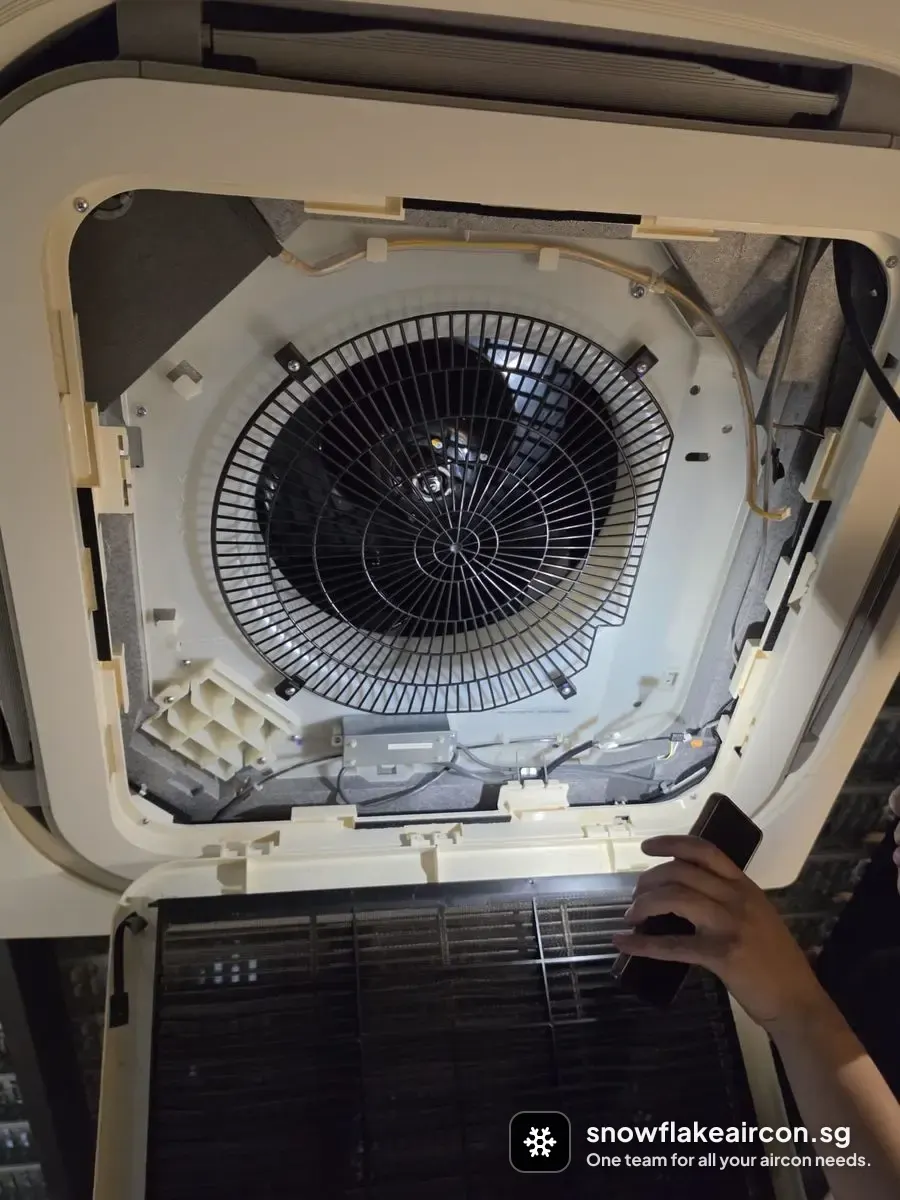
Mitsubishi Electric · Cassette
Cassette rattling at mid speed: off-centre fan blade clip
A fan blade sitting fractionally off-centre, grazing the housing across one speed band
Common Questions
How often should pottery workshops rinse aircon filters in Singapore?
Should a studio run aircon inside the kiln room during firing?
Can regular water servicing remove hardened clay from blower wheels?
Can Singapore art studios use grants when replacing old workshop aircons?
Sources
Sources checked 27 Nov 2026