On this page
Quick summary
Waiting lounges inside Singapore auto workshops lose cooling fast when bay doors draw in tyre dust and oil vapour. Door closers, clean air curtains, and weekly mesh rinsing keep indoor fins clear. Scheduled chemical degreasing prevents sticky sludge from clogging lounge drains.
Wall-mounted general servicing $25–$50/unit · chemical wash $60–$80/unit · View servicing rates
How Tyre Rubber Dust and Oil Mist Foul Lounge Coils
Every time mechanics walk through sliding lounge doors, hot air from active service bays rushes inside. Airborne brake soot, tyre rubber grit, and aerosol oil mist coat wet evaporator fins inside wall splits or ceiling cassettes.
Unlike dry office lint, oily rubber paste bonds tightly between aluminium fin gaps and drips into condensate trays. Blocked fins force compressors into sustained peak load, raising workshop electricity bills across long trading days. Negative air pressure from bay exhaust fans pulls even more fumes under gaps.
Set Bay Door Seals, Condenser Clearance, and EEG Options
Fit spring door closers and tight rubber sweep seals on bay-facing glass doors. That barrier keeps oily fumes outside between customer handovers. Clean overhead air curtains monthly so doorway air velocity stays strong. Seal ceiling cable penetrations linking the customer office to workshop bays.
Mount outdoor condensers well clear of pneumatic tool exhausts and spray booths where oil vapour clogs radiator fins. Local SME workshops upgrading old lounge units can check Energy Efficiency Grant rules on GoBusiness. Confirm BCA mounting standards before setting outdoor stands.
Compare Workshop Lounge Fouling Risks and Upkeep Tiers
Match common service-bay infiltration signs to practical preventive fixes and cleaning frequency:
Scroll to see more columns
| Workshop hazard | Lounge cooling symptom | Bay-side prevention step | Service cadence needed |
|---|---|---|---|
| Propped sliding bay door | Warm air rush and sweating vents | Install hydraulic door closer | Weekly screen rinse by staff |
| Tyre dust and brake grit | Black lint caked across intakes | Rinse mesh screens every Friday | Monthly or bi-monthly general clean |
| Oil mist and exhaust haze | Sour smell and slow cold recovery | Seal partition cable gaps tightly | Quarterly chemical degreasing wash |
| Sticky jelly in tray pan | Drips above customer sofa row | Add drain trap access hatch | Dismantled overhaul on stubborn slime |
Schedule Lounge Inspections and Degreasing Washes
Keep customer lounges crisp during peak servicing hours with predictable flat rates and zero downtime guesswork:
- Lounge fault checks cost S$30 on splits (S$80 on VRV layouts). Booking repair or replacement cancels that fee under 30-day repair cover.
- Monthly general servicing bills S$50 for one lounge unit or S$60 across two units (S$30 apiece). Multi-bay shops running three-plus heads pay S$25 per head with 14-day warranty.
- Degreasing chemical washes clear oily rubber film for S$80 on one head, or S$140 combined across two (S$70 each). Three-head workshops pay S$60 per room with 60 days of warranty.
- Dismantled overhauls strip baked grease off blower drums at S$150 solo. Two units total S$250 (S$125 per unit), while three-plus run S$115 apiece with 90 days of cover.
Diagnostic Cases for This Fault
Singapore jobs showing what we checked on-site before quoting parts or gas.
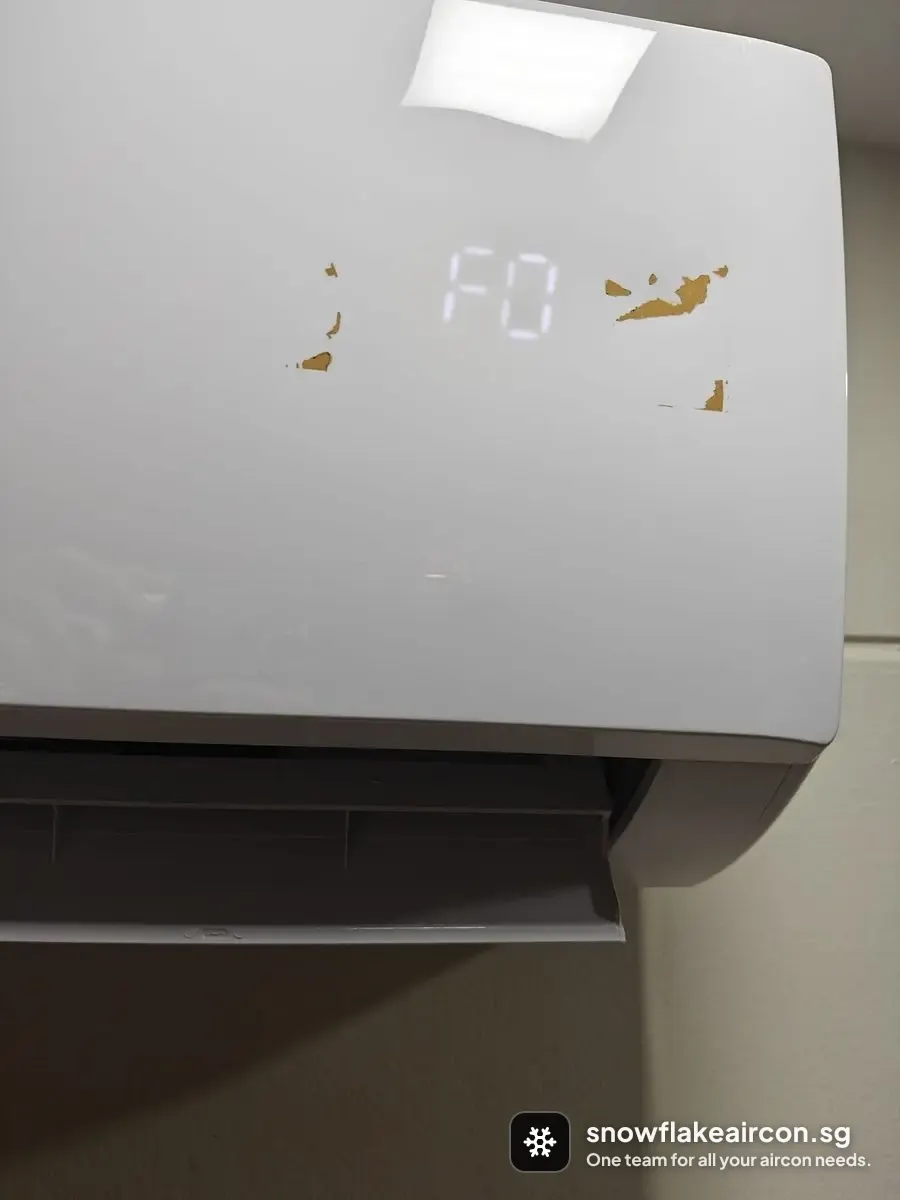
Gree · Wall-mounted
Gree F0 on a rusted condenser: refrigerant shortage
R32 refrigerant shortage triggering Gree F0 protection from corroded evaporator return bends
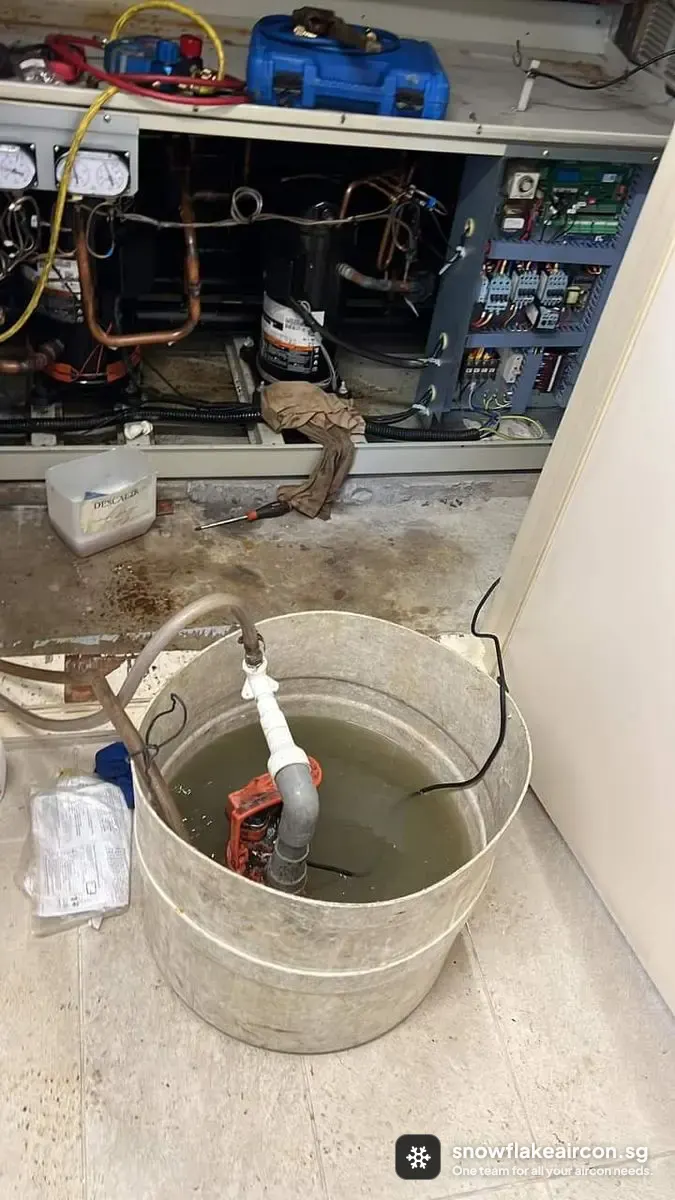
Mitsubishi Electric · Multi-split
Outdoor ledge dripping downstairs: split drain pipe stub
Split outdoor PVC condensate drain stub spilling backed-up water across the ledge