On this page
Quick summary
Windowless escape room venues trap body heat, prop electronics, and stale CO2 inside sealed corridors where one wall split cannot circulate. Pairing ducted fresh-air supply with acoustic return paths, concealed service hatches, and scheduled coil cleaning keeps consecutive player groups cool without spoiling room immersion.
Wall-mounted general servicing $25–$50/unit · chemical wash $60–$80/unit · View servicing rates
Understand Why Sealed Corridors Stall Wall-Split Airflow
Cooling a lobby hallway leaves inner puzzle chambers warm once thick acoustic doors latch shut. Without return air pathways, corridor supply air short-cycles back into the wall unit. CO2 and body heat then build inside sealed game rooms.
Hidden prop cabinets packing electromagnetic lock relays, control PCs, and fog timers also release constant daytime heat. Windowless commercial suites require active outdoor fresh-air supply alongside balanced cooling.
Positive corridor pressure keeps lobby smells outside game suites while preventing stuffy dead corners. Dedicated return grilles also silence whistling air drafts around narrow door undercuts.
Compare Ducted Supply, Transfer Grilles, and Split Zoning
Combine concealed ducted zones with sound-baffled return paths to cool windowless suites discreetly:
Scroll to see more columns
| Airflow component | Partition role | Installation requirement | Commercial benefit |
|---|---|---|---|
| Ducted fan coil | Feeds multiple chambers via insulated ceiling flex | Match duct static pressure and seal plenum joints | Hides modern plastic grilles inside period themes |
| Acoustic transfer duct | Draws return air across sealed interior walls | Use Z-baffled lined channel to block voices | Stops stuffiness without leaking puzzle hints |
| Treated fresh-air fan | Supplies filtered outdoor air into dead ends | Link intake riser per landlord building rules | Controls CO2 build-up during back-to-back games |
| Hinged service panel | Exposes ceiling drain pans and condensate pumps | Locate clear of prop wiring and set panels | Allows chemical coil care without wrecking sets |
Coordinate EMA Electrical Safety and Energy Upgrades
Wiring inline booster fans, ducted fan coils, and condensate lift pumps inside commercial shophouses needs proper isolators. Licensed technicians must verify circuit safety under EMA electrical regulations. Route drain piping clear of painted plaster props to prevent water stains.
Operators upgrading older commercial equipment should check GoBusiness Energy Efficiency Grant (EEG) rules. Balancing branch dampers prevents freezing empty hallways while inner rooms feel muggy. Adding accessible volume dampers lets staff tune individual puzzle rooms after renovations finish.
Prepare Escape Room Maintenance Hatches and Wash Cycles
Carpet lint, costume dust, and theatrical fog residue coat hidden return plenums rapidly. Keep accessible intake grilles clean from floor level between bookings:
- Inspect airflow balance, hatch sizing, and lift pumps via a S$30 survey (S$80 for VRV networks). Approved repairs or installations waive this fee with 30-day repair cover.
- Mount removable ceiling hatches directly beneath drain trays for clean access. General servicing charges S$50 for one blower, S$30 apiece for two, and S$25 per zone across three or more units (14-day warranty).
- Flush sticky fog residue and tray algae through chemical cleaning. Single-zone chemical treatments cost S$80, dual-zone treatments cost S$70 each, and multi-zone venues with three or more blowers pay S$60 per zone (60-day cover).
- Annual deep resets on enclosed ceiling blowers call for dismantled chemical overhauls. Full teardowns cost S$150 when handling one blower, S$125 apiece for two blowers, or S$115 apiece for three-plus blowers with 90-day cover.
Diagnostic Cases for This Fault
Singapore jobs showing what we checked on-site before quoting parts or gas.
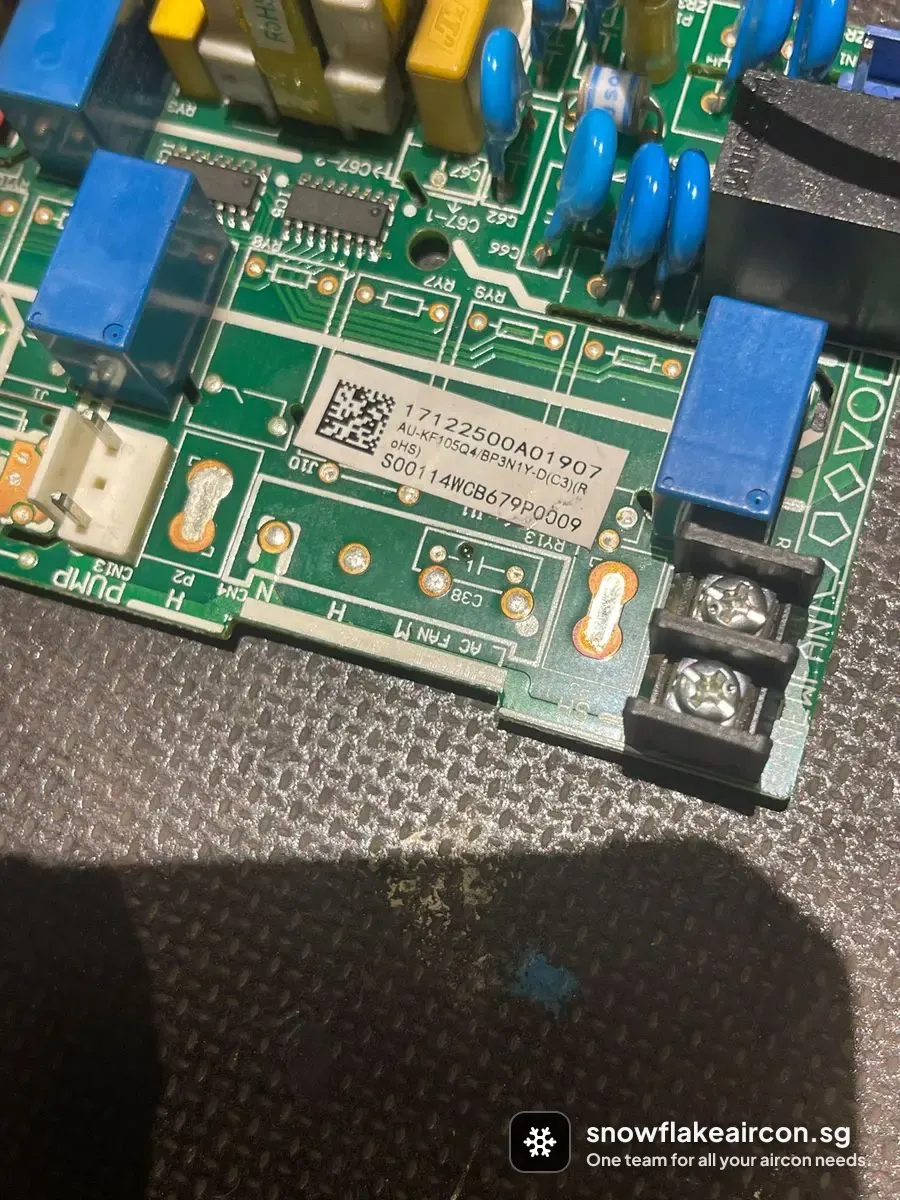
Daikin · Ducted
Drain pump siphoning water back: valve fitted backwards
A non-return fitting installed against its flow direction during a previous service
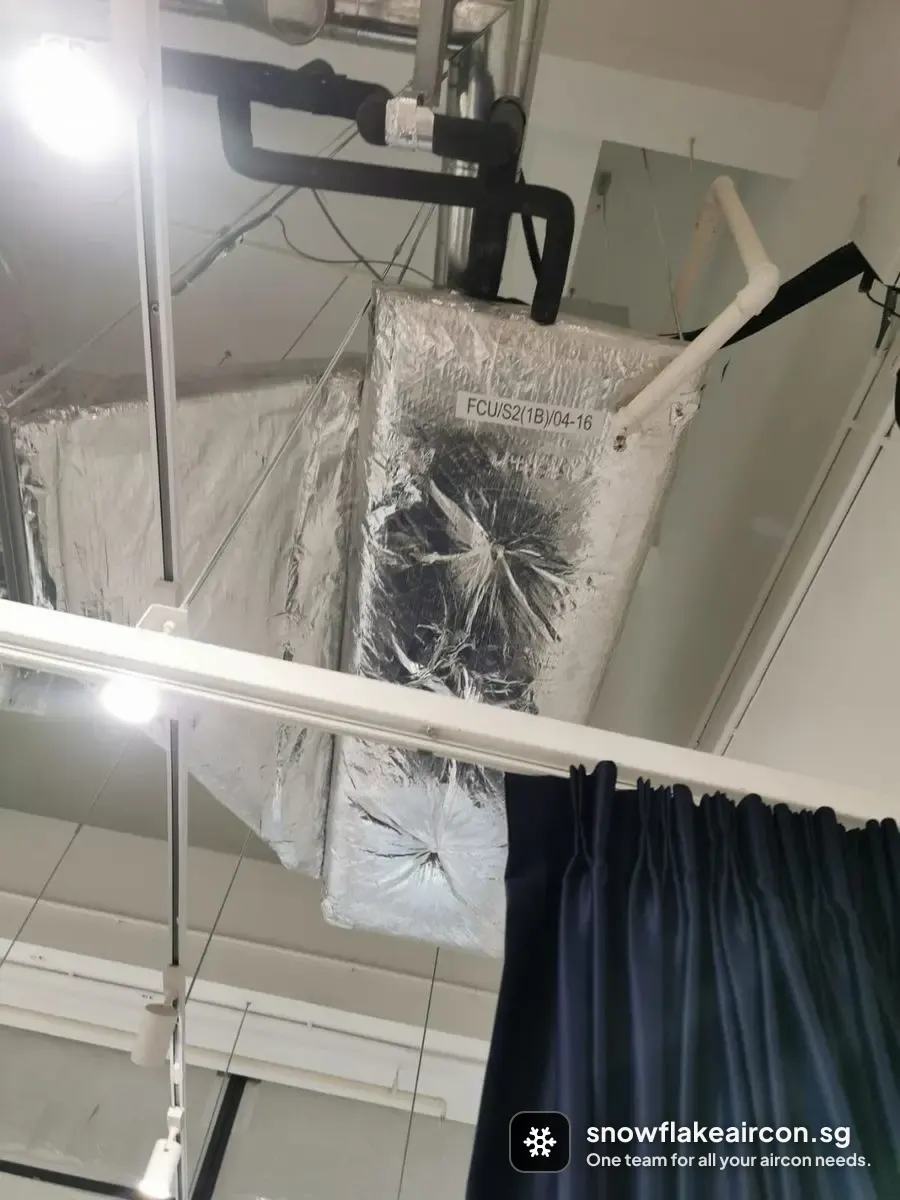
Carrier · Ducted
Shop ducted FCU losing airflow: lint-choked coil
Apparel textile lint compacted across the concealed ducted FCU coil face and blower blades
Common Questions
Why do single wall-mounted splits leave windowless escape room chambers warm?
How do escape rooms move return air between rooms without leaking game clues?
What ceiling access do concealed escape room blowers need for cleaning?
How much does commercial maintenance cost for multi-zone escape room setups?
Sources
Sources checked 27 Nov 2026