On this page
Quick summary
Church halls and community auditoriums strain Singapore VRF plants with idle weekdays that dry out condensate drain traps before sudden weekend crowds dump heavy heat and humidity. Disciplined Friday trap priming, staggered pre-cooling ramps, and quarterly chemical coil hygiene prevent sewer odours, ceiling drips, and service shutdowns.
Wall-mounted general servicing $25–$50/unit · chemical wash $60–$80/unit · View servicing rates
Why Idle Weekdays and Weekend Crowds Stress VRF
Singapore church sanctuaries and community auditoriums typically sit empty from Monday through Thursday. Warm ceiling voids evaporate standing water seals inside concealed-duct P-traps. Sewer smells then enter seating rows while biofilm bakes dry inside drain pans.
Saturday rehearsals and Sunday worship immediately inject dense human heat and stage lighting loads. Sound booths and projection rooms also create isolated hot spots during services. Demanding peak VRF output all at once stresses oil-return cycles. Rapid condensation then washes dried flakes into sluggish traps, spilling water onto ceiling boards during packed gatherings.
Compare Weekday Standby and Weekend Surge Risks
Monitor each stage across the weekly worship calendar to catch drain and compressor stress before crowds arrive.
Scroll to see more columns
| Weekly hall stage | Mechanical stress point | Facility warning sign | Preventative action |
|---|---|---|---|
| Idle weekday gap | Evaporated water seal in drain trap | Musty sewer smell at startup | Pour clean trap water or add seal traps |
| Pre-service warm pull-down | Abrupt VRF compressor torque spike | Uneven cooling near rear balcony | Stagger zone starts 75 mins early |
| Peak crowd humidity | Heavy condensation hits dried biofilm | Gurgling ducts or wet ceiling tiles | Test lift pumps and flush drain lines |
| Post-event shutdown | Wet evaporator fins grow mould rapidly | Dark lint crust on supply grilles | Run 20-min fan dry cycle after dismissal |
Schedule Pre-Cooling, Trap Priming, and Coil Hygiene
Stewards protect VRF compressors and curb utility spend (benchmarked via Singapore's 31.16-cent regulated Q4 2026 kWh tariff) by staging zone thermostats gradually. Never drop every hall controller to minimum temperature at door opening. Run fan-only cycles for 20 minutes after dismissal to dry wet coils.
High sanctuary ceilings demand compliant MOM and BCA elevated-access equipment rather than risky ladders. Ancillary room splits follow straightforward tiers: one room pays S$50 general, S$80 chemical, or S$150 overhaul; two rooms cost S$30, S$70, and S$125 apiece; three or more rooms qualify for S$25, S$60, and S$115 per blower across 14-day, 60-day, and 90-day warranties.
Verify Friday Pre-Event Checks and Servicing Plans
Follow this weekly facility routine to eliminate mid-service shutdowns, stale smells, and ceiling water marks:
- Have hall stewards inspect return grilles, thermostat schedules, and dry floor waste traps every Friday afternoon.
- Engage an S$80 commercial VRV assessment before major conference months—credited toward repairs or replacements with 30-day workmanship assurance (standard splits run S$30).
- Schedule mid-week access windows so certified crews bring scaffold towers into empty sanctuaries without disrupting choir practice.
- Pair annual drain trap flushing with quarterly filter hygiene tailored to real weekend attendance counts.
- Record outdoor inverter fault codes whenever humidity climbs so technicians diagnose sensor drift early.
- Check motorized fresh-air dampers periodically so humid outside air never bypasses uncooled hall plenums.
Diagnostic Cases for This Fault
Singapore jobs showing what we checked on-site before quoting parts or gas.
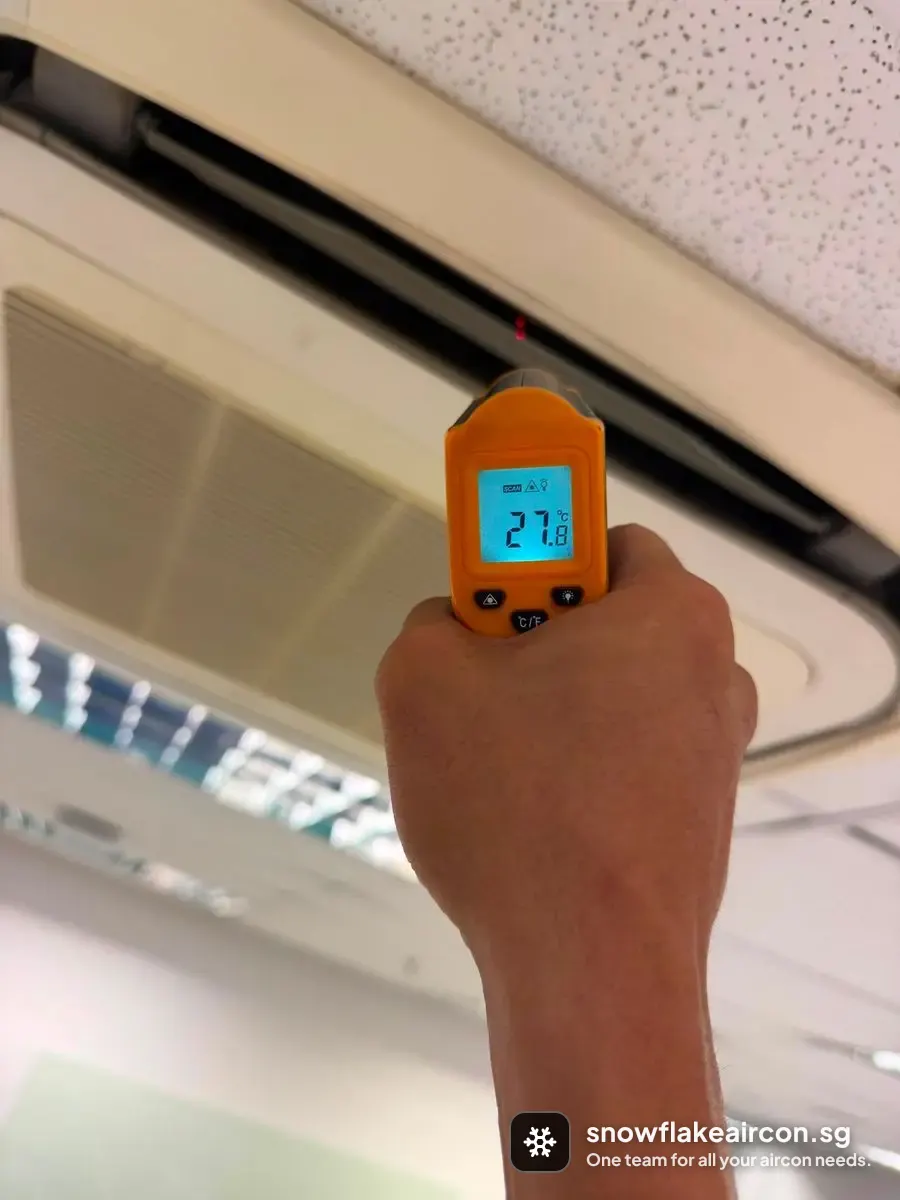
Daikin · Cassette
Cassette not cooling: stuck gas-flow valve, not compressor
A flow-control valve stuck part-closed, restricting refrigerant to the indoor coil
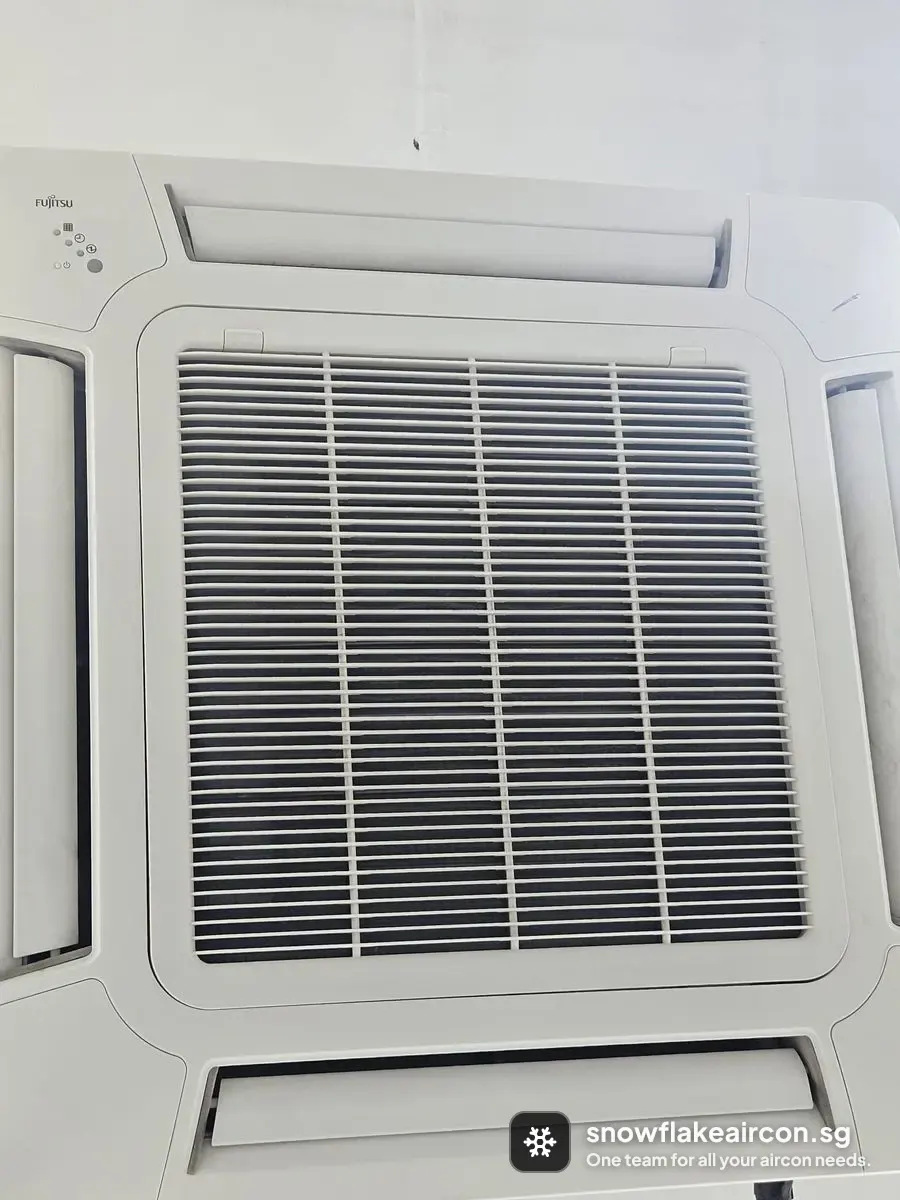
Fujitsu · Cassette
Office cassette dripping at louver: sweating from fouled coil
Surface condensation on the supply louver driven by restricted airflow across one fouled coil face