On this page
Quick summary
Solvent ink vapours and trimmed paper fibres fuse into tacky paste inside Singapore print shop and signage studio evaporator coils. Pairing local printer exhaust with scheduled chemical coil cleaning and GoBusiness EEG 5-tick inverter upgrades prevents airflow loss, drain leaks, and premature corrosion.
Wall-mounted general servicing $25–$50/unit · chemical wash $60–$80/unit · View servicing rates
How Solvent Ink Vapours and Paper Dust Coat Evaporator Fins
Eco-solvent plotters and wide-format printers release fine chemical mist during daily print runs. Cold, wet cooling coils condense those vapours into sticky residue across aluminium fins. Left unchecked, tacky solvent varnish reduces heat exchange and strains compressor motors.
Paper trimmers and vinyl cutters shed cellulose fibres into the exact same workshop airstream. Dust binds onto ink-wet coils, choking fan discharge, overflowing condensate trays, and corroding copper pipe bends before normal office timelines. Ignoring that paste doubles cooling draw and ruins compressor efficiency.
Compare Studio Contamination Zones and Coil Cleaning Methods
Match workshop zoning, airborne residue behaviour, and upkeep timing across common print studio bays:
Scroll to see more columns
| Studio bay zone | Airborne residue mix | Typical coil symptom | Recommended service step |
|---|---|---|---|
| Solvent printer bay | Ink mist plus humid condensate | Tacky sheen and sour chemical smell | Exhaust hood plus chemical coil wash |
| Guillotine and cutting desk | Fine paper lint and card fibres | Dense felt blanket over blower wheel | Weekly mesh wash and full overhaul |
| Client proof and layout room | Light office dust and low ink load | Gradual airflow drop every quarter | Quarterly general servicing upkeep |
| Old corroded workshop split | Acidic fin pitting and oil residue | Recurring leaks and high amp draw | S$80 VRV or S$30 split upgrade survey |
Separate Printer Exhaust Hoods and Evaluate EEG Inverter Upgrades
Standard wall splits only cool and recirculate existing workshop room air. Fit local exhaust hoods above solvent printers so fresh make-up air dilutes vapours first. Position return grilles away from curing dryers whenever workshop layout permits. Separate cutting bays with simple partitions where space allows.
Keep staff clear of live indoor control panels in line with EMA electrical safety guidance. Once older units develop pitted fins or compressor wear, Singapore firms can check GoBusiness Energy Efficiency Grant (EEG) terms for qualifying 5-tick inverter upgrades. Replacing corroded fixed-speed units stops recurring refrigerant recharge bills.
Schedule Commercial Studio Coil Care and Site Surveys
Control workshop cooling costs with predictable flat-rate cleaning tiers and upfront commercial surveys across all production bays. Booking off-peak workshop slots keeps print production schedules uninterrupted:
- Book an initial inspection at S$30 on wall splits, or S$80 on VRV commercial networks. Approved repair or replacement waives that fee under 30-day warranty.
- Rinse studio mesh screens weekly from floor level. General servicing charges S$50 for one bay, S$30 per bay on two bays, or S$25 per bay for three-plus bays (14-day warranty).
- Dissolve tacky solvent film before aluminium fins corrode using chemical washes. Single coils cost S$80, paired coils cost S$70 per coil, while three-plus studio coils cost S$60 apiece under 60-day warranty.
- Strip heavy ink-bound paper felt from blower drums with dismantled chemical cleans: S$150 covers one drum, S$125 covers each of two drums, and S$115 covers each across three-plus drums (90-day warranty).
Diagnostic Cases for This Fault
Singapore jobs showing what we checked on-site before quoting parts or gas.
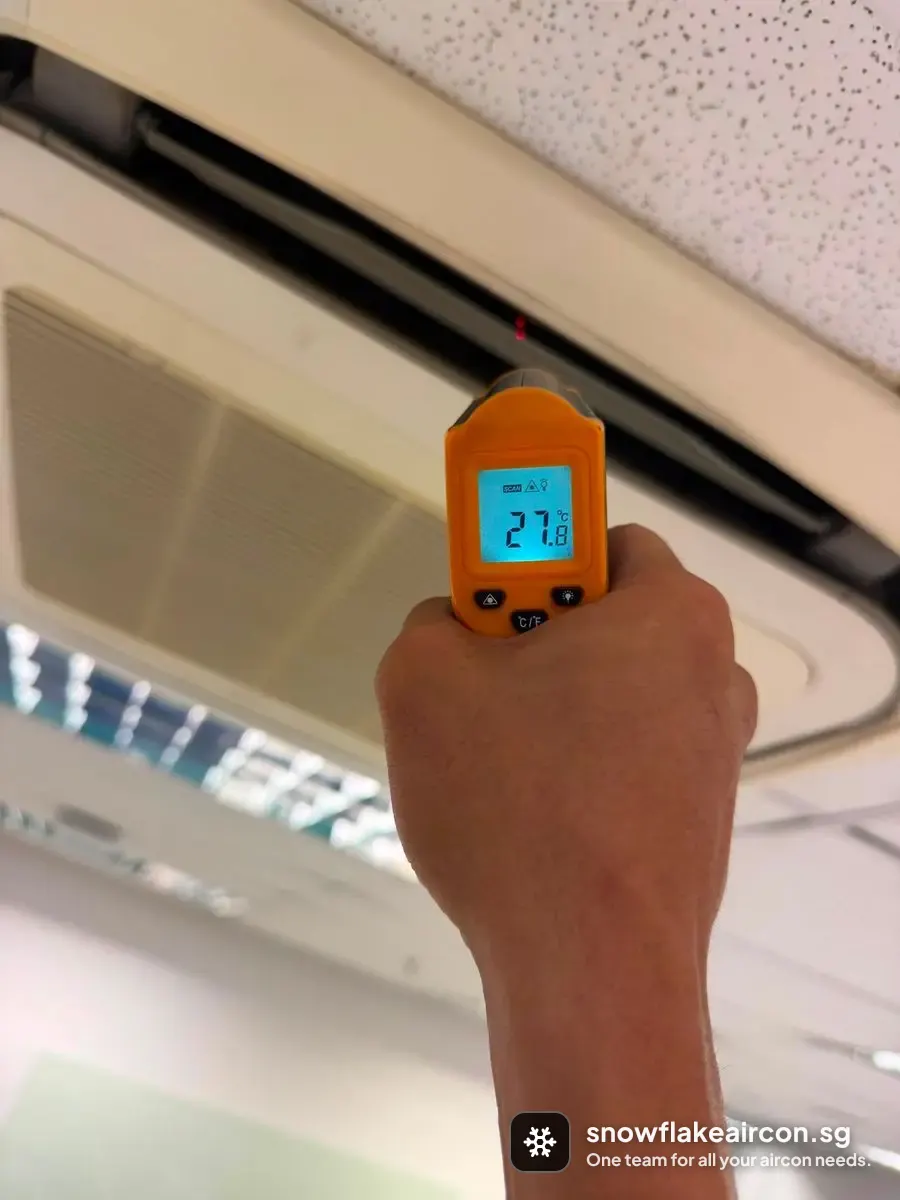
Daikin · Cassette
Cassette not cooling: stuck gas-flow valve, not compressor
A flow-control valve stuck part-closed, restricting refrigerant to the indoor coil
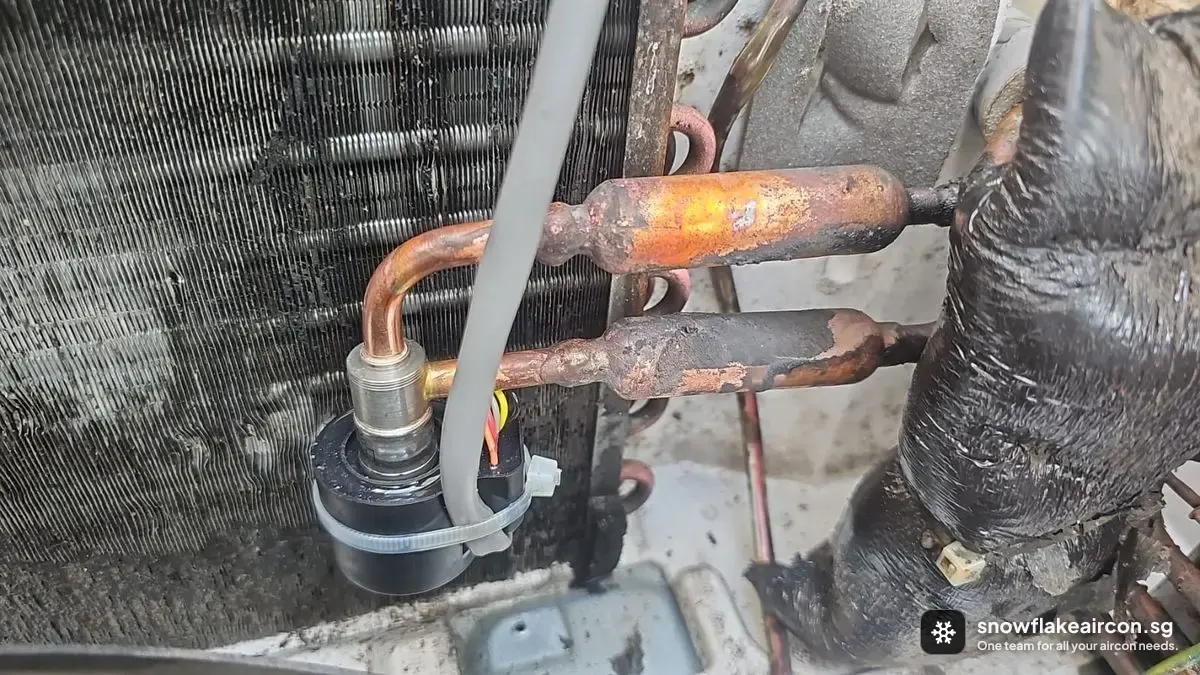
York · Cassette
Office outdoor unit failed: indoor side still had years left
A seized, salt-corroded outdoor unit above an indoor side with years of life left
Common Questions
Why do print shop aircon units clog faster than normal Singapore offices?
Can wall-mounted air conditioners remove solvent ink fumes from a signage studio?
How often should a Singapore signage workshop schedule chemical coil washes?
When should an ageing print studio split unit be replaced under GoBusiness EEG?
Sources
Sources checked 27 Nov 2026