On this page
Quick summary
Early aircon pipe sweat along Singapore wall trunking reveals itself through clammy PVC covers, cool soft spots under vinyl tape, and faint condensation beads weeks before brown plaster rings appear. Floor-level touch and tissue checks spot failing foam while following EMA, HDB, and MOM safety limits.
System 2 installed from $2,600 (22 SWG copper) · $30 site survey waived on install · View packages
Why Pipe Sweat Starts Inside Wall Trunking
Chilled copper lines stay far colder than humid indoor air across Singapore flats. When foam sleeves split or thin under half an inch, water condenses directly onto copper.
Moisture then creeps down horizontal PVC casing seams before leaking near bends or drywall joints. Catching clammy patches early prevents swollen plaster and paint bubbles.
Follow EMA, HDB, and MOM Floor-Level Safety Limits
Perform self-checks strictly from dry solid floor level using bare hands, dry tissue, and a torchlight. Under EMA electrical safety rules, never pry open trunking covers, breaker panels, or 230V wiring boxes. HDB and MOM circulars also forbid residents from climbing onto outdoor aircon ledges.
Run a Pass or Fail Trunking Self-Check
Run the bedroom unit at 24 degrees for thirty minutes before testing. Any failed pass/fail item below calls for a S$30 diagnostic visit:
Scroll to see more columns
| Pass/Fail self-check | Floor-level observation | Pass condition | Fail trigger (book S$30 check) |
|---|---|---|---|
| Tissue seam wipe | Slide dry tissue along trunking underside | Tissue remains dry and crisp | Damp streak or beads; S$30 check |
| Elbow surface feel | Touch plastic cover at wall bends | Even ambient warmth along run | Icy soft patch; S$30 check |
| Joint & plaster edge | Shine torch beside wall sleeves | Dry paint and intact silicone | Bubbling paint or ring; S$30 check |
| Cooling vs wet line | Compare blower airflow with wet casing | Strong blast and clear trap flow | Weak airflow or frost; S$30 check |
Decide When to Re-Insulate Trunking or Inspect Leaks
Matched symptoms guide whether your system needs re-lagging, drain clearing, or pressure leak diagnostics:
- Book Snowflake's S$30 inspection (S$80 VRV) when self-checks fail. Check charges waive on repair or install work under 30-day warranty.
- Light dust and dampness checks match general servicing at S$50 (1 room), S$30/room (2), or S$25/room (3+ rooms), 14-day warranty.
- Blocked drains feeding wet trunking clear via chemical servicing at S$80 (1 unit), S$70/head (2), or S$60/head (3+) under 60-day cover.
- Deep mould inside blower housings demands dismantled overhauls at S$150 (1), S$125 each (2), or S$115 each (3+) with 90-day cover.
Diagnostic Cases for This Fault
Singapore jobs showing what we checked on-site before quoting parts or gas.
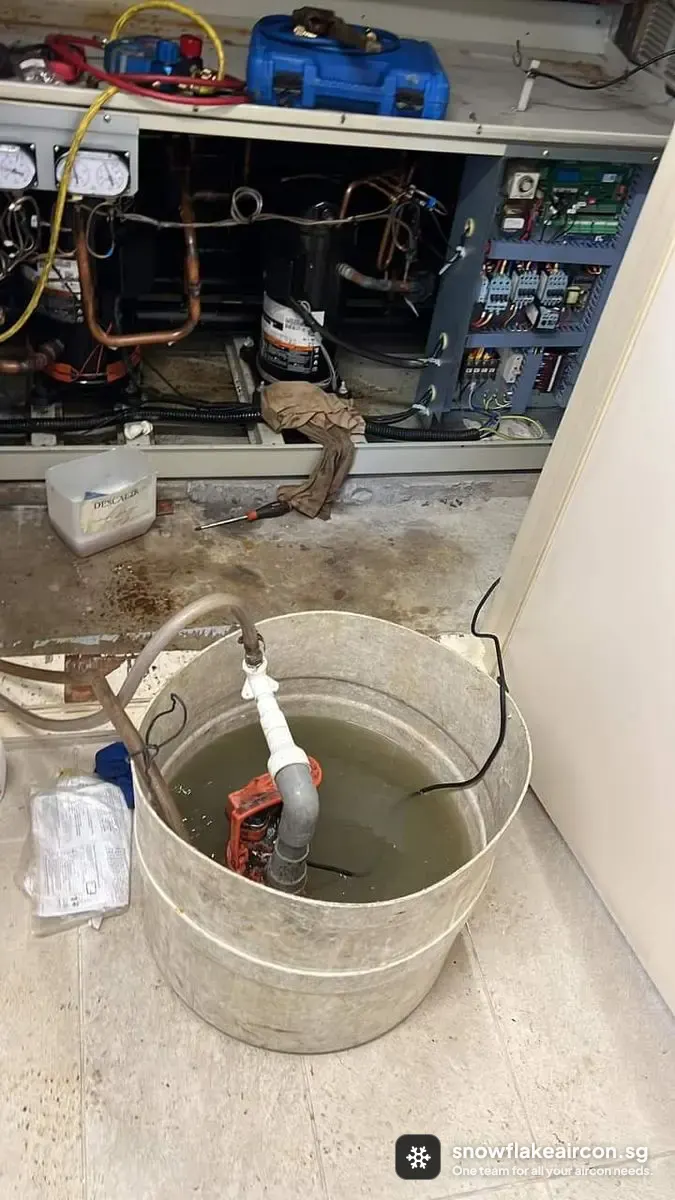
Mitsubishi Electric · Multi-split
Outdoor ledge dripping downstairs: split drain pipe stub
Split outdoor PVC condensate drain stub spilling backed-up water across the ledge
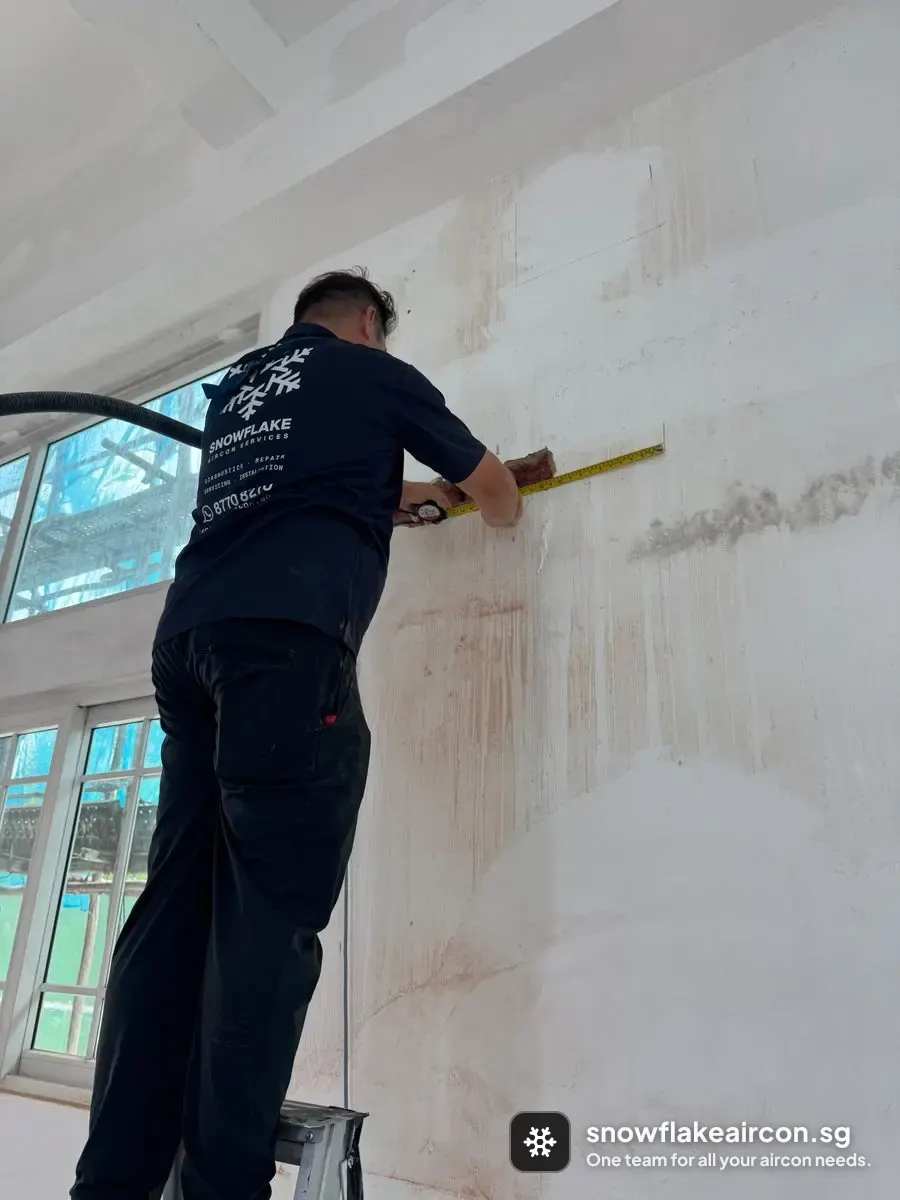
Daikin · Wall-mounted
Water stain down the wall: blocked rear drain trough
Biofilm jelly choking the hidden rear auxiliary drain trough behind the evaporator coil, spilling condensate down the plastered wall while the main trunking pipe stayed intact
Common Questions
Why does water drip out near a wall bend instead of right next to the fan coil?
Can taping wet exterior PVC trunking stop pipe sweating permanently?
How do I tell drain line overflow apart from sweating copper pipes?
Which parts of aircon trunking are unsafe for homeowners to open?
Sources
Sources checked 27 Nov 2026