On this page
Quick summary
Loud metallic clunks before an outdoor aircon condenser shuts down and restarts usually stem from chattering or welded relay contacts, compressor internal thermal overload tripping, or supply voltage sags. Leaving the main isolator off until a licensed check prevents burnt compressor windings and tripped flat circuit breakers.
On-site fault check: $30 ($80 VRV), waived if you proceed with repair · See diagnosis & repair
Three Faults Behind Loud Outdoor Clunks and Restarts
Sharp metallic slams inside an outdoor condenser mark a compressor stalling or a switching contactor snapping unevenly. Pitted relay contacts can weld briefly or chatter open under heavy load, cutting clean phase power.
Internal compressor thermal overload switches also snap open audibly when dome temperatures exceed safe limits. Restarts follow twenty minutes later after cooling down. Low supply voltage or weak capacitors amplify hard starts into loud housing shudders.
Recessed HDB service ledges with sun-baked louvres trap hot exhaust air around condenser coils during afternoons. Blocked exhaust pushes discharge pressure upward until compressor domes trip on thermal protection. Keeping ledge vents open lowers afternoon heat stress across outdoor fan coils during humid Singapore weather.
Check Symptom Clues Safely Before Calling Electrical Diagnosis
Monitor indoor cooling intervals and DB breaker trips strictly from inside your flat without climbing onto ledges:
Scroll to see more columns
| Observed clue | Likely fault mechanism | Safe indoor observation | Technician test needed |
|---|---|---|---|
| Restarts every 15-30 min | Thermal overload tripping | Air turns warm then cools again | Amp draw and condenser coil heat |
| Rapid buzz then thud | Relay chatter or weld | Immediate cut-out after startup | Relay continuity and coil resistance |
| Hums hard then trips | Low voltage or weak cap | Lights dim briefly on startup | Capacitor microfarad and line volts |
| Loud knock on shutdown | Worn mount or spring | Heavy shudder through wall pipe | Grommet check and pressure gauge |
Follow HDB and EMA Safety Limits for Outdoor Condensers
Homeowners must never lean outside windows, step onto concrete aircon ledges, or open 230V outdoor electrical lids. MOM, BCA, and EMA rules restrict exterior condenser repairs and live testing strictly to trained personnel using fall protection.
Turn the wall isolator off at once if your flat aircon MCB trips or smells hot. Engage an EMA-licensed electrician or qualified aircon technician before re-energising the circuit.
Schedule Diagnostic Testing to Prevent Permanent Compressor Damage
Repeated short-cycling cooks compressor oil fast, turning a simple relay replacement into an expensive outdoor change:
- Book an on-site condenser diagnosis for S$30 on home splits or S$80 on VRV gear. Approved relay, capacitor, or overload fixes waive the inspection fee with 30-day coverage.
- Leave wall isolators switched off whenever metallic clunks repeat within minutes. Forced restarts overheat intact compressor windings before technicians measure amp draw.
- Reduce head pressure and prevent afternoon thermal trips through quarterly indoor cleaning. Single coils bill S$50, twin coils cost S$30 each, and multi-room flats pay S$25 per coil (14-day warranty).
- Clear matted heat-exchange slime via chemical servicing priced at S$80 for a lone coil, S$70 each on twin coils, or S$60 per coil across larger homes under 60-day protection.
Diagnostic Cases for This Fault
Singapore jobs showing what we checked on-site before quoting parts or gas.
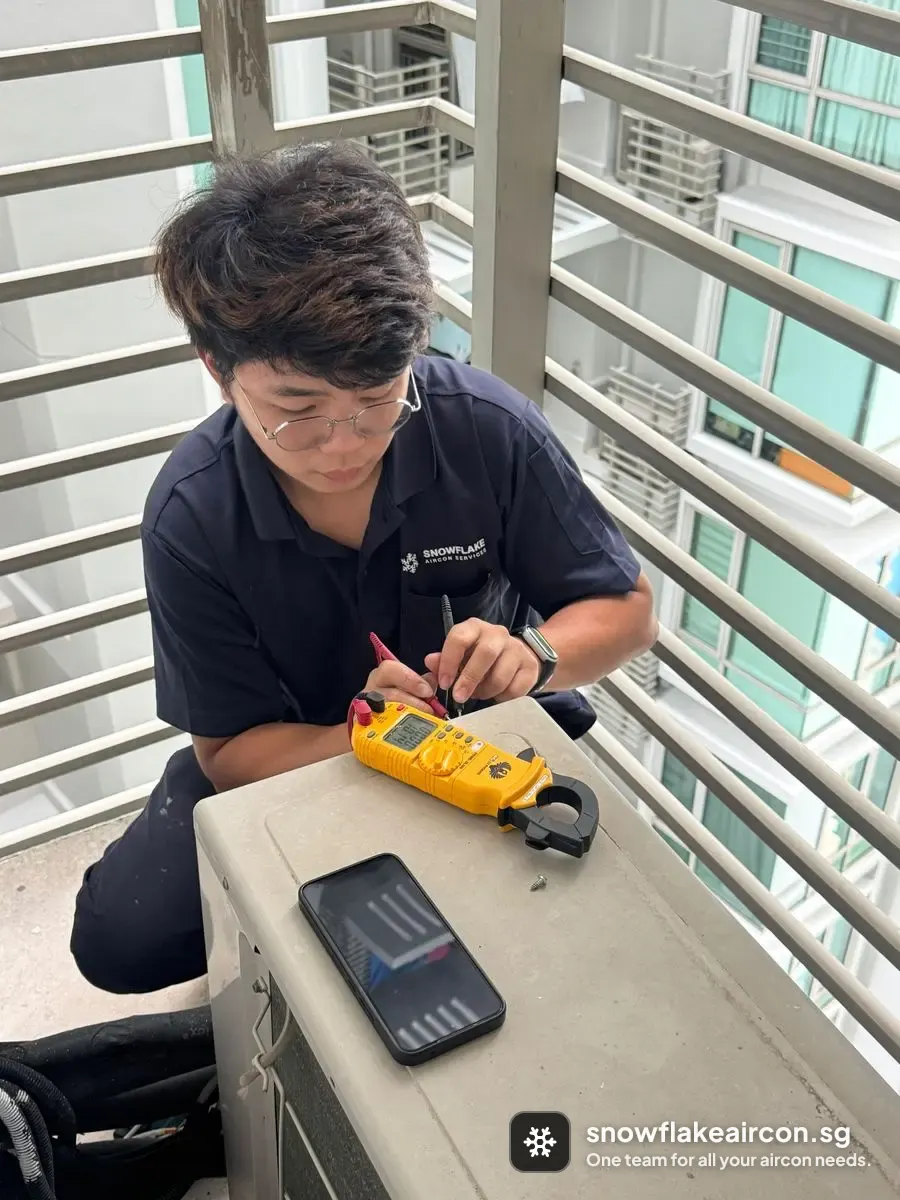
Daikin · Wall-mounted
Tripping a 20A breaker: weak capacitor, not compressor
Degraded outdoor run capacitor combined with a dust-choked condenser coil climbing amp draw past the 20A breaker limit after 15 minutes while the compressor remains sound
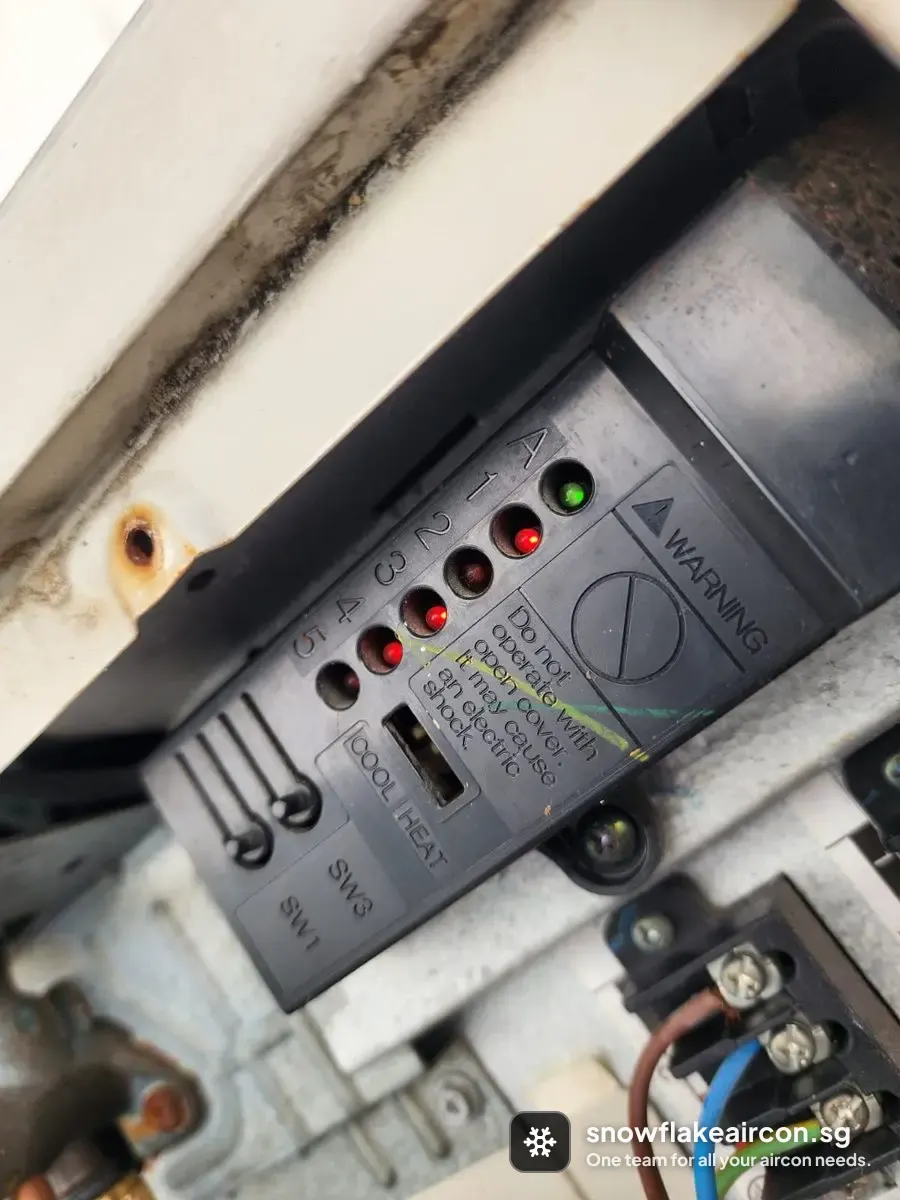
Daikin · Wall-mounted
Daikin J6 outdoor red LED: bad thermistor, not condenser
Open-circuit Daikin outdoor heat-exchanger thermistor halting multi-split cooling via outdoor safety protection while the inverter compressor stays healthy
Common Questions
Why does an outdoor aircon unit clunk off and wait twenty minutes before restarting?
How does a welded relay or pitted contactor cause loud outdoor cycling?
Can dirty coils really trigger loud compressor overload shutdowns in Singapore?
What should Singapore residents do immediately if an outdoor unit clunks and trips the MCB?
Sources
Sources checked 27 Nov 2026