On this page
Quick summary
Condenser microphones capture three preventable HVAC noises in Singapore studios: cycling cassette condensate pumps, turbulent supply grille hiss, and ceiling rod vibration. Routing gravity drains where height allows, enlarging low-velocity grilles, and adding spring hangers silence vocal rooms cleanly.
Wall-mounted general servicing $25–$50/unit · chemical wash $60–$80/unit · View servicing rates
Pinpoint the Three Aircon Noises Ruining Vocal Takes
Commercial ceiling cassettes use built-in condensate pumps that cycle abruptly during quiet studio interviews. Slime around float switches triggers loud chattering every few minutes. Sensitive condenser vocal microphones record every mechanical click loudly.
Undersized supply registers and solid hanging rods spoil takes equally fast. High-speed air whistles across tight metal vanes. Bare steel rods also transmit compressor-fan drone directly into acoustic drywall studio ceilings.
Compare Studio Acoustic Aircon Noise Sources and Fixes
Match each unwanted sound on your track to its root mechanical source before opening acoustic ceiling panels:
Scroll to see more columns
| Studio mic artifact | Mechanical aircon cause | Acoustic engineering fix | Pre-session operating habit |
|---|---|---|---|
| Intermittent pump rattle | Cassette drain lift float cycling | Clean float or gravity drain | Flush booth before live takes |
| High-pitched grille hiss | Fast air through small louvres | Wider supply grilles, balance flow | Pre-cool then drop fan speed |
| Low 50-hertz ceiling hum | Rigid steel rod transmission | Rubber spring hangers & canvas | Keep blowers serviced quarterly |
| Rattling access hatches | Loose plenum panels or dirt | Foam gasket strips & wheel wash | Inspect ceiling latches monthly |
Balance Supply Grilles, Drain Pumps, and Rubber Spring Hangers
Upgrade narrow vent slots to wider linear grilles and balance branch dampers for slow laminar airflow. Fit flexible canvas sleeves between fan outlets and sheet-metal trunks. Acoustic duct liners and lined return-air bends also block hallway noise from entering vocal booths through shared ducts.
Suspend ceiling-concealed coils on rubber-and-spring hangers instead of bare threaded rods bolted into concrete slabs. Route gravity PVC drainage wherever floor-trap drops permit so noisy lift pumps stay unused. Clean floor-trap seals block sewer odours too.
Pre-cool treated vocal booths to 22 or 23 degrees for twenty minutes before guests enter. Hosts can then lower fan speed smoothly during vocal takes. SMEs replacing inefficient commercial cooling hardware can also check current GoBusiness Energy Efficiency Grant eligibility.
Book a Commercial Studio Survey Before Modifying Ceiling Ducts
Inspect ceiling voids, isolator switches, and drainage falls on-site before cutting studio acoustic drywall:
- Diagnostic surveys cost S$30 for split or cassette booths and S$80 for commercial VRV setups. Proceeding with repairs or acoustic retrofits removes the survey fee alongside a 30-day warranty.
- Custom acoustic plenums, spring hanger mounts, and oversized duct grilles receive itemized quotes after checking ceiling clearance and structural load paths under BCA safety standards.
- Edit suites and reception lounges using standard wall splits follow fixed servicing tiers: general cleaning runs S$50/S$30/S$25 (1, 2, or 3+ heads; 14-day cover).
- Fouled blower wheels creating drone clear via chemical cleaning at S$80/S$70/S$60 (60-day cover) or full dismantled overhauls at S$150/S$125/S$115 (90-day cover) across 1, 2, or 3+ heads.
Diagnostic Cases for This Fault
Singapore jobs showing what we checked on-site before quoting parts or gas.
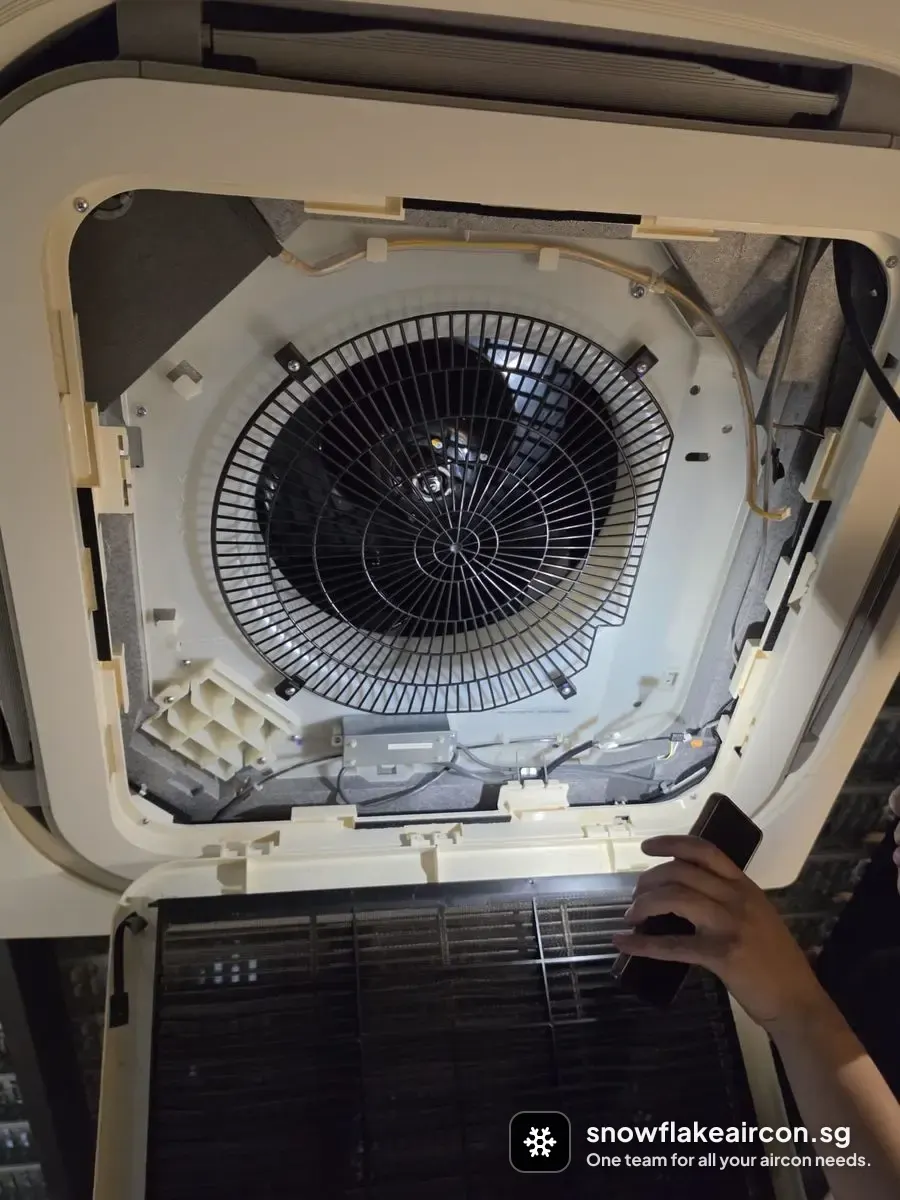
Mitsubishi Electric · Cassette
Cassette rattling at mid speed: off-centre fan blade clip
A fan blade sitting fractionally off-centre, grazing the housing across one speed band
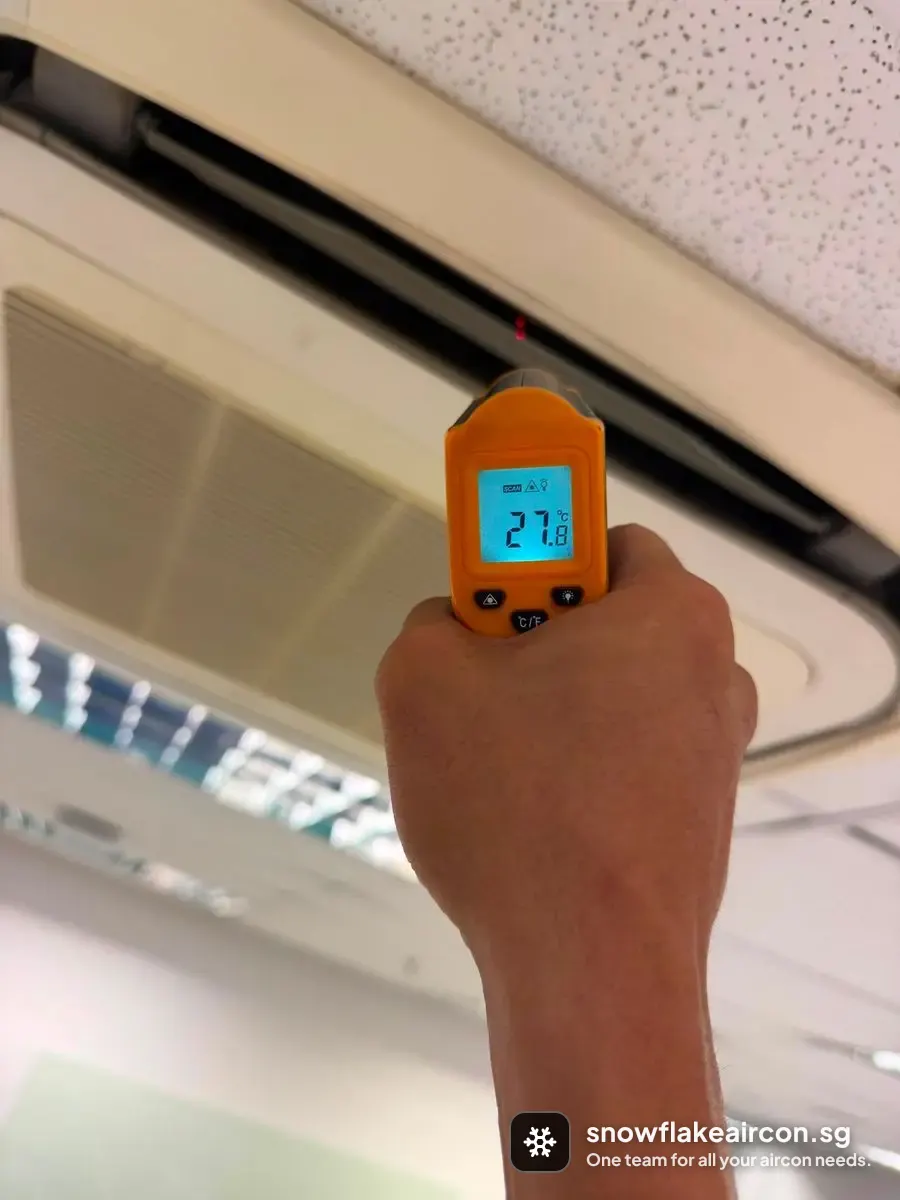
Daikin · Cassette
Cassette not cooling: stuck gas-flow valve, not compressor
A flow-control valve stuck part-closed, restricting refrigerant to the indoor coil
Common Questions
Why do ceiling cassettes create random clicking noises during quiet podcast interviews?
Can a Singapore recording studio completely eliminate aircon noise using wall splits?
Do rubber spring hangers and flexible duct connectors meaningfully reduce studio hum?
Should studios switch aircon units completely off during live recording sessions?
Sources
Sources checked 27 Nov 2026