On this page
Quick summary
Specialty coffee roasteries in Singapore shophouses dump fine chaff dust, roast smoke oils, and cooling-tray heat directly into cafe dining zones. Overhead ceiling cassettes rapidly choke on sticky chaff mats unless negative exhaust balance and monthly drain-and-coil maintenance protect airflow.
Wall-mounted general servicing $25–$50/unit · chemical wash $60–$80/unit · View servicing rates
How Roasted Chaff and Cooling Trays Foul Cafe Cassettes
Every batch drop inside a Singapore roastery cafe lifts flaky chaff and oily smoke toward ceiling cassettes. Fine dust slips past coarse grilles and sticks onto damp evaporator fins. Standard retail mesh simply cannot catch fine silverskin flakes.
Oily chaff soon washes down into condensate pans and jams pump float switches. Meanwhile, hot cooling-tray air spikes compressor head pressures every afternoon. Back-lane condensers also pull sticky exhaust steam across tight walls.
Compare Roastery Aircon Strain Points and Airflow Fixes
Spot where roast smoke, chaff flakes, and negative draft stress commercial cafe equipment:
Scroll to see more columns
| Roastery stress zone | Visible cafe symptom | Root mechanical cause | Operational fix |
|---|---|---|---|
| Cassette intake grille | Brown dust flaking onto seating | Chaff slips past coarse plastic mesh | Wipe weekly; add finer pre-filter |
| Drain pan & lift pump | Sudden ceiling drip over bar | Oily chaff sludge locks pump float | Monthly drain clear; regular chemical wash |
| Roaster cooling zone | Warm street air floods doorway | Exhaust stack lacks fresh makeup air | Supply dedicated roaster makeup intake |
| Back-lane condenser | Warm afternoon dining complaints | Grease and lint choke outdoor coils | Keep alley gap clear; clean fins |
Balance Roaster Exhaust Makeup Air and Efficiency Grants
Unbalanced roaster hoods pull chilled dining air up chimneys fast. Humid five-foot-way air then rushes through front doors. Partitioning roast bays or piping makeup air beside cooling trays eases cassette strain.
Local F&B operators replacing old cooling hardware with 5-tick inverter systems can review GoBusiness EEG co-funding options. Check asset efficiency rules beforehand.
Schedule Off-Hours Cassette Servicing and Drain Clears
Protect busy roasting shifts with off-hours servicing timed around clean intake routines:
- Start before opening hours with an S$30 check (S$80 on VRV). Mechanics waive standard fees once repairs start and include 30-day cover.
- Monthly general cleans clear dry chaff cleanly. Single blowers bill S$50, twin setups bill S$30 each, and larger cafes bill S$25 per cassette under 14-day backing.
- Oily roast residue requires periodic chemical washes. One cassette bills S$80, two bill S$70 apiece, and larger cafes cost S$60 per cassette (60-day guarantee).
- Slime-locked pumps warrant dismantled overhauls. One cassette runs S$150, two run S$125 apiece, and multi-cassette jobs cost S$115 per unit with 90-day warranty backing.
Diagnostic Cases for This Fault
Singapore jobs showing what we checked on-site before quoting parts or gas.
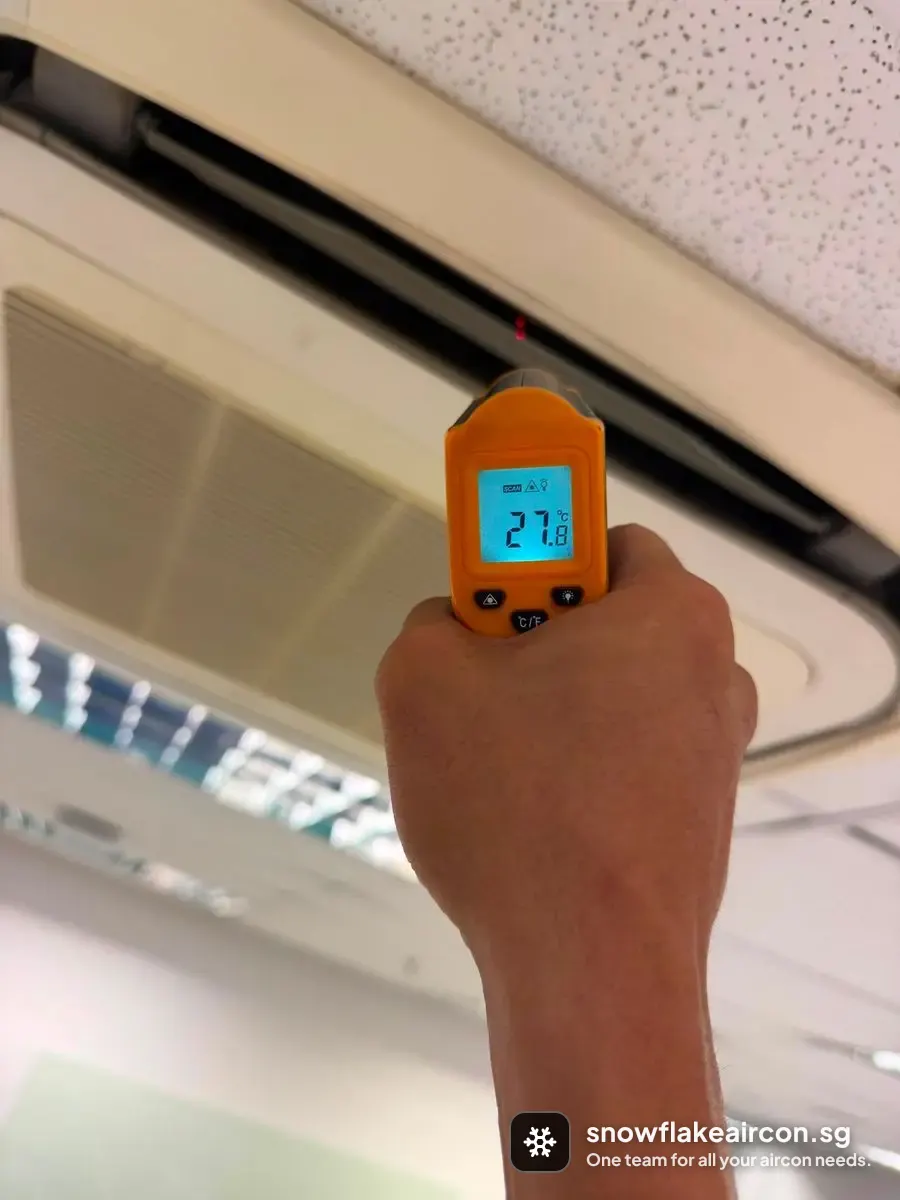
Daikin · Cassette
Cassette not cooling: stuck gas-flow valve, not compressor
A flow-control valve stuck part-closed, restricting refrigerant to the indoor coil
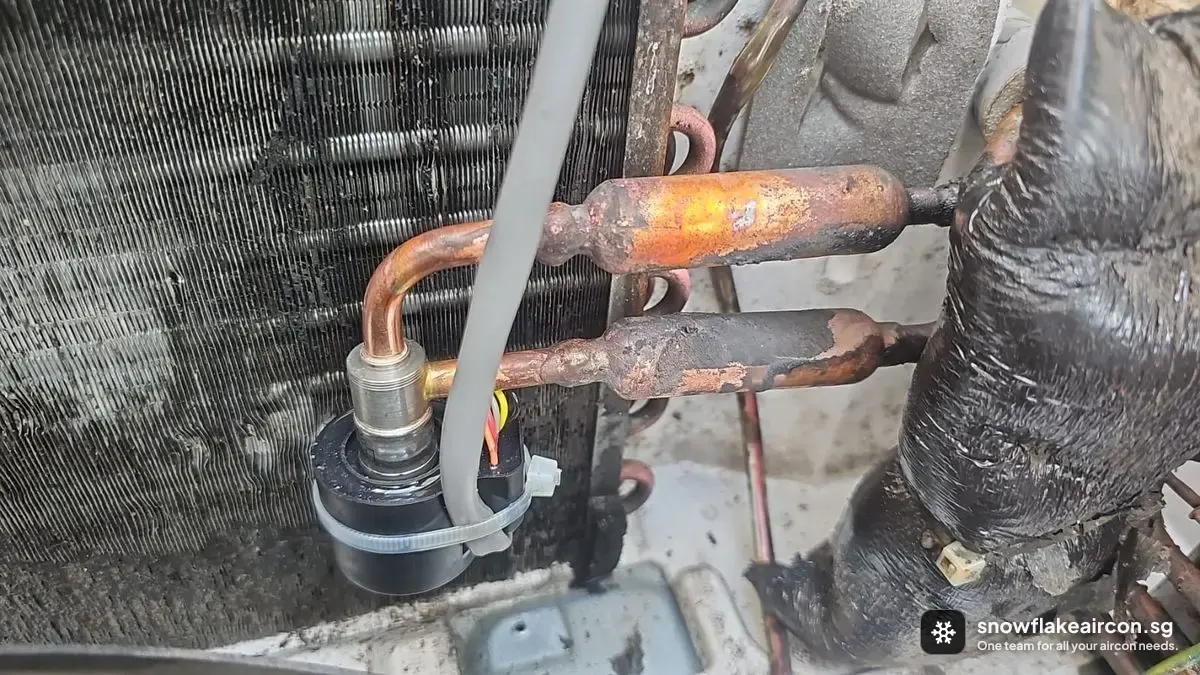
York · Cassette
Office outdoor unit failed: indoor side still had years left
A seized, salt-corroded outdoor unit above an indoor side with years of life left
Common Questions
Why does coffee chaff clog cafe ceiling cassettes faster than kitchen steam?
Can strong roaster exhaust hoods make cafe aircons work harder?
How frequently should specialty coffee roasteries wash overhead aircon coils?
Are Singapore cafe roasteries eligible for Energy Efficiency Grant aircon support?
Sources
Sources checked 27 Nov 2026