On this page
How This Presents
Main lounge and dining units inside a high-rise Orchard condo fade gradually from crisp chill to damp warmth every few months. Repeat refrigerant top-ups restore comfort briefly before humid afternoon air creeps back again. Concealed ceiling piping raises costly worries of hacking finished plaster walls across living areas.
- Setup
- Mitsubishi Electric Multi-split7-9 yearsCondoOrchard
- Misread as
- Funding endless short-lived R410A refills or opening finished Orchard condo walls to replace concealed piping.
- Check first
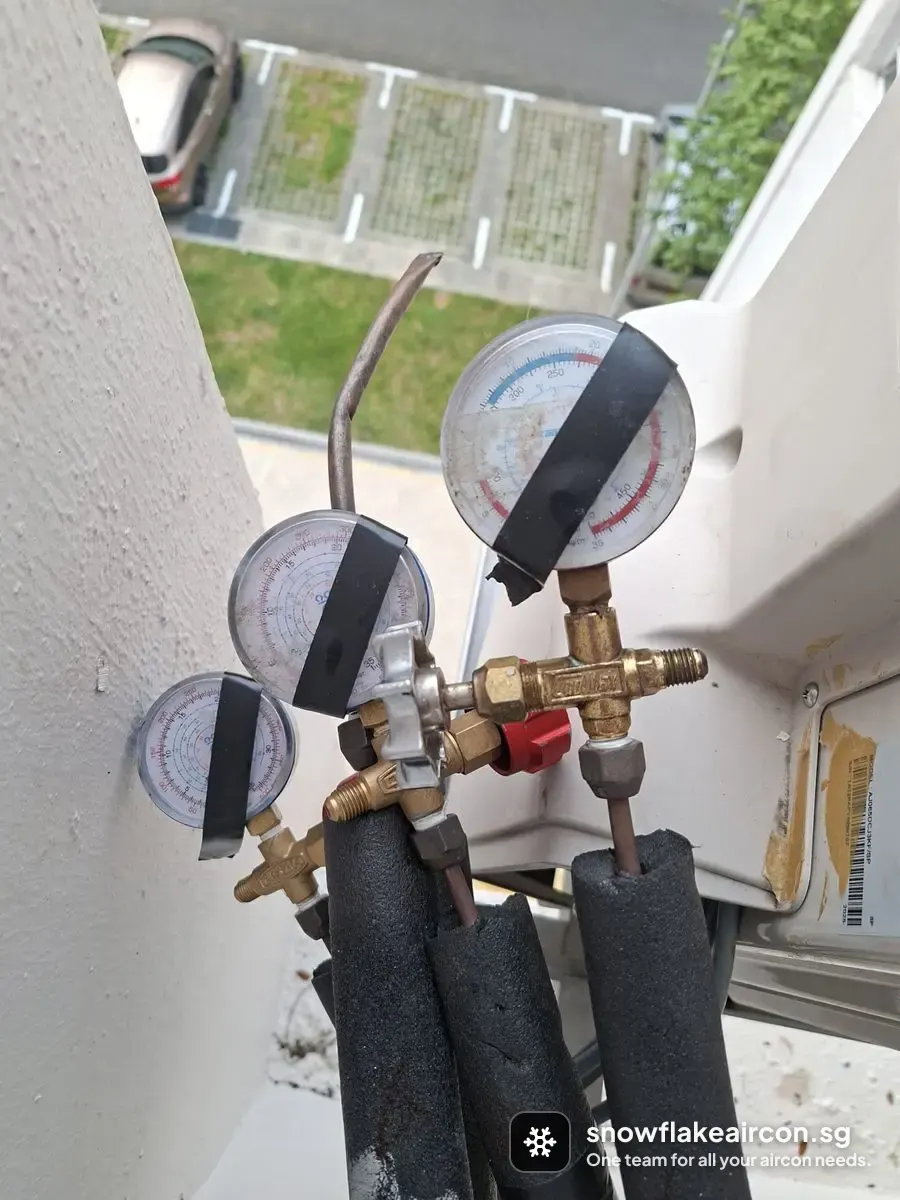
- Mounting gauges across all high-rise Orchard condo service valves to spot depressed R410A charge before soap-testing the weeping service port pin
- Actual finding
- Perished rubber O-ring inside a high-rise Orchard condo R410A service port valve core slowly weeping gas past a finger-loose brass cap
- Scope saved
- Root cause fixed once instead of repeat call-outs
What Else Produces This
Gradual R410A cooling fade in established condos usually stems from weathered outdoor valve fittings rather than buried copper splits. Attaching gauges on the high-rise ledge establishes circuit balance before pinpointing external brass service port leakage cleanly.
Connecting gauges across the Orchard condo outdoor service valves records equally depressed standing pressure across active loops.
Unscrewing the suction brass port cap reveals faint dark compressor oil dampness coating the inner female brass threads.
Dabbing leak-detection soap onto the exposed brass valve pin pushes a slow steady dome of tiny bubbles upward.
Testing neighbouring copper flare nuts and accessible indoor unions with soap solution shows dry brass with zero secondary leaks.
Holding dry nitrogen test pressure across concealed Orchard wall lines confirms zero pressure drop over twenty quiet minutes.
Why It Happens
Years of high-rise sun baking the Orchard condo ledge stiffened the inner rubber ring sealing the R410A service port valve core. Past gauge hookups nudged that aged pin slightly off-centre while a loosely tightened brass cap could not block escape. Refrigerant bled slowly outside without harming any buried wall pipework.
What Resolution Involves
Leave finished condo walls completely intact. Recover remaining blended R410A cleanly into a sealed cylinder, extract the worn valve pin with a core tool, and seat a fresh high-pressure R410A core. Pull a deep vacuum below target microns, weigh fresh factory R410A by digital scale, and wrench the cap tight.
How to Tell It Worked
Dab leak-detection soap over the renewed valve pin and tightened brass cap to confirm zero foam bubbles appear under live cooling load. High-rise ledge gauges hold steady R410A operating pressure across twenty continuous minutes of full lounge cooling. Supply air inside the Orchard condo stays crisp and dry across every warm afternoon heat wave.
Before You Approve a Quote
Inspect high-rise condo service pins before breaking wall plaster
- Slow seasonal gas loss across an established Singapore condo often escapes right at an aged outdoor charging pin.
- Topping up R410A blindly blends the refrigerant mix poorly without stopping the weeping valve seal from leaking again.
- Fitting one fresh valve pin, sealing the cap tightly, and weighing clean gas restores lasting condo chill.