On this page
How This Presents
This Sembawang HDB living-room split runs noticeably warm even on maximum cool, just four months after another contractor topped up refrigerant for the second time. Both earlier visits took twenty minutes and never pinpointed where the gas went.
- Setup
- Daikin Wall-mounted7-9 yearsHDBSembawang
- Misread as
- Paying another S$120 to S$180 for a third blind refrigerant top-up or being pushed into a full condenser replacement.
- Check first
- Pressurising the Daikin line with dry nitrogen and soap-testing every brass cap and flare nut on the outdoor service block before adding any gas
- Actual finding
- Hairline-cracked brass service port cap paired with a slightly scored, oil-weeping liquid-line flare union steadily bleeding refrigerant after two blind gas top-ups
- Scope saved
- Root cause fixed once instead of repeat call-outs
What Else Produces This
Two repeat gas refills within a year confirm an active leak rather than normal wear. Inspecting the outdoor brass valve block and running a proper pressure test pinpoints external joint leaks before assuming indoor coil rot.
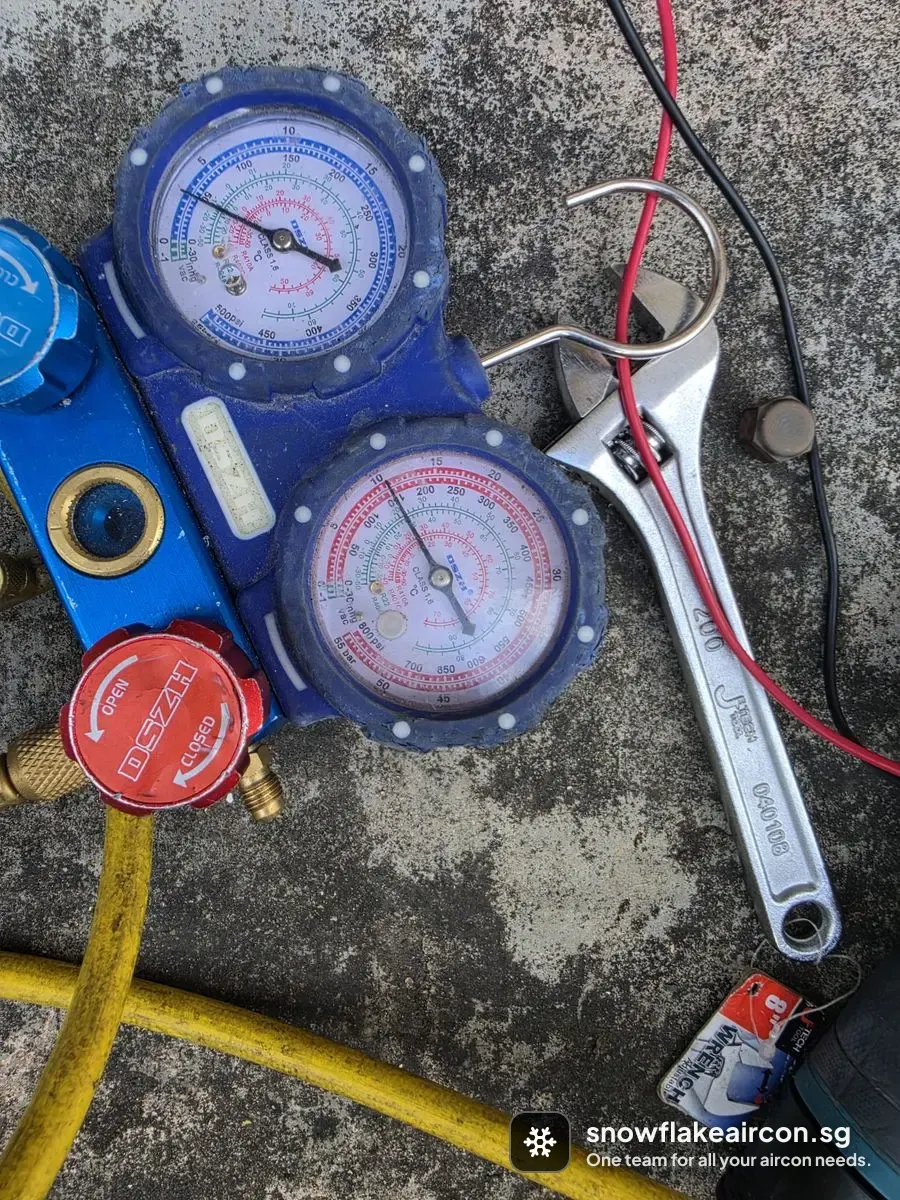
Connecting the manifold gauge set on the Sembawang ledge shows depleted suction pressure matching steady refrigerant loss.
Removing the side valve cover reveals dark compressor oil clinging around the smaller copper flare nut and pooling below the service block.
Closer inspection with an adjustable wrench shows a hairline split along the shoulder of the over-torqued brass service cap.
Under dry nitrogen holding pressure, soapy leak detector forms steady fine bubbles at the weeping flare union while indoor piping holds tight.
Why It Happens
Repeated heavy wrenching during past top-ups cracked the brass service cap shoulder and slightly deformed the copper flare lip on the Sembawang Daikin outdoor valve. Daily thermal expansion on the sunny HDB ledge worked that scored copper face loose until refrigerant wept away steadily after every refill.
What Resolution Involves
Stop the cycle of blind top-ups without replacing major hardware. Recover remaining charge safely, cut and remake a fresh clean copper flare on the weeping union, torque it evenly to spec, fit a sound brass service cap, hold dry nitrogen pressure to confirm zero drop, vacuum thoroughly, and weigh in exact refrigerant charge.
How to Tell It Worked
Soap-check the remade flare union and fresh brass cap under running pressure to confirm zero micro-bubbles. Run the Sembawang HDB Daikin at 24 degrees for twenty minutes; discharge air turns crisp and cold while manifold gauges hold rock-steady on factory targets.
Before You Approve a Quote
Pressure-test brass service caps and flare unions before paying for another gas refill
- A split brass service cap leaves the outdoor valve stem exposed whenever an older port seal softens under Singapore heat.
- Oily grime around an outdoor flare union is a clear visual clue of a slow refrigerant weep that blind top-ups never fix.
- Re-flaring the weeping union, replacing the cracked brass cap, and pressure-testing the repaired circuit ends repeat gas bills permanently.