On this page
How This Presents
Chilled airflow from a Pasir Ris HDB bedroom unit lasts barely ten minutes before easing into lukewarm breeze while the room stays humid. Lowering the remote setpoint restarts cold air momentarily, yet the exact same premature pause repeats all evening.
- Setup
- Mitsubishi Electric Wall-mounted4-6 yearsHDBPasir Ris
- Misread as
- Anticipating a S$240 to S$360 indoor board swap when a warm bedroom unit keeps stopping ten minutes after startup.
- Check first
- Lifting the full front indoor cover to inspect sensor clip placement along the coil face and verifying matched thermistor readings against bedroom air temperature
- Actual finding
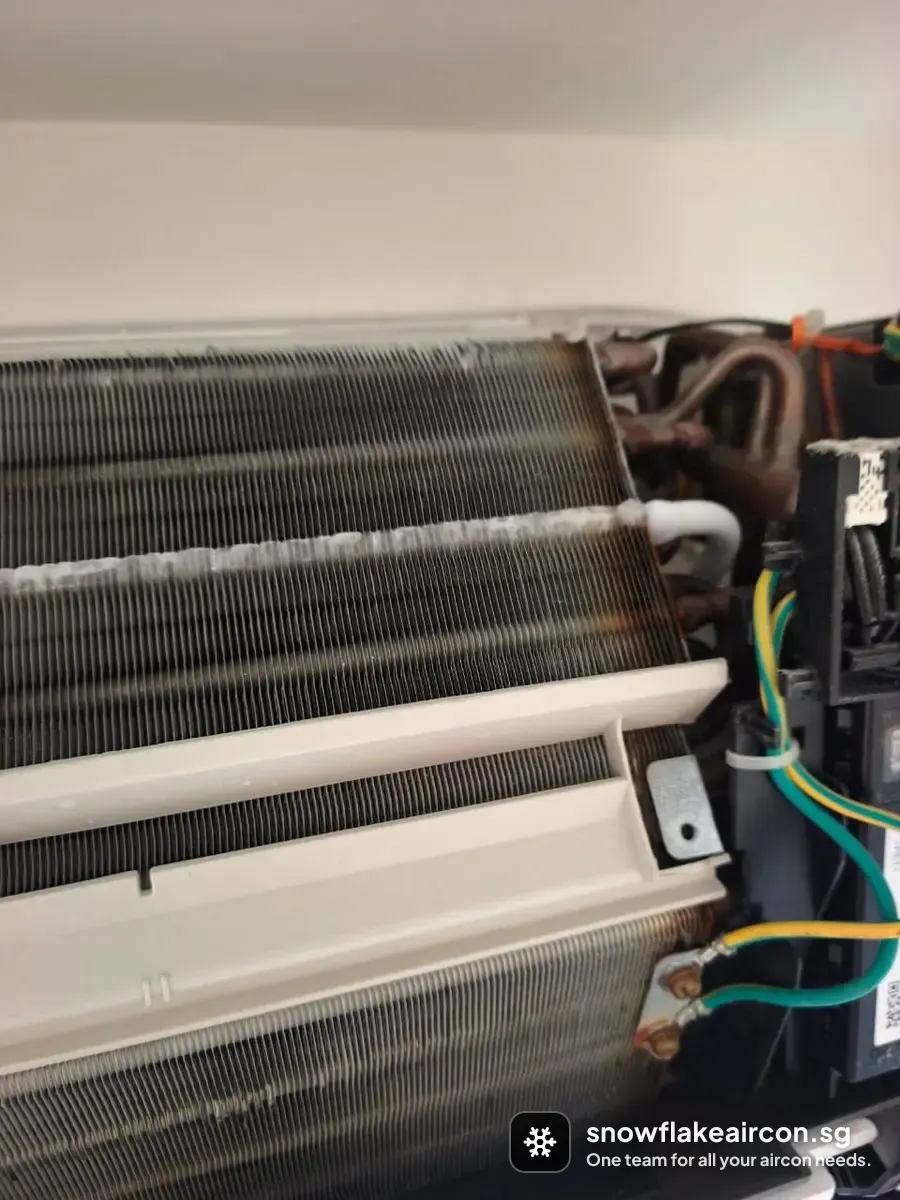
- Displaced indoor room-and-coil thermistor probe touching the frosty evaporator fin bank directly, fooling the healthy Mitsubishi Electric controller into cutting cooling off too early
- Scope saved
- Targeted repair instead of full replacement
What Else Produces This
Brief cooling bursts frequently get blamed on a confused indoor circuit board right away. Opening the front cover to inspect sensor placement exposes mechanical misreads in plain sight.
Measuring bedroom air right at the Pasir Ris return grille shows sticky warmth even as the Starmex pauses outdoor cooling early.
Removing the front indoor shell exposes the evaporator face and thin black thermistor loom routed beside the right-hand wiring bay.
Inspecting the factory plastic holder reveals the sensor probe popped free and pressed flat against the coldest front coil fins.
Testing the bruised thermistor off the fins reveals slight lag from damp coastal air. The Mitsubishi Electric indoor PCB processes commands accurately.
Checking the evaporator fins confirms clean frost-free metal and normal blower speed, ruling out airflow choke or low refrigerant.
Why It Happens
A dislodged thermistor bead resting directly against cold aluminium fins fed chilled metal readings straight to the Pasir Ris Starmex board instead of real bedroom air. Paired with mild response drift from humid coastal breeze, the intact indoor controller kept stopping outdoor cooling far too early.
What Resolution Involves
Keep the working Mitsubishi Electric PCB mounted instead of spending S$240 to S$360 on an unneeded board swap. Install a fresh matched thermistor assembly right beside the intake path. Seat the sensor bead firmly inside its plastic clip well clear of cold fins and route the wire neatly along factory guides.
How to Tell It Worked
Snap the indoor cover back on and run the Pasir Ris Starmex at normal sleeping temperature for forty uninterrupted minutes. Cooling stays engaged smoothly until the entire bedroom feels genuinely crisp and dry. Outdoor compressor cycling then settles into steady, even overnight intervals without premature shut-offs.
Before You Approve a Quote
Check sensor clip position before replacing an early-stopping board
- A temperature probe leaning directly onto icy coil fins thinks the whole bedroom already hit target chill and shuts cooling down early.
- Sensors easily get bumped out of their plastic holder clips during rushed filter scrubbing or casual cover removal.
- Fitting a matched probe snugly inside its factory clip restores steady overnight cooling across Singapore HDB bedrooms without new boards.