On this page
Quick summary
Inverter master bedroom aircons briefly hiss when electronic expansion valves modulate refrigerant flow or pause at setpoint temperature. Continuous shrill whistling paired with room warmth, frozen copper flare nuts, or rapid outdoor trips indicates low refrigerant rather than normal cycling and needs S$30 diagnostic pressure testing.
On-site fault check: $30 ($80 VRV), waived if you proceed with repair · See diagnosis & repair
Separate Expansion Valve Modulation from Gas Leak Whistling
Singapore bedroom inverter splits regulate refrigerant continuously via electronic expansion valves. At startup or near room setpoint, liquid equalizes across the valve for 10 to 30 seconds. Outdoor fan pitch also shifts softly during this step.
That brief fluid whoosh stays distinct from sustained gas leaks. Low R32 or R410A charge lets vapour whistle sharply while room airflow warms up. Frost soon forms along indoor flare nuts too.
Compare Hissing Symptoms, Sound Cues, and Fault Outcomes
Measure how long each noise lasts and check air temperature before ordering replacement parts:
Scroll to see more columns
| Symptom pattern | Likely internal cause | Room cooling impact | Recommended Singapore action |
|---|---|---|---|
| Short 15-second swoosh on start | Routine valve pressure balance | Cold airflow starts fast | Monitor; rinse filters monthly |
| Brief sigh before outdoor pause | Inverter slows near setpoint | Room holds steady 25 degrees | Normal operation; no fix needed |
| Sustained shrill hiss plus frost | Low gas flashing across coil | Lukewarm draft and weak drop | Schedule S$30 leak inspection |
| Loud hiss then blinking shutoff | Thermal or low-suction lockout | Compressor trips off early | Power off; stop repeated resets |
Check Safe Indoor Clues Without Opening Covers
Dust-choked mesh screens starve indoor evaporator coils of return air. Falling suction pressure makes refrigerant boil loudly and trips freeze protection early. Rinse washable screens from floor level first.
Keep every visual check safely inside your master bedroom. Under MOM, BCA, and EMA limits, avoid climbing onto outdoor ledges or opening 230V covers. Note blinking display lights instead.
Schedule Pressure Diagnosis and Verified Coil Servicing
Match fault cues against Snowflake's flat rates so repairs solve root leaks permanently:
- On-site checks cost S$30 and drop off repair bills (S$80 for VRV). Nitrogen pressure testing checks flare joints under a 30-day warranty.
- Light general upkeep runs S$50 solo, S$60 paired, or S$75 across three bedrooms (S$25 apiece). Every clean carries 14-day cover.
- Chemical washing removes sticky sludge for S$80 on one room. Twin units cost S$70 each, and larger jobs run S$60 per room (60-day warranty).
- Heavy mould requires chemical overhauls at S$150 single, S$125 each when dismantling two coils, or S$115 apiece for larger sets with 90-day protection.
Diagnostic Cases for This Fault
Singapore jobs showing what we checked on-site before quoting parts or gas.
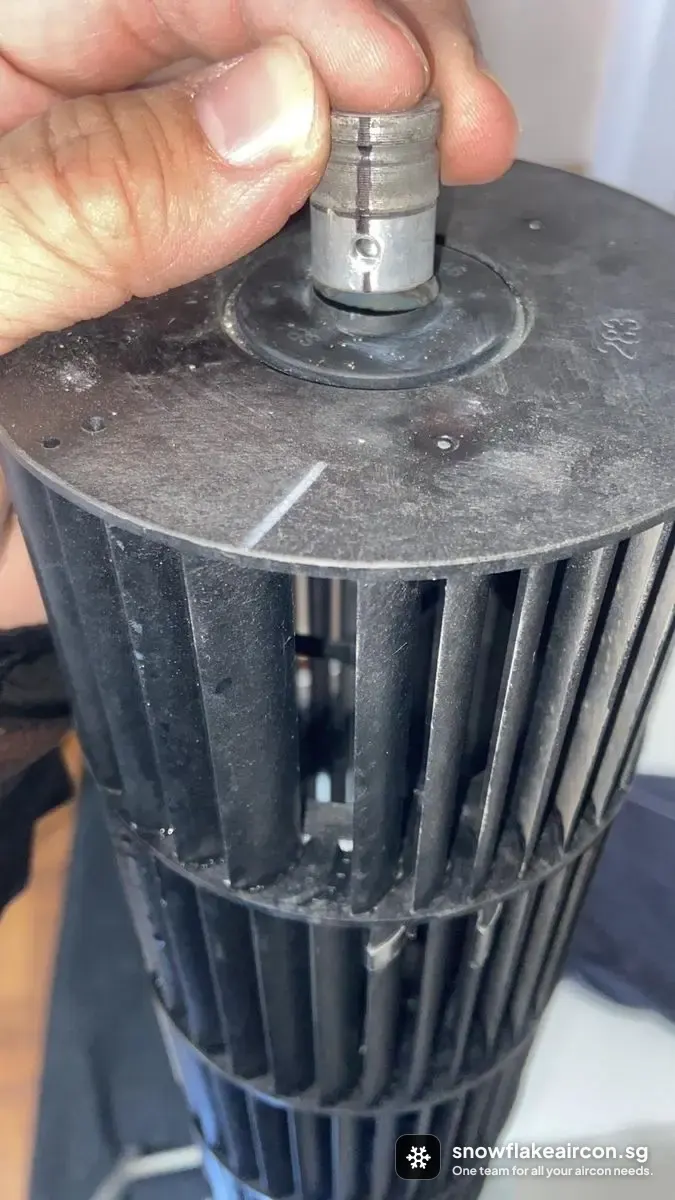
Midea · Wall-mounted
Rattling on startup: blower wheel loose on the shaft
A blower barrel drifted along its shaft after the setscrew backed off
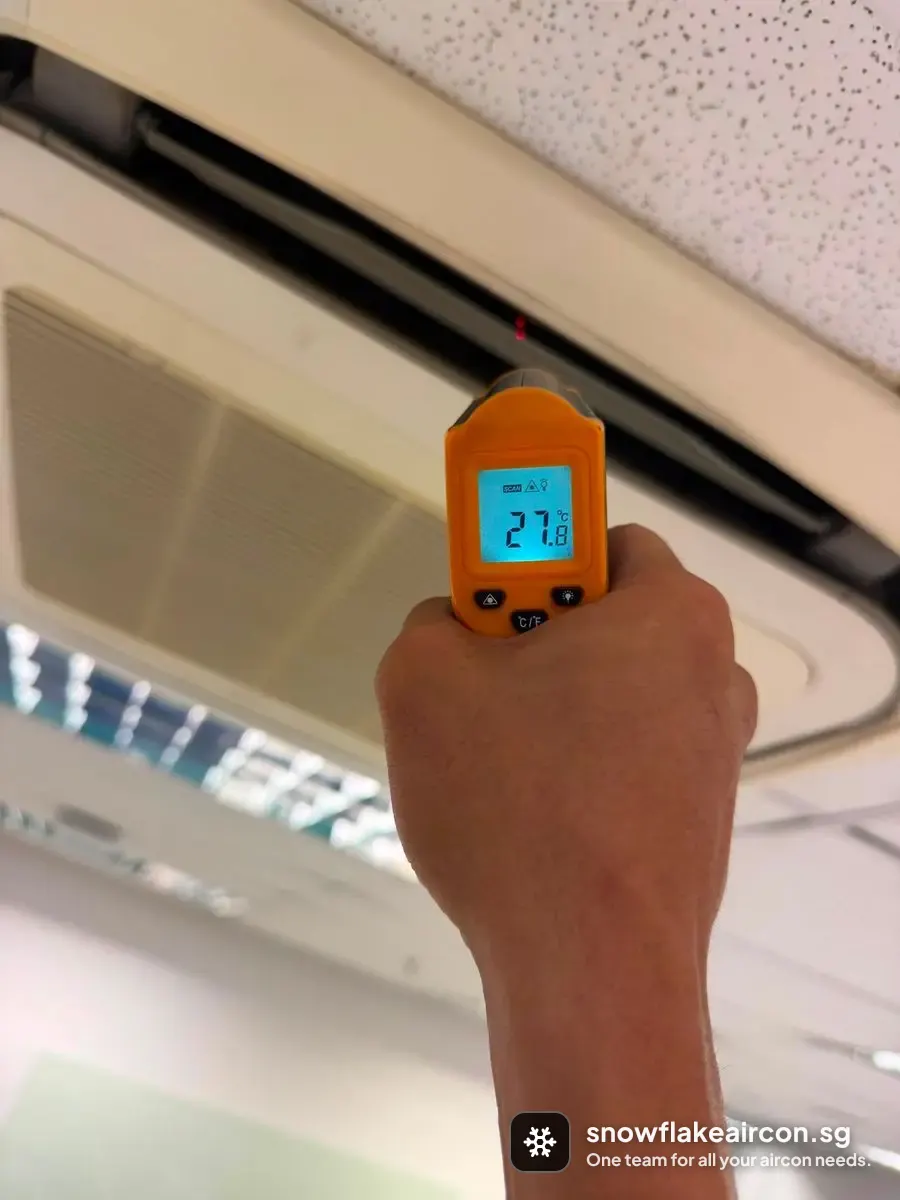
Daikin · Cassette
Cassette not cooling: stuck gas-flow valve, not compressor
A flow-control valve stuck part-closed, restricting refrigerant to the indoor coil
Common Questions
Why does my master bedroom aircon hiss for 20 seconds and go quiet?
How do homeowners tell normal valve noise apart from a refrigerant leak?
Can clogged indoor air filters cause loud pipe hissing before shutdown?
Should technicians refill gas immediately when an aircon hisses and stops?
Sources
Sources checked 27 Nov 2026