On this page
Quick summary
Thick white ice encasing an outdoor brass pipe valve signals sub-zero refrigerant flashing caused by either starved indoor airflow or a liquid-line EEV or capillary restriction. Turning off cooling prevents compressor liquid floodback while a technician checks superheat, coil dirt, and gauge pressures.
On-site fault check: $30 ($80 VRV), waived if you proceed with repair · See diagnosis & repair
Why Thick Ice Forms on Outdoor Brass Valves
White ice encasing the thicker insulated suction valve traces backward from indoors. Matted filters, slimy blower wheels, or weak fan motors starve coils of warm air.
Without room heat to boil liquid gas, freezing refrigerant rides straight outside onto brass ports. Ice starting on the thinner liquid-line valve tells a different story.
A jammed electronic expansion valve or pinched copper line drops pressure outside early. Refrigerant flashes below zero right at the condenser outlet valve.
Humidity in Singapore turns sub-zero pipe exposure into solid snowballs within twenty minutes. Look indoors at the wall grille first to spot matted grey slime.
Compare Starved Airflow Icing Against Metering Restrictions
Checking which valve crusts first alongside manifold gauge numbers separates cleaning needs from restriction work:
Scroll to see more columns
| Diagnostic clue | Starved indoor airflow | EEV or capillary block | Low refrigerant charge |
|---|---|---|---|
| Frosted brass valve | Larger suction pipe valve | Thinner liquid pipe valve | Thin liquid valve crusts lightly |
| Indoor blower symptom | Weak breeze from dirty wheel | Clean coil blows warm air | Long cycles with mild cooling |
| Gauge reading sign | Low suction normal subcooling | Vacuum suction high subcooling | Low suction near-zero subcooling |
| Required local fix | Dismantled coil overhaul | Purge or swap EEV valve | Seal flare leak and recharge |
Switch Off Cooling Safely and Protect the Compressor
Keeping an iced split running sends raw liquid back into the compressor sump. Unboiled refrigerant washes away oil and overheats internal valves quickly.
Turn off cooling at the indoor remote immediately so ice melts naturally over two hours. Stay indoors off external HDB ledges under MOM and BCA rules, and never chip ice with metal tools.
Melting blocks drip fast down exterior casing drains once cooling halts. Place a cloth below indoor louvers in case thawed evaporator frost overflows a dirty tray.
Verify Servicing or Repair Costs Before Work Starts
Thawing pipe ice beforehand lets gauges read true pressures on arrival:
- Begin with a S$30 fault visit, or S$80 for VRV networks. Approved repairs remove that visit charge and carry 30-day cover.
- Solid indoor ice from neglected slime needs stripped chemical overhaul work. Solo units bill S$150, twin bookings pay S$125 per coil, and multi-unit sets reaching three blowers drop to S$115 per blower under 90-day protection.
- Moderate grime clears safely before solid icing begins. Chemical washing charges S$80 for one room, two coils cost S$70 apiece, while three or more rooms run S$60 per coil under 60-day protection.
- Quarterly general checks keep suction airflow unobstructed. One room pays S$50, pairs cost S$30 per unit, and bookings covering at least three rooms settle at S$25 per room for 14-day warranty.
Diagnostic Cases for This Fault
Singapore jobs showing what we checked on-site before quoting parts or gas.
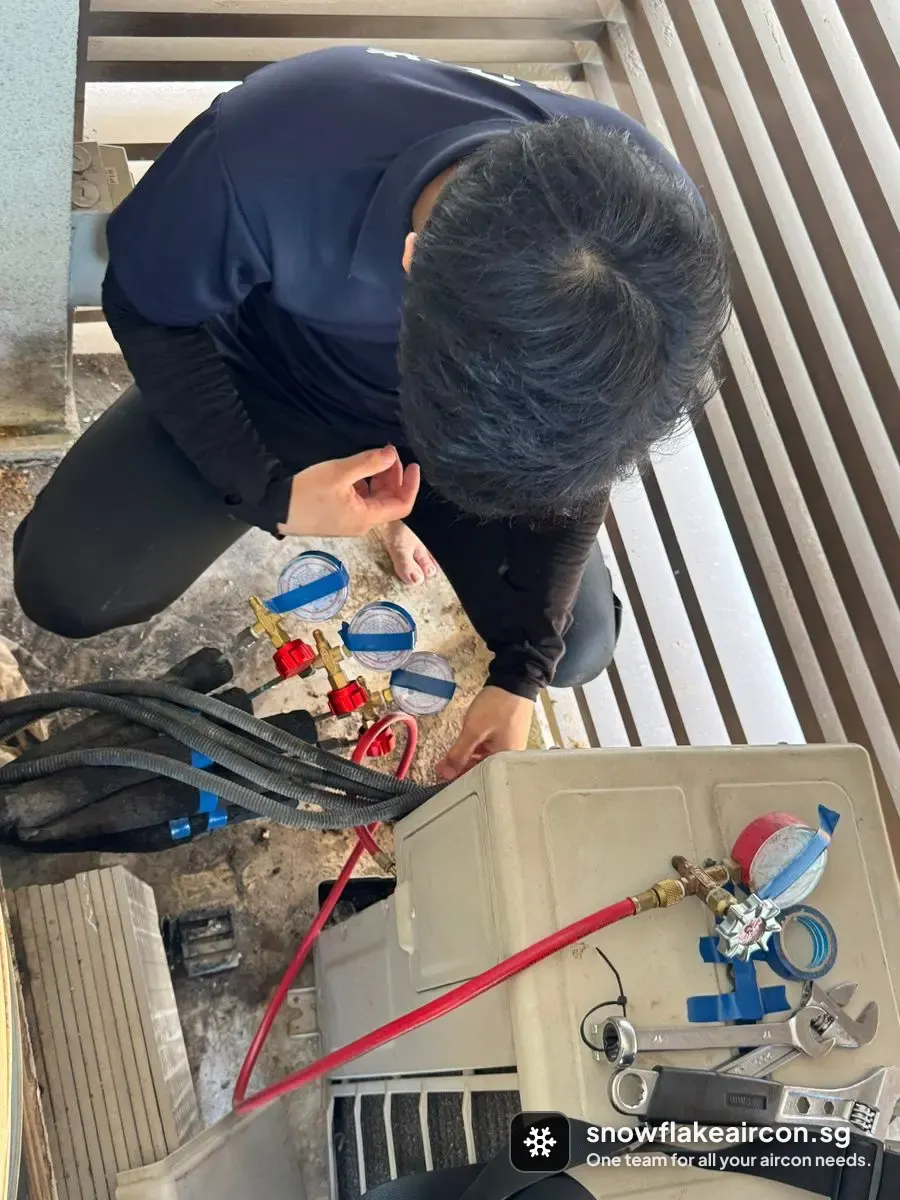
Mitsubishi Electric · Wall-mounted
Warm air with normal gas pressure: fouled coil, not low gas
Grease-choked indoor evaporator coil and dust-packed blower wheel causing poor temperature drop while refrigerant pressure stayed full
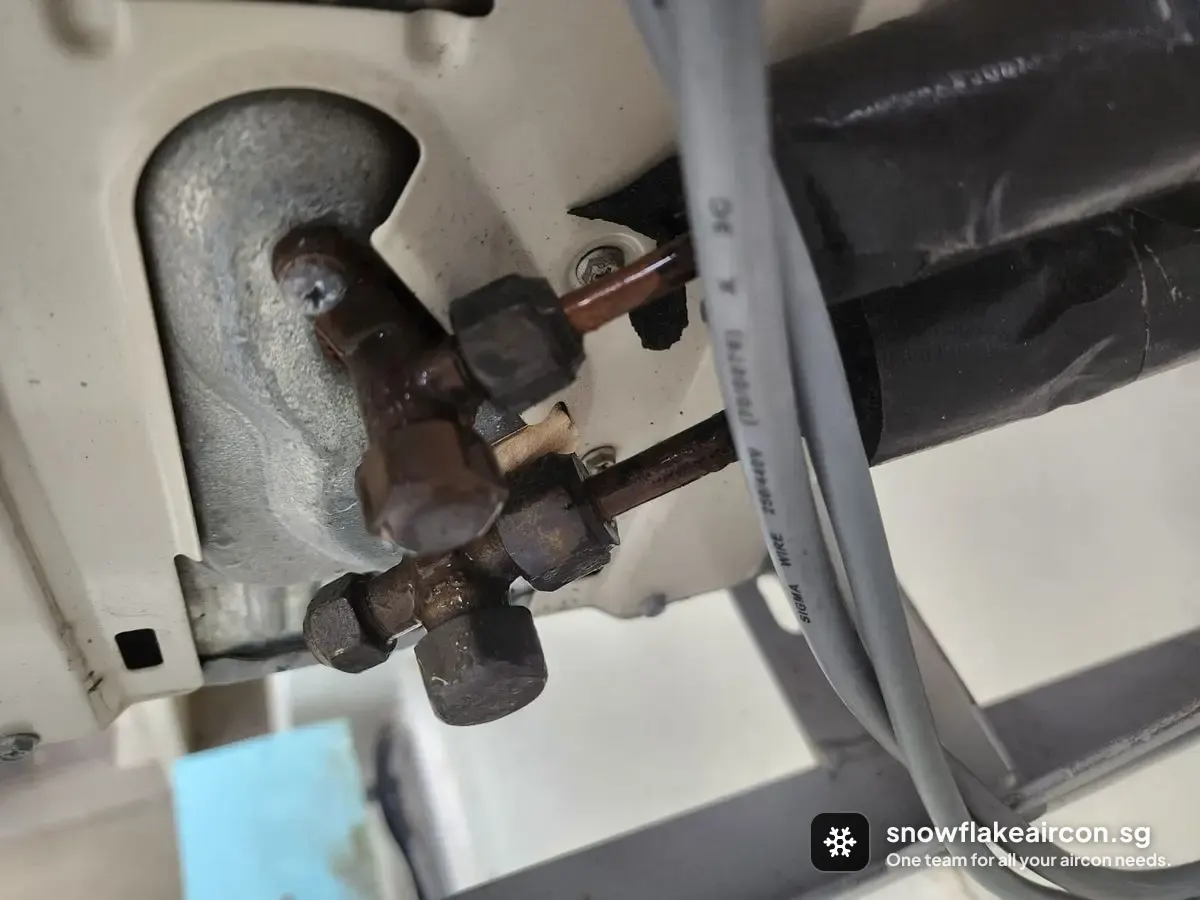
Samsung · Wall-mounted
Coastal unit losing gas again: salt ate the pipe fitting
A corroded outdoor fitting thinned past the point where it can seal
Common Questions
Can homeowners scrape thick ice off an outdoor brass aircon valve themselves?
How long should an iced aircon stay shut off before a technician arrives?
Does white frost on the thick suction valve always indicate missing refrigerant?
What damage occurs if an iced compressor runs overnight in Singapore humidity?
Sources
Sources checked 27 Nov 2026