On this page
Quick summary
Weekend tuition halls seating 40 students absorb over 4 kW of sudden body heat and moisture. Pre-cooling classrooms 45 minutes early keeps walls cool. Steady 23-degree settings and clean evaporator coils stop sticky exam rooms.
Wall-mounted general servicing $25–$50/unit · chemical wash $60–$80/unit · View servicing rates
Why Weekend 40-Student Exam Blocks Overwhelm Late Starts
Forty teenagers writing an exam release four to five kilowatts of body heat plus constant breath moisture. Turning aircon on five minutes before class leaves desks and walls radiating stored warmth. Cooling output lags right when attendance peaks during back-to-back weekend sessions.
Dropping remotes abruptly to 18 degrees rarely recovers a stuffy room fast. Dirty return filters and slow fan speeds let room humidity pass 70 percent. Exam scripts turn damp while outdoor compressors draw peak current across humid afternoons. Clear intake airflow maintains steady comfort throughout intense Saturday revision blocks.
Compare Exam-Hall Pre-Cooling Steps Against Load Failure Signs
Apply these classroom operating benchmarks ahead of busy Saturday sessions:
Scroll to see more columns
| Operating check | Target classroom setting | Weekend stress signal | Practical adjustment |
|---|---|---|---|
| Pre-cool lead time | Run 45 to 60 minutes early | Stuffy warmth at first bell | Enable auto-on before staff arrive |
| Setpoint and airflow | 23 degrees, medium-high fan | Clammy air under cold vents | Avoid Auto fan with full halls |
| Return grille dust | Vacuumed fortnightly on Fridays | Loud intake hiss or warm corners | Clear mesh screens before Saturday |
| Entrance door discipline | Closed sweep during changeovers | Sweating ceiling diffuser trims | Keep foyer doors shut tightly |
Protect Classroom Aircon Circuits and Safe Maintenance Access
Shophouse tuition hubs running heavy weekend hours produce steady condensate flow and electrical load. Check drain lines from floor level only. Tutors and front-desk staff should never climb ladders toward ceiling cassette wiring or exterior ledges. Keeping corridor louvres clear also helps condenser heat escape rapidly.
Repeated circuit breaker trips signal wiring stress under EMA electrical safety guidelines. Engage licensed electricians for isolator repairs rather than resetting breakers repeatedly. Weekday maintenance also trims extra draw under 31.16 cents commercial power rates. Steady preventive care avoids costly mid-term breakdowns during revision camps.
Schedule Tuition Hub Servicing Ahead of Peak Exam Terms
Booking off-peak maintenance between term intakes protects weekend classes without sudden leaks:
- Begin with an engineering walk-through at S$30 for split installations or S$80 for commercial VRV networks. Booking corrective repairs credits that site fee back completely under 30-day warranty.
- Clear classroom lint via routine general servicing: S$50 for a solo room, S$30 each on twin rooms, or S$25 per classroom when bundling three-plus units under 14-day warranty.
- Remove musty damp odours ahead of mock exam papers with chemical washes: single-room treatment bills S$80, two-room suites total S$140 (S$70 per classroom), while triple-plus setups pay S$60 per classroom carrying 60-day cover.
- Clear thick drain jelly inside busy cassettes or wall blowers through full chemical overhaul. Solo units bill S$150, paired units run S$125 apiece, and three-plus suites drop to S$115 apiece with 90-day protection.
Diagnostic Cases for This Fault
Singapore jobs showing what we checked on-site before quoting parts or gas.
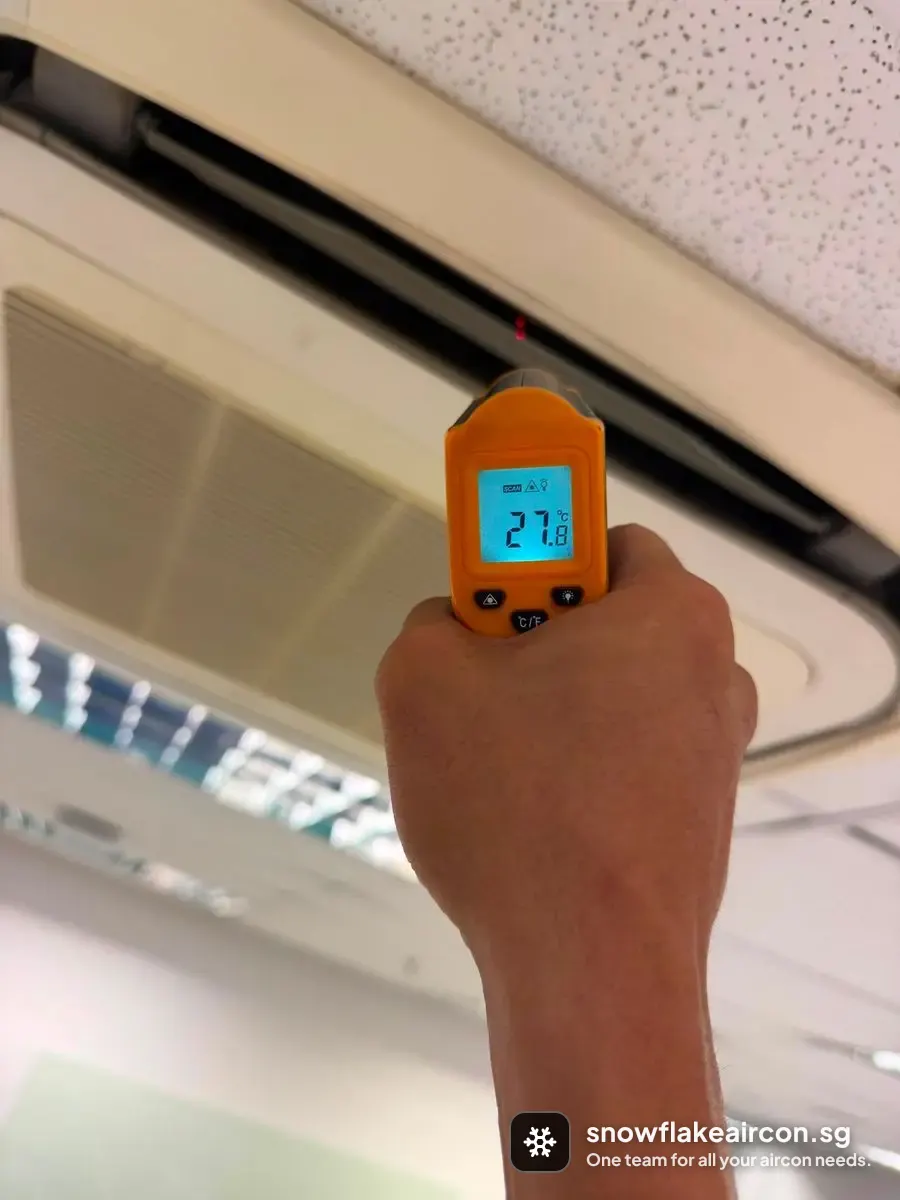
Daikin · Cassette
Cassette not cooling: stuck gas-flow valve, not compressor
A flow-control valve stuck part-closed, restricting refrigerant to the indoor coil
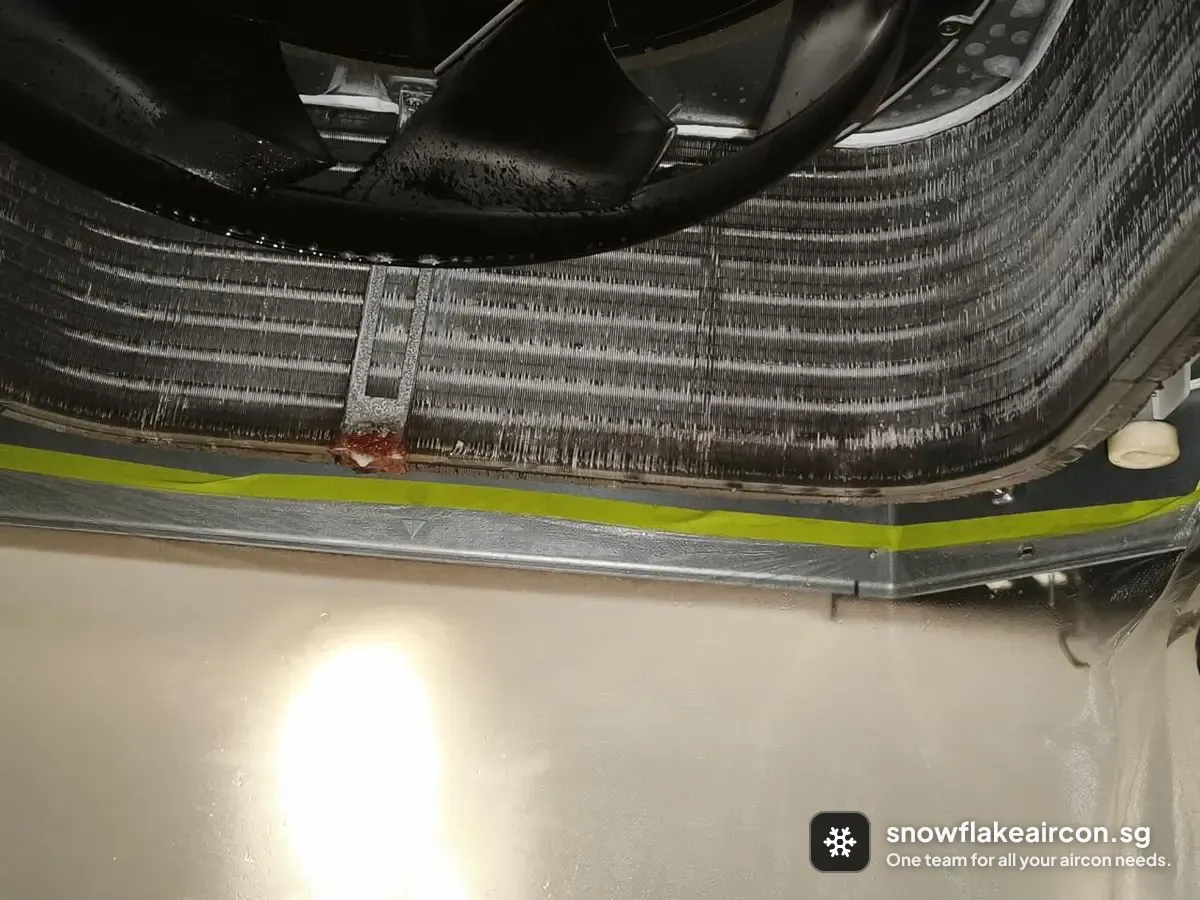
Hitachi · Cassette
Cassette weak on two sides: coil fouled behind outlets
Compacted deposit on the coil sections behind two cassette outlets