On this page
Quick summary
Hot yoga studios swinging rapidly from 40-degree humid classes toward crisp 23-degree cool-downs risk frozen evaporator coils and flooded ceiling trays. Staging exhaust ventilation and dehumidifiers before lowering cooling setpoints keeps airflow steady, prevents ice buildup, and maintains clean studio hygiene between classes.
Wall-mounted general servicing $25–$50/unit · chemical wash $60–$80/unit · View servicing rates
Prevent Coil Icing During Post-Heat Studio Turnovers
Dropping a saturated 40-degree studio straight to 18 degrees freezes moisture onto evaporator fins. Ice then blocks airflow and overflows ceiling trays once frost melts. Thermal shock also strains inverter sensors during back-to-back afternoon transitions.
Sweat aerosols, mat cleaners, and essential oil sprays coat aluminum fins within weeks. Sticky coils ice faster and raise studio bills on the 31.16-cent commercial electricity rate. Clean aluminum surfaces shed condensation smoothly without starving room circulation.
Stage Dehumidifiers and Cooling Steps Between Classes
Follow a twenty-minute four-stage changeover protocol rather than slamming compressors onto maximum cooling immediately:
Scroll to see more columns
| Turnover phase | Studio equipment action | Target airflow rule | Problem prevented |
|---|---|---|---|
| Minutes 0 to 5 | Cut heaters; open exhaust air | Run commercial dehumidifier high | Reduces latent steam surge |
| Minutes 5 to 12 | Start aircon at 25 degrees | Use high fan speed only | Keeps coil temp above freezing |
| Minutes 12 to 20 | Step down toward 22 degrees | Maintain strong blower throw | Balances crisp mat comfort |
| Nightly shutdown | Switch cool off before close | Run 20-minute fan dry cycle | Slows drain-pan algae growth |
Maintain Drainage Hygiene and Commercial Compliance
Humid studios produce litres of condensate daily, plugging stagnant drains within one month. Flush condensate lines under pressure and clean mesh grilles between classes. Dry-fan purge cycles after nightly lockup curb mould growth inside ceiling trays.
Studios replacing overloaded cassettes can check GoBusiness EEG grants for verified five-tick commercial units. Keep outdoor brackets and concealed drains compliant with BCA safety rules.
Verify Studio Coil Hygiene and Transition Check Rates
Keep studio schedules running without leaks using Snowflake's published commercial rates:
- Monthly or quarterly general servicing clears lint and drains under 14-day terms. Studios pay S$50 for one unit, S$30 each for two, and S$25 per blower when servicing three or more.
- Essential-oil film and algae clear via chemical servicing under 60-day terms. Pricing runs S$80 singly, S$70 apiece for pairs, and S$60 each from three units onward.
- Recurring coil icing or jelly trays call for full strip-down overhauls protected by a 90-day warranty. Single units cost S$150, paired units bill S$125 per unit, while three-plus units drop to S$115 apiece.
- Thermistor drift, icing faults, or VRV balancing issues warrant a S$30 studio check (S$80 for VRV networks) with 30-day fault repair terms, waived when remediation confirms.
Diagnostic Cases for This Fault
Singapore jobs showing what we checked on-site before quoting parts or gas.
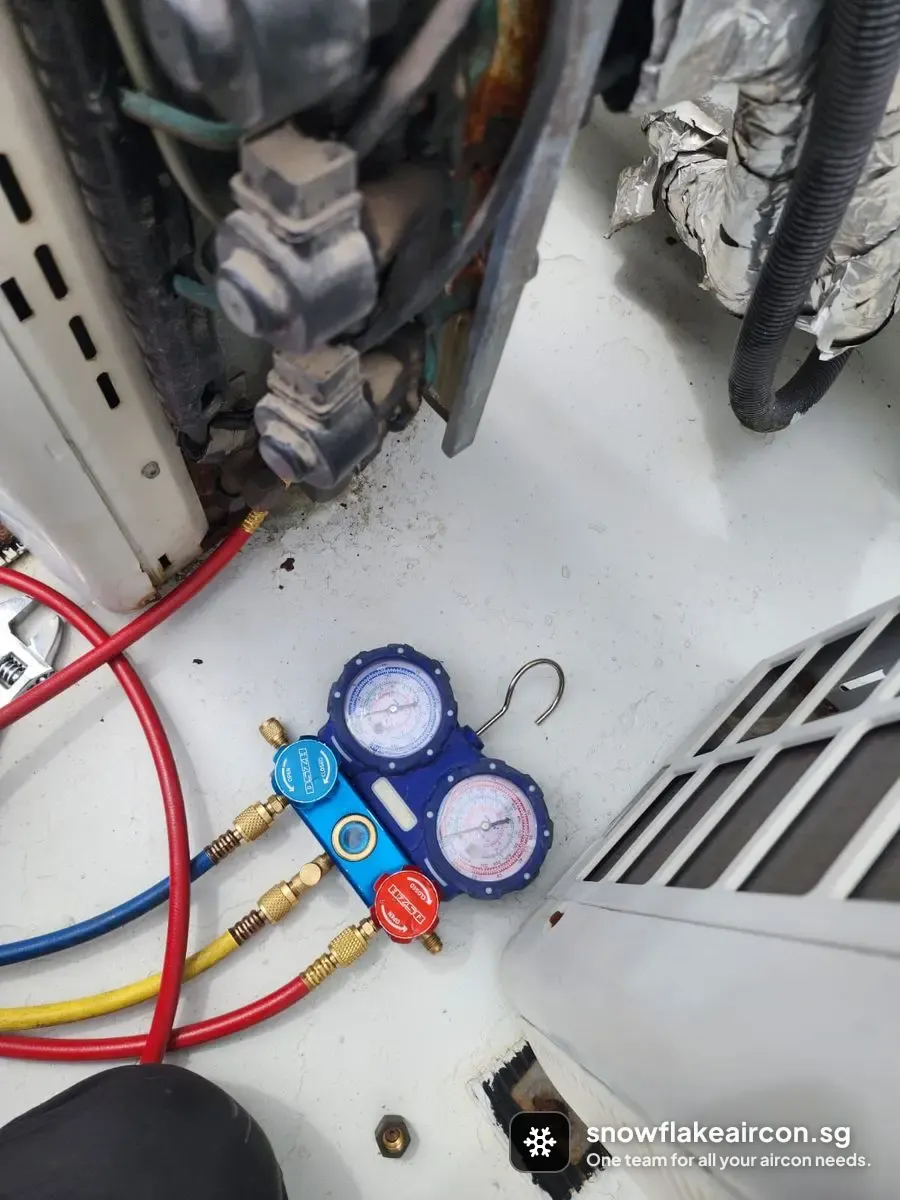
LG · Wall-mounted
LG CH35 error: gas leak at the outdoor connections
Refrigerant leak at corroded outdoor unit pipe connections
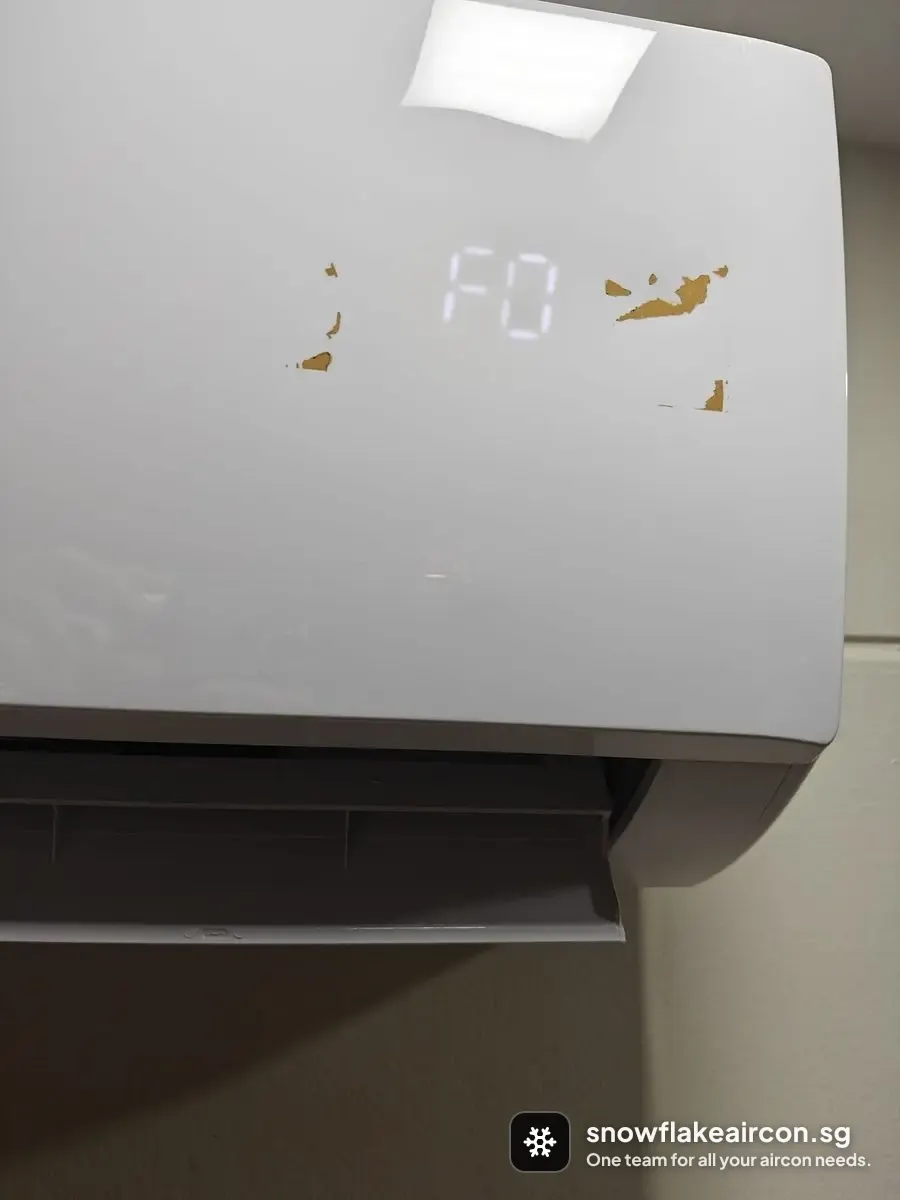
Gree · Wall-mounted
Gree F0 on a rusted condenser: refrigerant shortage
R32 refrigerant shortage triggering Gree F0 protection from corroded evaporator return bends